Where to Purchase Stock Options: Comprehensive Financial Data
When looking to buy stock options, having all the financial data is key. Online trading platforms make it easy to buy and sell options. Knowing which options to buy for tomorrow can really help.
Investors need to know how to buy stock options and where to do it. This knowledge is vital for success.
OptionMetrics provides top-notch historical options data to many worldwide. This data helps investors find the right stock options. With the right tools, investors can outdo others and maximize their investments.
Introduction to Stock Options
Investors looking to buy stock options must consider several factors. These include the type of options, the underlying assets, and when they expire. With the right data, investors can make smart choices and find the best options.
Whether searching for where to buy options or the best ones for tomorrow, the right data and platform are essential. This is how investors succeed in the stock options market.
Key Takeaways
- Comprehensive financial data is essential for making informed decisions when purchasing stock options.
- Understanding the different types of options and underlying assets is critical for finding the best options to buy.
- Online trading platforms have made it easier to buy and sell stock options, but investors need to choose the right platform for their needs.
- Knowing where to buy stock options and the best options to buy now for tomorrow can be a significant advantage in the stock options market.
- Investors should consider factors such as expiration dates, underlying assets, and fees when purchasing stock options.
- Having access to complete financial data and the right platform can help investors stay ahead of the competition and make the most of their investment.
Understanding Stock Options
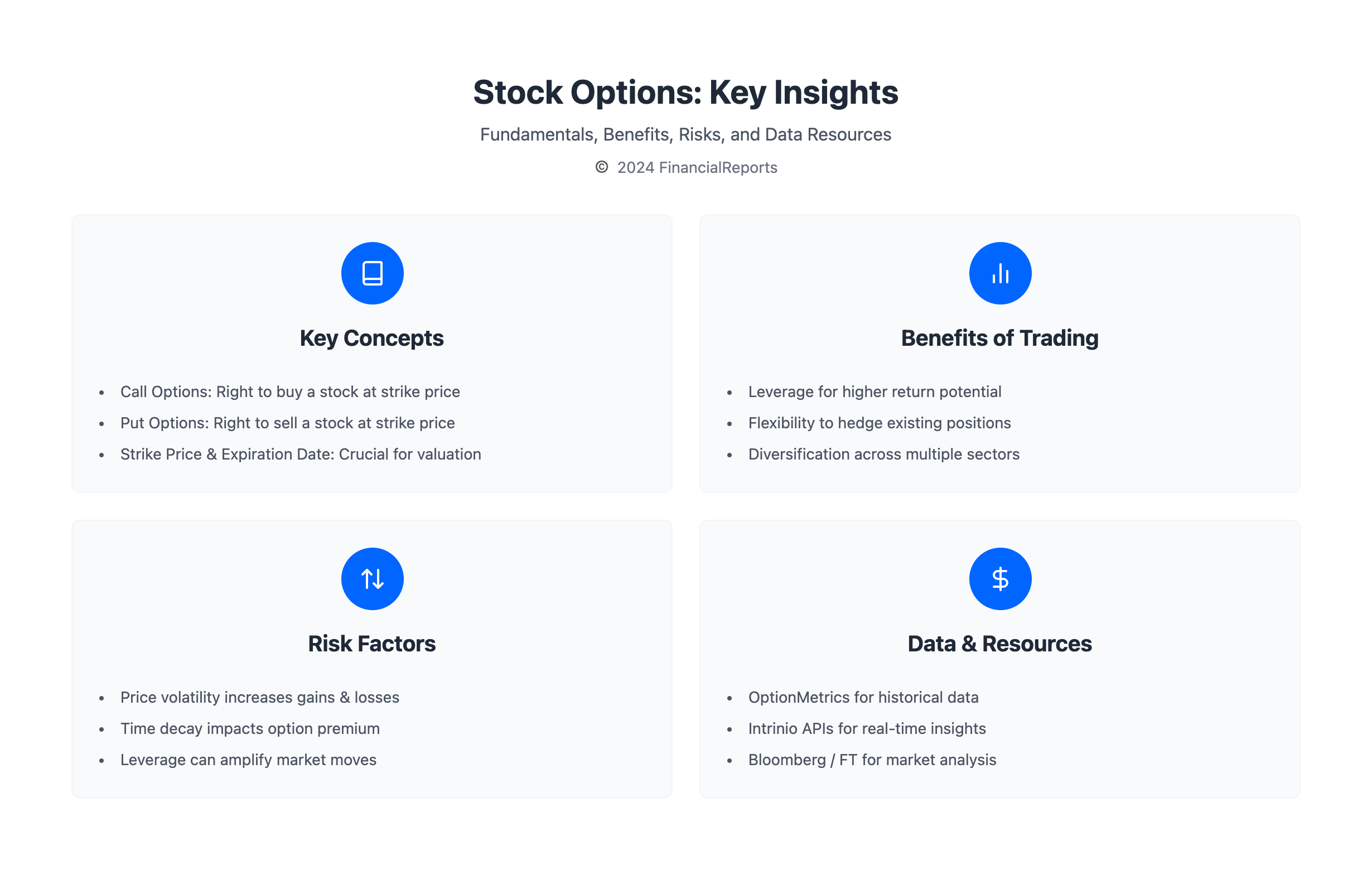
Stock options are a financial tool that lets you buy or sell a stock at a set price before a certain date. This is key in online trading options. It lets investors guess a stock's price without owning it. The best options to trade depend on your goals and how much risk you can take.
There are two main types of stock options: call and put. Call options let you buy a stock, while put options let you sell one. Knowing terms like strike price, expiration date, and volatility is important for smart investing. An options brokerage can help you understand these complex options.
Some key terms to know about stock options include:
- Strike price: the price at which the option can be exercised
- Expiration date: the last day on which the option can be exercised
- Volatility: a measure of the stock's price fluctuations
Intrinio offers financial data APIs, including options data. This data can help you make better investment choices. By understanding stock options and using the right tools, you can reach your financial goals.
| Option Type | Description |
|---|---|
| Call Option | Gives the buyer the right to buy a stock at a specified price |
| Put Option | Gives the buyer the right to sell a stock at a specified price |
Benefits of Trading Stock Options
Trading stock options has many benefits. You can trade online and find a wide range of options. With the right strategy, you can earn high returns, making it a top choice today.
Recent data shows a big increase in options trading. By 2023, about 10.2 billion options were traded. This growth shows how popular options trading has become and its high return possibilities.
Leverage and Potentia Returns
One key benefit of trading stock options is leverage. A small amount of capital can control a big position. This leads to higher returns, attracting investors to trade online.
Flexibility and Risk Management
Stock options also offer flexibility and risk management. Investors can use calls and puts to manage risks and losses. This makes options a vital tool for those looking to buy good options.
Diversification Opportunities
Trading stock options also provides diversification. It allows investors to spread risk across different assets and markets. This can reduce overall risk and increase returns, making it a great option today.
| Year | Volume of Options Traded |
|---|---|
| 1993 | Approximately a quarter billion |
| 2013 | 4.2 billion |
| 2018 | 5.2 billion |
| 2023 | 10.2 billion |
Where to Buy Stock Options
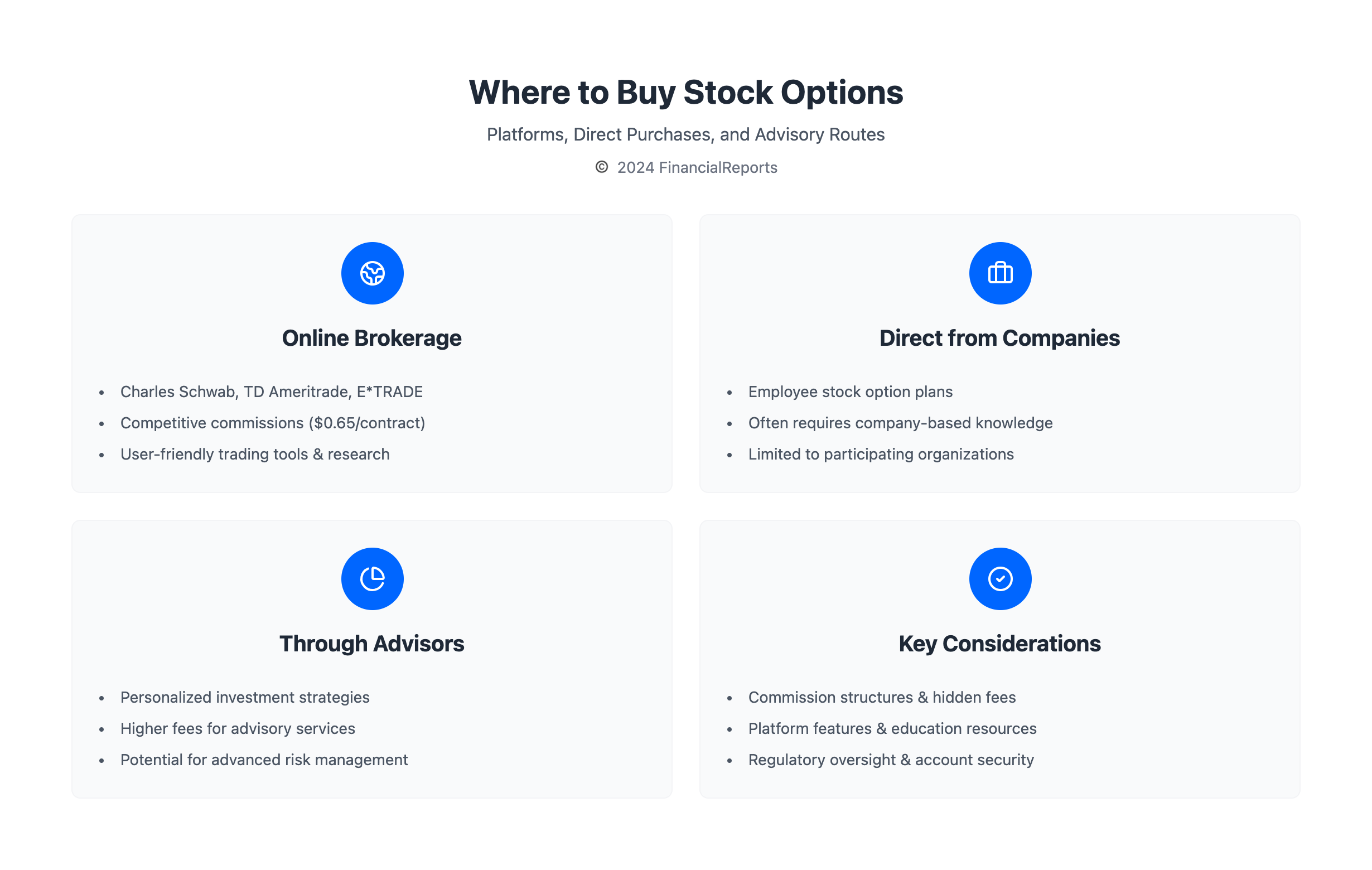
Investors can buy stock options in many ways. They can use online platforms, work with financial advisors, or buy directly from companies. It's key to look at fees, commissions, and services when deciding where can i buy stock options. Online platforms like Charles Schwab and TD Ameritrade are cheap and easy to use, helping you figure out where to buy options.
Financial advisors and brokers offer stock options and advice. They help you understand where can you buy options and the market. Some companies also sell stock options directly to investors. Online trading makes it simple to find where to buy options and start investing.
| Brokerage Platform | Fees | Services |
|---|---|---|
| Charles Schwab | $0 per trade | Online trading, mobile app, research tools |
| TD Ameritrade | $0 per trade | Online trading, mobile app, education resources |
The right place to buy stock options depends on your investment goals. By researching and comparing options, you can choose the best fit for you. Whether you're looking for where can i buy stock options or where to buy options, you can make a smart choice.
Popular Online Brokerage Platforms
Choosing the right online brokerage platform is key for trading options. Many platforms are out there, each with its own fees, commissions, and features. For those seeking good trade options, several platforms are highly recommended.
Charles Schwab, TD Ameritrade, and E*TRADE are among the top choices. They offer competitive pricing, starting at $0.65 per contract. These platforms also provide tools and resources to aid in making informed decisions.
Key Features of Top Platforms
- Charles Schwab: $0.65 per contract, no minimum deposit or stock trade fees
- TD Ameritrade: $0.65 per contract, no minimum deposit or stock trade fees
- E*TRADE: $0.65 per contract, dropping to $0.50 per contract after 30 trades in a quarter
These platforms are great for those looking for good stock options and where to trade options. They have user-friendly interfaces, advanced trading tools, and a variety of investment products. By picking the right platform, investors can enhance their trading experience and maximize their good trade options.
| Platform | Commission per Contract | Minimum Deposit |
|---|---|---|
| Charles Schwab | $0.65 | No minimum |
| TD Ameritrade | $0.65 | No minimum |
| E*TRADE | $0.65 (drops to $0.50 after 30 trades) | No minimum |
The best platform for options trading varies based on individual needs and preferences. By looking at fees, commissions, and features, investors can find the ideal platform for their good trade options and where to trade options.
Comparing Commission Structures
When looking at options trading accounts, the commission structure is key. The best options to buy this week can change based on trade fees. Some brokers charge a flat fee, while others have tiered pricing, affecting trade costs.
For instance, Interactive Brokers has no commission for equities/ETFs on TWS Lite. They charge low costs based on volume for active traders. On the other hand, Charles Schwab charges $0 for stock/ETF trades but $0.65 per contract for options. Knowing these fees helps investors pick the right options trading account.
Hidden fees can also reduce investment returns. These include maintenance, inactivity, and trading platform fees. By looking at these, investors can pick the best options for the week and improve their trading account's performance.
- Flat pricing: a fixed fee per trade
- Tiered pricing: a fee based on the size of the trade
- Hidden fees: maintenance fees, inactivity fees, and trading platform fees
By carefully checking commission structures and all fees, investors can make smart choices. This way, they can pick the best options for their trading account and aim for long-term success.
Choosing the Right Platform
When looking to buy stock options, picking the right platform is key. Online brokerage sites offer different features and tools. For example, E*Trade has a wide range of investments. InteractiveBrokers gives you access to global markets.
Think about these points when choosing:
- User experience and tools: Look for a platform with a user-friendly interface and advanced charting tools, such as Thinkorswim or Webull.
- Research and education resources: Choose a platform that offers webinars, tutorials, and market analysis, like Tastytrade or VectorVest.
- Customer support: Ensure the platform has excellent customer support, with multiple channels of communication and a responsive team.
By looking at these factors and trying out different platforms, you can find the best place to buy stock options. Always keep your investment goals and risk level in mind when picking a platform.
| Platform | Features | Fees |
|---|---|---|
| E*Trade | Comprehensive investment options, advanced charting tools | Variable commission fees |
| InteractiveBrokers | Global market access, advanced analytical tools | Competitive commission fees |
| Tastytrade | Robust option analytics, no commission for closing positions | Capped fees at $10 per leg |
Tax Implications of Stock Options
Stock options come with tax implications that investors should know. The tax rate depends on whether the gain is long-term or short-term. Long-term gains are taxed at a lower rate than short-term ones. It's important to consider these taxes when looking for the best options to buy.
For online trading options, the tax rules can be tricky. There are two main types of stock options: statutory and nonstatutory. Statutory options are given under certain plans and are taxed differently. Nonstatutory options have three tax events: grant, exercise, and sale, each with its own tax rules.
Here are some key points to consider when it comes to the tax implications of stock options:
- Long-term capital gains are typically taxed at a lower rate than short-term capital gains.
- Statutory options are subject to the alternative minimum tax (AMT).
- Nonstatutory options entail three taxable events: grant, exercise, and sale.
- Investors should consider the tax implications of their investments when looking for the best options to buy.
Intrinio's options data API offers detailed info on each stock option. This includes the strike price and expiration date. This info helps investors make informed choices. By understanding the tax implications and using the right tools, investors can maximize their returns in online trading options.
| Type of Option | Tax Implication |
|---|---|
| Statutory Option | Subject to alternative minimum tax (AMT) |
| Nonstatutory Option | Entails three taxable events: grant, exercise, and sale |
Risk Management Strategies
Trading stock options requires careful risk management. Investors can use various strategies to manage risk. These include setting stop-loss orders, diversifying their portfolio, and using options to hedge against losses. To trade options online well, it's important to know about different options like call and put options and how they help manage risk.
Setting stop-loss orders can limit losses by selling a stock at a certain price. Diversifying a portfolio can also reduce risk by spreading investments across different types of assets. Options can be used to hedge against losses by allowing a sale at a set price. When looking for the best call options to buy today, consider the stock's volatility, market trends, and overall market conditions.
Some key statistics to consider when developing a risk management strategy include:
- Long options can only lose a maximum of the premium paid for the option but have unlimited profit.
- Investing $10,000 in a $10 option allows the investor to buy 10 contracts and control 1,000 shares. In contrast, $10,000 in a $50 stock only buys 200 shares.
- Buying 1,000 shares of XYZ at $41.75 for $41,750 or buying 10 call option contracts with the same value will incur a total capital outlay of $16,300. This represents about 60% savings compared to buying the shares outright.
| Strategy | Description |
|---|---|
| Stop-Loss Orders | Automatically sell a stock when it reaches a certain price to limit losses. |
| Diversification | Spread investments across different asset classes to reduce risk. |
| Options Hedging | Use options to hedge against losses by providing a way to sell a stock at a specified price. |
The Role of Market Analysis
Market analysis is key in stock options trading. It helps investors decide where to buy options and manage their portfolios. To find the best places to buy stock options, thorough market analysis is needed. This includes looking at financial data like earnings, price-to-earnings ratio, and dividend yield.
Technical analysis is also vital. It involves studying charts and patterns to guess future price changes. Investors can spot buying or selling opportunities by analyzing trends and patterns. For instance, Charles Schwab offers a tool to help narrow down stock choices.
Some important things to think about in market analysis are:
- Fundamental analysis: looking at financial statements to understand a company's value and growth.
- Technical analysis: studying charts and patterns to predict future price movements.
- Trend analysis: finding trends and patterns in the market to guide buying decisions.
By using these methods, investors can make smart choices about where to buy options. Whether you're searching for where can i buy stock options or where to buy options, market analysis is essential.
| Analysis Type | Description |
|---|---|
| Fundamental Analysis | Analyzing financial statements to determine a company's value and growth. |
| Technical Analysis | Studying charts and patterns to predict future price movements. |
| Trend Analysis | Identifying trends and patterns in the market to make informed decisions. |
Common Mistakes to Avoid
Trading stock options can be tricky. Knowing the common mistakes helps investors make better choices. It's key to understand where to trade and how to navigate the market.
Some common errors include not understanding stock options, using too much leverage, and ignoring market trends. Alpha Vantage offers real-time and historical data on stocks, forex, and options. This data can guide investors in making better decisions.
To steer clear of these mistakes, investors should:
- Take the time to understand stock options terms and concepts
- Avoid overleveraging positions, as this can amplify both gains and losses
- Stay current with market conditions and adjust strategies as needed
By knowing these common pitfalls and avoiding them, investors can boost their success in the options market. They can find the best places to trade options.
| Mistake | Consequence |
|---|---|
| Misunderstanding stock options terms | Costly mistakes and possible losses |
| Overleveraging positions | Amplified gains and losses |
| Ignoring market conditions | Poor investment choices and possible losses |
Resources for Further Learning
Investors looking to learn more about stock options trading have many resources. Books like "Options Trading for Beginners" offer a great start. They cover the basics, strategies, and how to manage risks.
Online courses and webinars from places like Investopedia are also great. They provide practical training and insights from experts.
Keeping up with market news from Bloomberg and The Financial Times is important. It helps investors understand what's happening in the market. Joining online trading communities can also offer learning from others.
Using these resources helps investors improve their skills and make better choices. Remember, doing your homework and always learning is essential for success in stock options trading.
FAQ
What are stock options and how do they work?
Stock options are contracts that give the buyer the right to buy or sell a stock at a set price before a certain date. There are two main types: call options and put options. Understanding terms like strike price and expiration date is key for smart investing.
What are the benefits of trading stock options?
Trading stock options offers leverage and the chance for big returns. It also provides flexibility and ways to manage risk. Options let investors speculate on stock prices without a big investment.
Where can I buy stock options?
You can buy stock options online, through financial advisors, or directly from companies. Online platforms like Charles Schwab and E*TRADE are easy and affordable.
What are the key factors to consider when choosing an online brokerage platform for stock options?
Look at the commission structure and any hidden fees. Also, consider the platform's user-friendliness, tools, and customer support. These factors help you choose the best platform.
What are the tax implications of trading stock options?
Taxes on stock options depend on the gain's duration. Long-term gains are taxed lower. Be aware of reporting requirements and tax strategies like tax-loss harvesting.
What are some common risk management strategies for stock options trading?
Use stop-loss orders to limit losses. Diversify your portfolio and consider options for hedging. These strategies help manage risk.
What are the key factors to consider when conducting market analysis for stock options?
Analyze a company's financials and industry trends with fundamental analysis. Use technical analysis to predict price movements. Staying informed about market trends is also vital.
What are some common mistakes to avoid when trading stock options?
Avoid misunderstandings about strike price and expiration date. Don't overleverage and stay informed about market conditions and news.
What resources are available for learning more about stock options trading?
Books, online courses, and financial news outlets offer insights. These resources help deepen your understanding of stock options trading.