What Should I Do Before Revenue Report: A Simple Guide
Understanding what to do before a revenue report is crucial. First, gathering financial data is key. You'll need to collect and review information about your revenues, the cost to sell goods, your gross profits, and operating expenses. This helps tell the story of your business's financial health.
Make sure all data accurately reflects your company's current financial status before you start your revenue report. Knowing how to create a financial statement helps. You can then precisely show costs of sales ($2,738,714) against revenues ($4,358,100). This results in a gross profit of $1,619,386. Detailing financial aspects like sales and operational expenses ($560,430), and operating income ($765,227) is vital.
Aligning your report with IRS rules is key, especially for Schedule C filers contributing to SIMPLE IRAs. Record all transactions carefully and ensure contributions are made on time. It's important for employers to properly document contributions as business expenses. This helps in maximizing tax benefits and showcasing a true financial picture.
Key Takeaways
- Systematic collection of financial data is necessary for accurate reporting.
- Adherence to IRS guidelines for Schedule C filers is crucial for compliance.
- Detailed income statements inform strategic business decisions.
- Financial reports must accurately reflect performance to inform investors and stakeholders.
- Financial dashboards and KPIs enhance the readability and comprehensiveness of financial reports.
- Regular reviews and updates to financial statements help maintain their accuracy and relevance.
Understand the Importance of Revenue Reports
Revenue reports are key for checking a company's money health and success. They are vital as companies work to better their money plans. Knowing how to write an income statement and other money reports is crucial.
Why are Revenue Reports Crucial?
These reports give a full view of money status. They are important for people making choices and managing the business. Revenue reports, including Profit and Loss Statement, Balance Sheet Report, and Cash Flow Statements, show how well a company is doing money-wise.
They help companies see trends, change plans, and be financially smart. This supports wise choices that help a business grow.
Key Metrics to Monitor
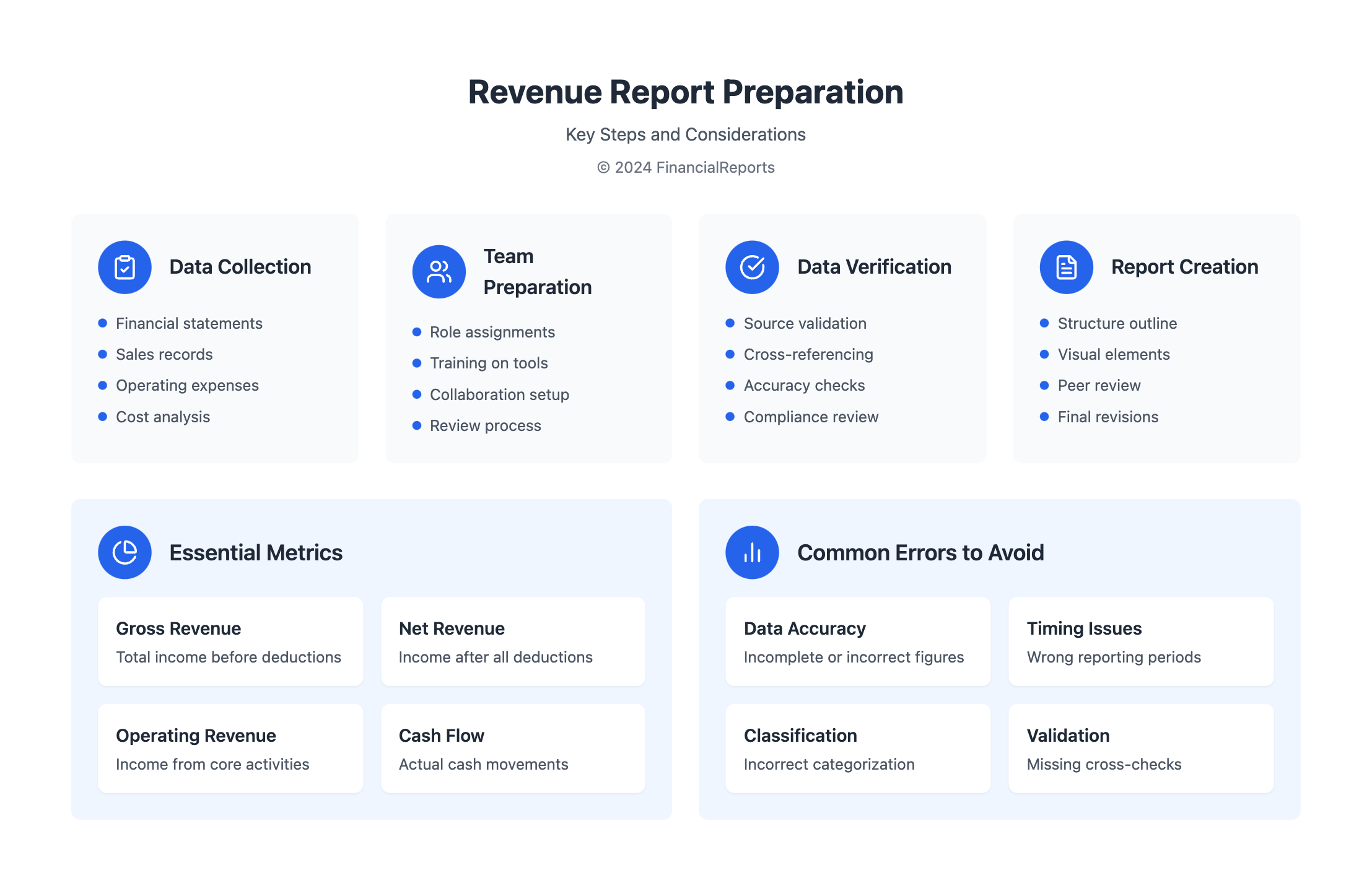
- Gross Revenue: Total money from main activities like ticket sales or bookings.
- Net Revenue: Gross revenue minus costs and operating expenses.
- Operating Revenue: Money from the main business activities.
- Net Profit: Profit after paying all expenses.
- Cash Flow: Tracks cash coming in and going out.
Watching these metrics helps make correct money statements. It also gives businesses data to make things better and earn more money.
Common Mistakes in Reporting
Mistakes in reporting can make a business look worse than it is. Common issues are not reporting enough revenue, missing expenses, and wrong asset values. These mistakes can be fewer by following strict reporting rules and double-checking numbers. Using good accounting software helps a lot too.
By knowing how to make an income statement and being careful with reports, companies can trust their financial data. This is key for making plans that help the business in the long run.

Gather Necessary Data
To start preparing financial reports and income statements, gather data carefully. Financial pros must collect and review financial details well. They focus on three areas: an overview of financial statements, sales data, and costs analysis.
Financial Statements Overview
Understanding different financial statements is key. These include balance sheets and cash flow statements. They are crucial for good financial analysis. Correct financial statements help make reliable reports.
Sales Data Compilation
Collecting sales data helps understand where money comes from. It involves tracking yearly sales and website visitors. This info comes from CRM systems. It's important for income statements and future predictions.
Expenses and Cost Analysis
Looking closely at expenses shows a company's financial health. This covers direct costs and indirect costs like marketing. By using accounting tools, costs are tracked and sorted. This makes financial reports accurate.
Good data collection methods make financial reports and income statements accurate and complete. They show the real financial state and help make wise decisions.
Analyze Previous Reports
Looking back at financial history is key to understanding a business's strategy. Learning to make an income statement and analyzing old reports is foundational. It tells us about the company's long-term financial health and operational stability.
Comparing past reports, like 10-K reports and SEC submissions, helps dive into financial trends. This deep analysis shows the changes over time.
Comparative Analysis with Past Reports
Reviewing these documents lets professionals spot yearly differences. Differences can be in profit margins or changes in risk factors noted in legal sections. This analysis is vital for making a truthful financial statement.
Identifying Trends and Patterns
One important trend is looking at cash flow statements. This shows if a company has managed its cash well over time. Big changes in cash flow might point to financial issues that need a new strategy.
Watching metrics like ROAS and ROSS gives extra insight. It shows how well the company spends on advertising and staff.
Lessons Learned
This analysis teaches key lessons for future reports and strategies. For example, keeping a debt ratio under 50% is important for small businesses. And having a current ratio over 1:1 helps avoid running out of cash.
Here's a summary of important financial benchmarks from analyzing annual and 10-K reports:
| Financial Metric | Ideal Value | Observed Trends |
|---|---|---|
| Gross Profit Margin | 20%-80% | Mostly 30%-40% |
| EBITDA Margin | 10%-30% | Varies by business model |
| Debt Ratio | <50% | Key for small businesses |
| Current Ratio | >1:1 | Prevents immediate cash squeeze |
| Inventory Turnover | 3-4x per year | Critical for cash flow management |
| Return on Capital (ROC) | 15%-35% | Attracts and retains investors |
This research stresses the need for regular financial checks. It also shows the importance of a strategic, informed approach in making detailed income statements and reports.
Set Clear Goals for the Report
Setting clear goals for your revenue report is very important. It helps guide your financial reporting and aligns it with your business's main goals. Starting with well-defined objectives is key to creating a report that provides insights and matches your overall business aims.
Short-term vs. Long-term Goals
Setting short-term financial goals helps with immediate decisions, like changing the budget or handling unexpected costs. These goals, usually made for each quarter, help reach bigger, long-term goals. Long-term goals focus on major achievements like growing in the market or improving customer happiness, measured yearly.
Aligning with Business Objectives
Tom Polen, CEO of Becton Dickinson, points out the importance of aligning financial goals with overall business aims. This isn't just about numbers. It's also about improving how the business runs inside. This alignment affects financial results and helps every department move forward together. Good financial reports show this alignment, making it clear how financial results back up the wider business strategies.
Communicating Goals with Team
Sharing financial goals with your team is crucial. It ensures everyone knows their part in reaching these goals. Regular meetings to talk about moving towards goals, like revenue or customer happiness, keep everyone focused. Tom Siebel of C3.ai emphasizes this. Using clear metrics in these discussions helps everyone see how close they are to meeting the goals.
| Objective Type | Scope | Regular Review Interval | Key Metrics |
|---|---|---|---|
| Operational | Internal Processes | Monthly/Quarterly | Customer satisfaction, Operational efficiency |
| Strategic | Long-Term Growth | Annually | Market share, Revenue growth |
| Tactical | Immediate Actions | Weekly | Expense management, Budget adjustments |
As you learn how to write a financial statement, using a strategic framework helps. It lets you show how financial measures match up with and support big business goals. This makes decision-making clearer. It also highlights the role of financial management in your organization.
Prepare Your Team
Preparing financial statements requires knowledge, tools, and a capable team. The quality of a financial report depends on the team's ability to work together. Creating a good financial statement starts with a team knowledgeable about financial data and skilled in analytical tools.
Role Assignments for Reporting
It is important to assign clear roles. Members should have tasks that fit their skills and experience. For instance, one might analyze cash flows, while another focuses on balance sheets or income statements.
Training on Data Analysis Tools
Training in data analysis tools is key. Financial reporting today needs knowledge of complex software. This software manages large datasets and makes detailed calculations. It assesses a company's financial health. Training may involve learning to use specific platforms for analyzing financial data from different sources. This ensures accuracy and speeds up report preparation.
Importance of Collaboration
Working together well is crucial for financial reports. Good team interaction improves both speed and precision of the report. Regular meetings ensure everyone is aligned and issues are resolved quickly. This leads to more trustworthy financial statements.
| Financial Statement | Main Components | Purpose |
|---|---|---|
| Income Statement | Revenue, Expenses, Profitability | Assess company's performance and operational efficiency over a period. |
| Balance Sheet | Assets, Liabilities, Shareholder Equity | Snapshot of financial standing at a specific point in time. |
| Cash Flow Statement | Operating, Investing, and Financing Activities | Insight into cash inflows and outflows, providing a measure of liquidity and financial flexibility. |
Leaders should focus on these points to prepare their team for financial statement tasks. Doing so improves the reports' quality and trustworthiness.
Ensure Data Accuracy
It's vital to make sure that data in financial reports is right. This helps keep trust and follows rules. Mistakes in data can lead to big losses for companies. It shows why strong checking and matching processes are key in making and preparing financial reports.
Verify Data Sources
Checking where data comes from is the first step. It's crucial to use only good, reliable data. This is very important in the reporting process and when dealing with the IRS. Setting a standard review process helps match the data with financial records and meet industry rules.
Cross-Reference Figures
It's important to check numbers are right before reporting them. This means looking at data from different reports and times to find any wrong numbers. Getting this right helps make good decisions and makes financial reports more trustworthy. It's a key part in learning to prepare financial reports that impact business choices.
Tools for Data Validation
Using advanced tools is vital for checking financial data's accuracy. Tools like Power Query and automation software help lower errors by cutting out manual checks. These tools check if data is valid, complete, consistent, timely, and honest. They are needed for dependable financial reporting.
Bringing in automated tools helps look at data more closely and makes the process smoother. This helps avoid mistakes that could cost a lot, about $12.9 million a year due to bad data. In making a financial report, these tools are very important. They make sure the data is correct and reliable.
Create Visual Representations
Making great visual representations is key to making complex financial data simple. It helps a lot when you're learning to write or create an income statement. Charts and graphs turn hard numbers into easy visuals. They help people quickly get the key points without getting bogged down in details.
Importance of Charts and Graphs
Charts and graphs are super important in financial reporting. They make comparing data sets easy and communicate key findings well. For income statements, they show financial trends, earnings, expenses, and profits over time. This gives a clear view of a company's financial health.
Choosing the Right Visual Tools
Picking the right chart or graph is key to showing your data right. Line charts are good for showing changes in net income over time. Pie charts are great for showing parts of total sales as revenue streams. The choice depends on what info you have and what your audience needs.
Simplifying Complex Data
The aim of using visual tools in financial statements is to make hard data easy to get at a glance. Simplifying means putting a lot of data in an easy format, not leaving out details. This way, even those not expert in finance can make good decisions from the visuals.
Here's a list of different visualization techniques and their best uses in financial settings. It's to make the impact and clarity of income statements better:
| Type of Chart | Best Use |
|---|---|
| Line Chart | Displaying trends over time |
| Bar Chart | Comparing quantities among different groups |
| Column Chart | Comparing data points at regular intervals |
| Pie Chart | Showcasing proportions in a whole |
| Area Chart | Illustrating cumulated totals over time using different colors |
| Pivot Table | Summarizing large data sets concisely |
| Scatter Chart | Examining relationships between variables in a data set |
| Bubble Chart | Visualizing data in three dimensions to compare entities in terms of size, position, and scale |
| Treemap | Displaying hierarchical data and part-to-whole relationships |
Using clear, data-driven visual aids in an income statement makes financial reporting easier. It also makes it easier for stakeholders to understand. As we get better at visualizing data, we get better at sharing financial info effectively and efficiently.
Draft the Revenue Report
Financial experts start by carefully planning the revenue report. This step is key to delivering the financial story well. The work done in the beginning impacts how stakeholders understand and use the financial data.
Structuring the Report
Creating a clear financial report is essential. It should start with an executive summary that highlights important numbers and insights. Then, it should detail income, expenses, and profit, following financial reporting rules.
Using tables to show different accounting methods can make things clearer. This helps explain how each method affects the report's results.
| Accounting Method | Description | Suitability |
|---|---|---|
| Completed-Contract | Revenue and expenses are recognized at contract completion. | Used for long-term projects where progress estimates are difficult. |
| Installment | Revenue recognized upon cash receipt, cost recorded when incurred. | Suitable for sales with uncertain collections. |
| Proportional Performance | Modification of percentage-of-completion for recognising profits. | Tracks ongoing performance metrics before project completion. |
Language and Tone Considerations
The language in a financial report must be precise and understandable for readers. Using appropriate vocabulary helps ensure the report is clear and brief. Highlighting metrics like liquidity ratios helps with strategic decisions.
Incorporating Feedback
Getting feedback is crucial when making a financial report. Sharing a draft with stakeholders adds valuable insights and details. This process improves the report and aligns it with the company's strategic aims.
Drafting a revenue report requires careful structuring, precise language, and feedback. By following these steps, financial pros can make reports that are insightful and helpful for strategic decisions.
Review and Revise
In the final stages of how to prepare financial reports, revising is crucial. It ensures your financial reporting is both high-quality and accurate.
Importance of Peer Reviews
Peer reviews are key in making a great financial report. They offer unbiased feedback. This helps catch errors and unclear parts that you might have missed.
They check every part of the financial report. This includes making sure tax-deferred savings contributions are shown right. Also, they check that everything in the financial statement matches up. The goal is to make every detail clear and correct.
A continuous review process is very important, experts say. It helps get better at making business plans and reports. Doing reviews over and over shows a dedication to top-notch financial reporting. It also keeps the organization running well and following rules.
Having different people review your financial reports is smart. This includes bosses and financial experts. It uses many points of view to avoid mistakes or misunderstandings. This way of reviewing helps everyone learn. It keeps the team up-to-date on how to report finances correctly.
In short, regular peer reviews make your financial reports better. They ensure your reports are useful and meet all requirements. This benefits both your team and those outside your company.
Presenting the Revenue Report
Creating a revenue report is a detailed process. The next step is sharing this important document with stakeholders effectively. A well-presented revenue report shows the company's financial state clearly. It also helps stakeholders understand and make smart choices. Good presentation and follow-up make sure the report's information stays relevant and useful.
Effective Presentation Techniques
Knowing how to explain financial statements is key. Begin by defining important terms like "revenue," as ASC 606-10-20 does. This makes sure everyone understands the same things. Use graphs and charts to show important trends, such as sales increases or cost changes over time. Make slides or pages simple, focusing on the most important data. This keeps the audience focused on what matters.
Start presentations by showing the overall financial health. Then, detail different types of revenue, like operating or non-operating. This helps people grasp and engage with the information more easily.
Engaging Your Audience
Making the data relatable is key to keeping your audience's attention. Show how revenue recognition changes influence real-world income and rules. Ask the audience questions about the financial effects of different revenue types. This not only helps them understand better but also encourages deep thinking about finances.
Follow-up Strategies
Keep the conversation about the report going after the presentation. Set up times to look over the report again, considering new financial rules or market conditions. Provide extra documents for those who want to learn more about complicated topics like revenue recognition. Having open talks helps stakeholders make better choices with the most current financial info. This makes the report more valuable for long-term planning.
By clearly explaining how to make a financial statement and using great presentation and engagement methods, leaders turn revenue reports into powerful tools. This not only meets the immediate needs of reporting but also helps the whole company make better decisions.
Continuous Improvement
In the world of financial reporting, staying the same is not an option. The area of financial statement preparation needs continuous growth to stay ahead. Continuous improvement is essential, not just a choice. It helps finance professionals keep up with market changes. Setting a strong review cycle is crucial, including recent updates in how to prepare financial reports. It also means adopting the latest best practices.
Setting a Review Cycle
Having a strict review cycle is key to accurate and improved revenue reports. By looking at project data and measuring success, we make the review cycle meaningful. It leads to cost saving and better processes. Regular checks and using LEAN methods also cut down on waste. This makes the company more efficient.
Embracing Feedback for Future Reports
Feedback is vital for growth in finance. About 54% of steps taken to improve customer satisfaction come from feedback. Using Six Sigma helps find and fix process issues, raising the quality of our work. Also, tools like SolveXia can boost productivity by up to 98%. This shows how tech plays a big role in getting better.
Adapting to Changing Market Conditions
Finance experts know that markets can change fast. It’s important to adjust improvement plans so they stay useful. Keeping an eye on KPIs helps. So does managing an idea funnel to pick the best improvement ideas. This helps firms keep up with changes and be leaders in financial reporting.
FAQ
Why are Revenue Reports Crucial?
Revenue reports are key for businesses to see how they're doing. They show money made and spent, giving a clear picture of profits. This helps in making big decisions and planning for the future.
Key Metrics to Monitor in Revenue Reports?
Important things to watch include earnings, IRA contributions, sales, expenses, and profit. Tracking these helps keep financial reports right and follow IRS rules.
What are Common Mistakes in Reporting?
Errors often made involve IRA contributions, missing deadlines, and not keeping within contribution limits. Such mistakes can lead to trouble with rules and show finances incorrectly.
What Financial Statements Overview is Necessary?
You need the balance sheet, income statement, and cash flow statement. They each show different important financial details which are essential for a full revenue report.
How to Compile Sales Data Effectively?
To put together sales data well, keep accurate records, sort sales by type or area, and match data with bank statements and bills.
Why is Expenses and Cost Analysis Important?
It's vital to look at expenses and costs to see how profitable a business is. This means tracking and reviewing all money spent to find ways to save.
What Should be Included in a Comparative Analysis with Past Reports?
Compare financial figures from year to year. Look at things like revenue growth and expense trends. It shows how well the business is doing over time.
How to Identify Trends and Patterns in Financial Data?
Look at past data over several periods. Search for regular patterns, like sales peaks or rising expenses. This helps forecast and make smart choices.
What Lessons Can Be Learned from Analyzing Previous Reports?
Reviewing past reports can teach you about strategy success, forecast accuracy, and outside effects on business. This info can improve business plans and reports.
How Should Short-term vs. Long-term Goals be Balanced in the Report?
Mix short and long-term goals by aligning immediate steps with the overall business plan. Short-term may focus on cash flow, while long-term on growth and reserves.
Why is it Vital to Align Report Goals with Business Objectives?
Making report goals match business plans makes sure reporting helps the company's bigger goals. It steers useful insights and supports key decisions for growth.
How to Effectively Communicate Goals with the Team?
Share goals clearly, explain why they matter, and show how everyone helps. Use meetings and clear tracking to keep all on track and responsible.
What are the Role Assignments for Reporting?
Reporting roles should cover data gathering, analyzing, rule-checking, and writing. Pick people by their skills to smooth out the process and get accurate reports.
How Important is Training on Data Analysis Tools?
Training is key because these tools help understand financial data, spot trends, and give insights for choices. Being good with these tools makes reports better.
How Does Collaboration Impact the Financial Reporting Process?
Working together brings different views and skills to reporting, lowering mistakes. It builds a team’s commitment to quality and correctness in reports.
Why Verify Data Sources?
Checking data sources makes sure info is correct and trustworthy. It stops mistakes, fraud, and problems with rules.
What's Involved in Cross-Referencing Figures?
Cross-referencing checks if financial info matches across all documents. It confirms everything is right and consistent.
Which Tools for Data Validation are Recommended?
Use financial software that automatically checks for errors and matches standards. It makes sure the data is right.
Why are Charts and Graphs Important?
Visuals like charts and graphs make complex data easier to get quickly. They show trends and oddities clearly for better decisions.
How to Choose the Right Visual Tools?
Pick visuals that fit what you're showing, like pie charts for percentages. Make sure they're easy to understand and fit the data.
How Does Simplifying Complex Data Benefit Stakeholders?
Making data simple helps stakeholders understand financial status and decisions faster. This leads to quicker and better agreement and choices.
What to Consider When Structuring the Report?
Think about clear information flow and keeping it brief. Start with key points, then analyze in detail, and end with conclusions.
How to Choose the Right Language and Tone for a Revenue Report?
Use formal, clear language that shows you know your stuff but is still easy for everyone to understand. Be confident and helpful.
What is the Role of Feedback in Drafting a Revenue Report?
Feedback is key because it gives new ideas and views to make reports more accurate, complete, and useful. Always be open to feedback.
Why is Peer Review Important in Financial Reporting?
Peer review adds an extra check for mistakes and bias, ensuring the report is credible and reliable.
What are Effective Presentation Techniques for a Revenue Report?
Use clear language, engaging visuals, and focus on main points. Match the talk to the audience's level and answer their questions well.
How to Engage Your Audience During a Revenue Report Presentation?
Connect with the audience by talking about what matters to them, having a good Q&A, and giving useful insights. Link data to real-life impacts.
Why are Follow-up Strategies Important Post-Presentation?
Follow-ups help make sure everyone gets the information, understands next steps, and keeps working towards goals. They keep support high and accountability clear.
What Comprises Setting a Review Cycle?
A review cycle plans regular checks of the reporting process for ongoing rightness and improvement. It uses feedback and updates to stay current.
How Can Feedback Improve Future Revenue Reports?
Feedback points out what to do better, helps fine-tune gathering and analyzing data, and keeps the report in line with business and industry shifts.
How Should a Company Adapt to Changing Market Conditions in its Financial Reporting?
Stay up-to-date with industry news and economic signs, refresh financial models with fresh data, and be ready to adjust analyses to meet new situations.