Unlock the Secrets to Profitable End of Day Trading
Day trading means buying and selling financial items in the same day. It aims to make money from small price changes. An end of day trading strategy is popular, needing a deep market understanding and a solid plan for profit.
Only about 0.1% of traders make a good profit. It's key to have a strong trading plan. To succeed, traders must learn about trading and pick stocks wisely, considering liquidity, volatility, and volume.
Starting with small trades is wise to avoid big losses. Risking less than 1% to 2% of your account per trade is a good rule. By doing research and following your plan, you can boost your chances of winning in end of day trading.
Key Takeaways
- Only about 0.1% of traders achieve success and make a substantial profit in day trading.
- A well-thought-out end of day trading strategy is essential for profitable trading.
- Traders should educate themselves on trading principles and strategies to succeed.
- Starting with small positions and risking less than 1% to 2% of their accounts per trade can minimize risk.
- Adopting a research-driven approach and sticking to their trading plans can increase chances of success in end of day trading.
- Day traders should focus on managing winners and losers, and reflect on their investment behavior to identify patterns and learn from mistakes.
Understanding End of Day Trading
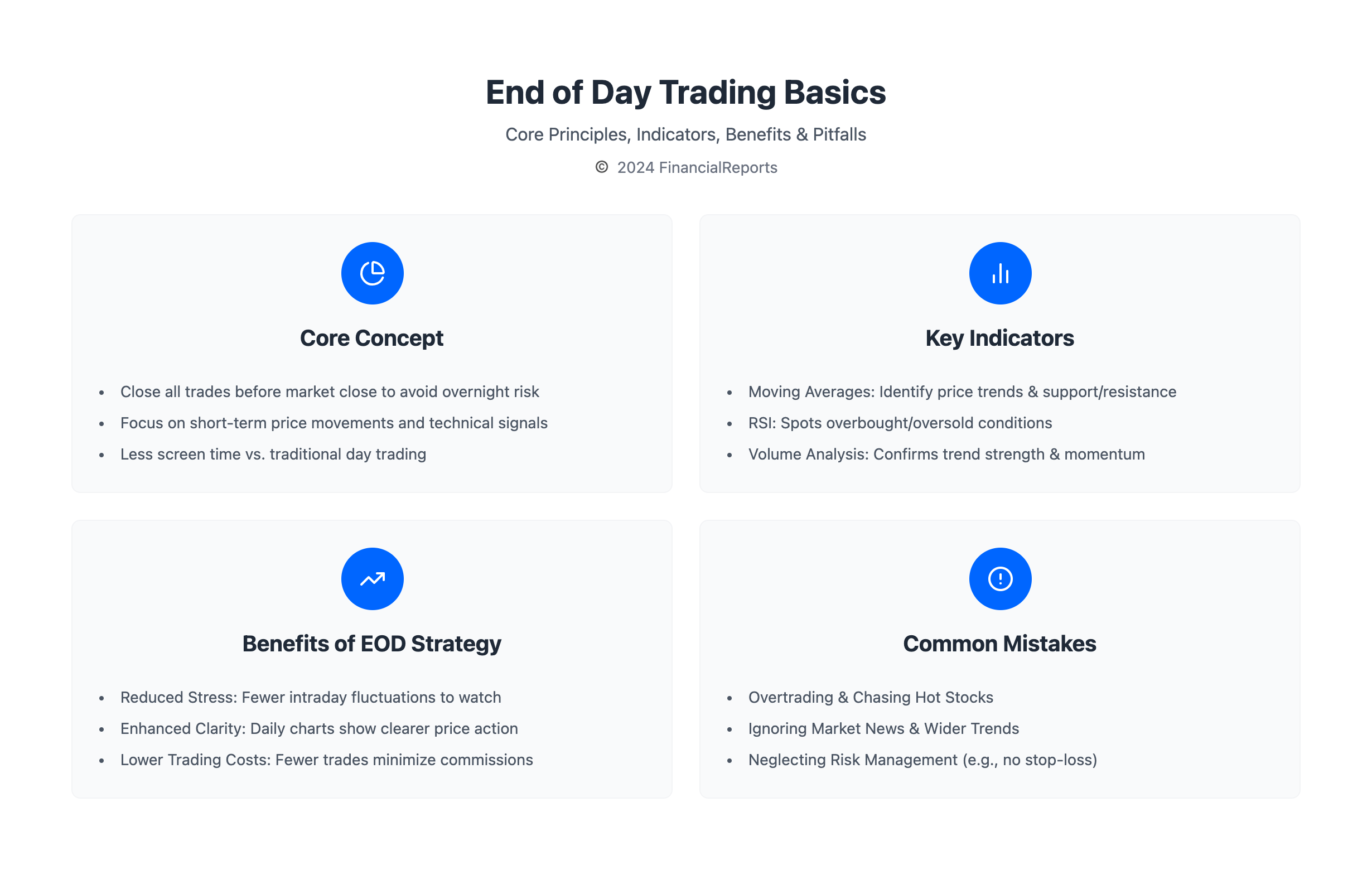
End of day trading means closing all trades before the market closes. It's different from day trading, which involves many trades in one day. Day trading aims to make money from small price changes by buying and selling quickly.
End of day traders focus on short-term price changes. They try to make money from expected market moves. This is unlike long-term investing, where you hold assets for a long time to grow your money. Key parts of end of day trading include:
- Less need for constant market monitoring, reducing trading costs due to fewer transactions
- Use of stop-loss orders to automatically exit trades if they move against the trader beyond a certain point
- Importance of psychological considerations, such as managing emotions like fear and greed
Learning about end of day trading helps traders make good strategies. Whether you trade during the day or at the end, staying informed and adapting to market changes is key.
Benefits of an End of Day Trading Strategy
Using an end of day trading strategy can greatly reduce stress for traders. It allows them to spend only about an hour a day on trading. This leads to a better balance between work and personal life.
Traders often find more reliable trade setups with this strategy. This is because the daily chart shows clearer price action signals.
Some key advantages of an end of day trading strategy include:
- Lower stress levels: End of day trading eliminates the need for constant monitoring, resulting in reduced mental fatigue and stress.
- Increased profit: End of day trading can lead to capturing larger market moves, increasing profit.
- Lower transaction costs: Costs like commissions and spreads are often lower for end of day trading.
Traders can also do end of day trading while working a day job. This makes it more financially feasible. Backtesting strategies is also more affordable for end of day traders.
With an end of day trading strategy, traders can enjoy less stress and higher profits. It's a great option for those aiming to succeed in the markets.
| Trading Style | Stress Levels | Profit |
|---|---|---|
| End of Day Trading | Lower | Higher |
| Intraday Trading | Higher | Lower |
Key Indicators for End of Day Trading Success
End of day trades need a deep understanding of technical analysis. This involves using indicators to spot trends and patterns. Key indicators include moving averages, RSI, and volume analysis.
These tools help identify trends, confirm price actions, and create trading signals. For instance, moving averages serve as dynamic support and resistance. RSI shows when the market is overbought or oversold. Volume analysis gives insight into market sentiment, helping traders make better predictions.
Using these indicators has several benefits:
- They improve accuracy in spotting trends and patterns.
- They enhance the ability to confirm price actions and create trading signals.
- They increase insight into market sentiment and volatility.
By combining these indicators and using technical analysis, traders can make better decisions. This increases their chances of success in end of day trades. Remember, technical analysis is key in end of day trading, and the right indicators can be a game-changer.
| Indicator | Description |
|---|---|
| Moving Averages | Used to identify trends and act as dynamic support and resistance levels |
| RSI | Used to identify overbought and oversold market conditions |
| Volume Analysis | Used to provide insight into market sentiment and volatility |
Implementing a Profitable End of Day Trading Strategy
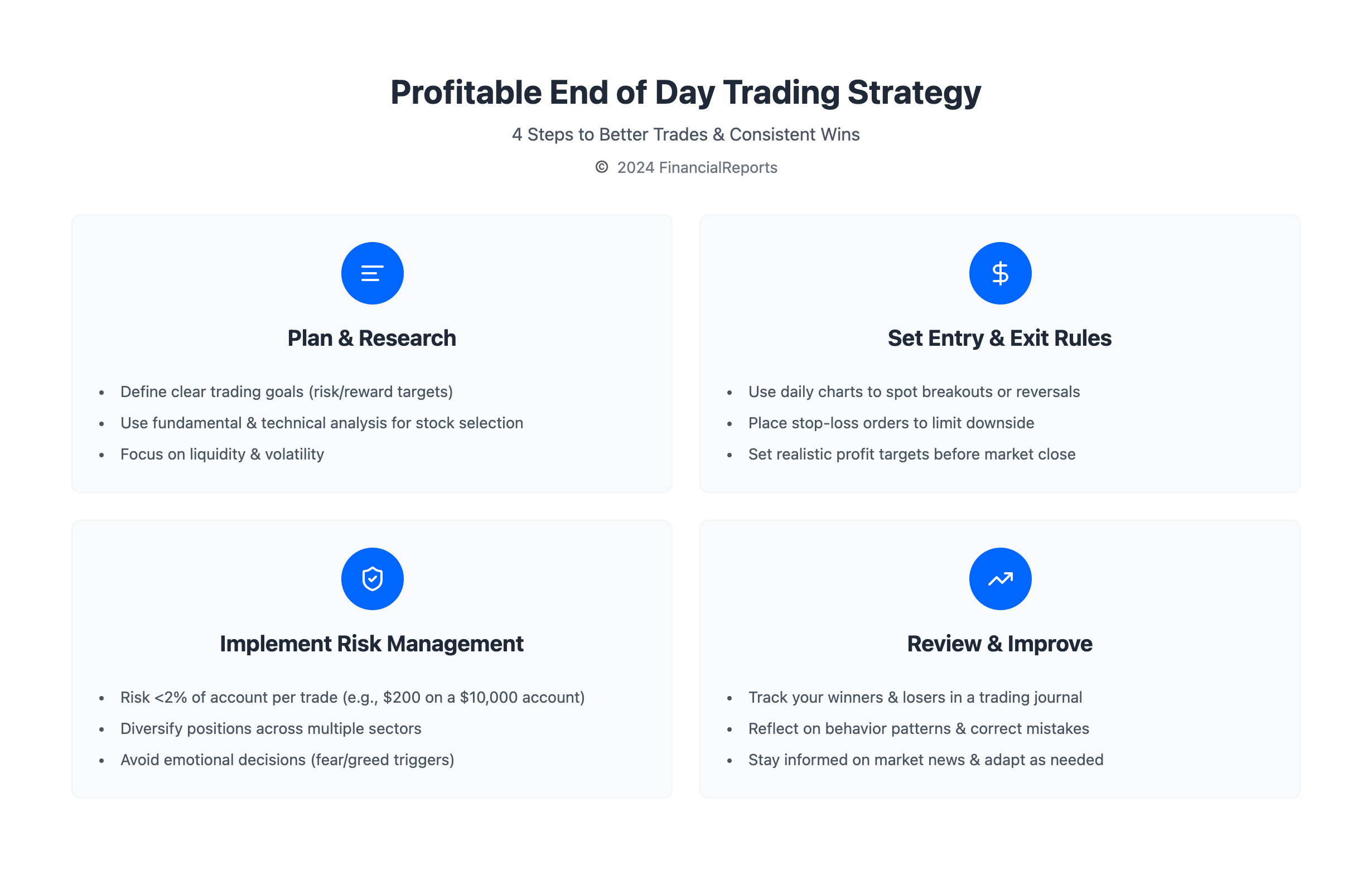
To succeed in end of day trading, having a solid plan is key. A good end of day trading strategy helps traders make smart choices and cut losses. Experts say a solid plan is vital for success in this field.
Risk management is a big part of any trading plan, including risk management in end of day trading. It means setting stop-loss orders, figuring out position sizes, and watching market trends. These steps help traders succeed and keep their risk low.
Some important things to think about when making a profitable end of day trading strategy include:
- Setting clear trading goals and objectives
- Developing a detailed risk management plan
- Keeping up with market news and trends
- Always checking and improving the trading strategy
By following these tips and using the right SEO keywords, traders can make a winning end of day trading strategy. This strategy will help them reach their trading goals.
| Trading Strategy | Risk Management | Market Trends |
|---|---|---|
| End of Day Trading | Stop-Loss Orders | Technical Analysis |
| Swing Trading | Position Sizing | Fundamental Analysis |
Tools and Platforms for End of Day Trading
For end of day trades, the right tools and platforms are key. Trading software is essential, as it helps analyze and execute trades. Many brokers now offer zero commissions, making it cheaper for traders to get involved.
When picking trading software, look for important features. These include automated analysis, stop-loss options, and live data feeds. The software should also support different types of assets, like stocks and forex, to be flexible in changing markets.
Popular platforms for end of day trades include Interactive Brokers, eToro, and Charles Schwab. These offer tools like commission-free trading and demo accounts. Using the right software and platforms helps traders make better decisions and boosts their chances of success.
Key features to consider when choosing trading software for end of day trades include:
- Automated analysis and trading
- Stop-loss features
- Live data feeds
- Support for various asset classes
- Commission-free trading
- Demo trading opportunities
Common Mistakes to Avoid in End of Day Trading
When you start trading at the end of the day, knowing common mistakes is key. Overtrading and ignoring market news are two big ones. Overtrading can cause big losses because it leads to quick, risky decisions. Not keeping up with market news can also hurt your trading, as knowing what's happening is vital.
Some stats show why these mistakes are so bad. For instance, 85% of day traders fail because they trade too much. Also, traders who use stop-loss levels lose 50% less. Plus, using just one or two strategies can lead to 100 to 150 wins in 200 days. This shows the value of choosing quality over quantity.
To steer clear of these errors, traders should:
- Make a strong trading plan
- Set clear stop-loss levels
- Keep up with market news and trends
- Avoid overtrading and aim for quality trades
| Mistake | Consequence | Prevention |
|---|---|---|
| Overtrading | Excessive losses | Set clear stop-loss levels, focus on quality trades |
| Ignoring market news | Poor trading decisions | Stay informed about market trends and developments |
By knowing these common mistakes and how to avoid them, traders can boost their success with end of day trading.
Psychological Aspects of Trading
Trading is more than just numbers and plans; it's about psychological aspects. In end of day trades, knowing your emotions and biases is key. Experts say that psychology is 80% of a trader's success or failure.
To beat fear and greed, traders need a plan. They should ignore market noise and make decisions based on facts, not feelings. Common feelings include:
- Fear of missing out (FOMO)
- Jealousy
- Ego-driven behaviors
- Hope and regret
Strategies to control emotions include:
- Creating a trading strategy
- Applying risk management techniques
- Staying informed about market trends and industry analysis
Understanding emotions helps traders make smarter choices. Being around positive people and like-minded traders is also important. It shows how support can keep focus and discipline.
| Emotion | Description |
|---|---|
| Fear | Causes traders to exit trades too early or avoid risky positions |
| Greed | Leads traders to stray from their plans, a common reason for failure |
Analyzing Market Trends for End of Day Trading
Developing a successful end of day trading strategy starts with analyzing market trends. This means looking at past data to spot patterns and trends. By understanding these, traders can make better choices and boost their success.
There are different kinds of market trends, like upward, downward, and sideways trends. Each trend has its own signs and meanings for trading. For instance, an upward trend might show strong economy, while a downward trend might show weakness. By studying these trends, traders can find chances and risks, and tweak their end of day trading strategy as needed.
Some key benefits of looking at market trends include:
- Spotting good times to buy and sell
- Lowering risk
- Improving decision-making
- Bettering portfolio performance
Yet, it's also key to know the limits and downsides of trend analysis. For example, how accurate it is depends on the data quality. Also, past trends don't always predict the future.
| Trend Type | Characteristics | Implications for Trading |
|---|---|---|
| Upward Trend | Sustained period of rising prices | Indicates economic strength, possible buying chance |
| Downward Trend | Sustained period of falling prices | Shows economic weakness, possible selling chance |
| Sideways Trend | Period of relatively stable prices | May show market uncertainty, chance for breakout or reversal |
Example of a Successful End of Day Trade
A successful end of day trade comes from understanding market trends. Traders make smart choices based on the day before's actions and technical signs. They use end of day data to spot important levels and trends. Then, they plan trades with clear goals and limits.
When trading at the end of the day, look at trendlines, moving averages, and key levels. These can lead to trades with a better chance of success. Using set-and-forget strategies can also help traders aim for long-term gains.
Step-by-Step Breakdown
To do well in end of day trading, follow these steps:
- Analyze market trends and find key levels and signals.
- Plan trades with clear entry, stop loss, and profit goals.
- Confirm trades with technical tools like moving averages and trendlines.
- Keep an eye on the trade and make changes to boost profits and cut losses.
Lessons Learned from the Trade
Traders can boost their success by studying market trends and making smart choices. It's key to stay focused, patient, and well-informed for long-term success. End of day trades offer benefits like better decision-making, less stress, and lower fees.
Resources for Continuous Learning
As the saying goes, "learning never stops." This is very true in the fast-paced world of end of day trading. It's key to keep up with market trends and best practices for success. Here, we'll look at great resources to help you keep learning.
Books and E-Courses
Starting with solid educational materials is a good idea. Authors like John F. Carter and Markus Heitkoetter have written great books on trading. Also, Tradepro Academy and Online Trading Academy offer detailed e-courses for traders at all levels.
Online Trading Communities and Forums
Connecting with other traders is very helpful. Sites like r/Daytrading on Reddit and forums like EliteTrader are full of useful info. They offer insights, strategies, and live market talks from seasoned traders. Being part of these groups can help you stay updated, improve your trading skills, and learn from others' experiences.
Being a skilled end of day trader requires a commitment to keep learning. By using the resources mentioned here, you can stay ahead, adapt to market changes, and increase your chances of success in trading.
FAQ
What is end of day trading?
End of day trading means closing all trades before the market closes. It's different from day trading, which also closes trades before the market closes but can have more trades.
What are the benefits of an end of day trading strategy?
End of day trading is less stressful than day trading. Traders close all positions before the market closes, avoiding overnight risks. It also means fewer trades, which reduces the need for constant monitoring.
What are the key indicators for end of day trading success?
Technical analysis is key for end of day trading success. Important indicators include moving averages, RSI (Relative Strength Index), and volume analysis. These help identify trends and make informed decisions.
What is the importance of having a solid trading plan for end of day trading?
A solid trading plan and effective risk management are vital for end of day trading success. Setting up a plan and managing risk are essential for success.
What are the recommended tools and platforms for end of day trading?
The right tools and platforms are essential for end of day trading success. Recommended software, charting tools, and resources should be used to enhance performance.
What are the common mistakes to avoid in end of day trading?
Common mistakes include overtrading and ignoring market news. Avoiding these and improving performance is key to success.
How important are psychological aspects in end of day trading?
Trading involves more than just technical analysis and strategy. Psychological aspects like discipline, patience, and overcoming fear and greed are also critical for success.
How can analyzing market trends help in end of day trading?
Analyzing market trends is vital for informed trading decisions. Historical data and technical analysis help identify trends, improving performance.
Can you provide an example of a successful end of day trade?
Yes, we can share a successful end of day trade example. It includes a step-by-step breakdown and lessons learned.
What resources are available for continuous learning in end of day trading?
Continuous learning is key for staying updated and improving performance. Resources include books, e-courses, online communities, and forums.