Understanding What Is a Margin in Finance
To understand margin in finance, it's key to know it's the collateral needed for a loan when investing in securities. Knowing this is important for investors. It lets them use their investments to make more money. Margin loans let investors borrow from a brokerage firm, using their securities as collateral.
In finance, margin is vital for trading. It lets investors borrow up to 50% of the money needed to buy a security. Margin is the difference between an investment's value and a loan. It lets investors use borrowed money to trade assets.
Key Takeaways
- Margin definition in finance refers to the collateral required to secure a loan when investing in securities.
- Understanding what is a margin is key for investors to grow their investments and increase returns.
- Margin loans let investors borrow money from a brokerage firm, using securities as collateral.
- Margin is the difference between an investment's value and a loan, enabling investors to trade assets with borrowed capital.
- Knowing margin is essential for investors to understand margin trading and avoid risks.
- Margin borrowing can lead to big profits if stocks rise, but can also cause huge losses if the market falls.
Definition of Margin in Finance
Margin in finance is the money needed to start a trade in a trading account. It's key in trading because it lets investors use borrowed money. This can make their gains bigger or losses worse.
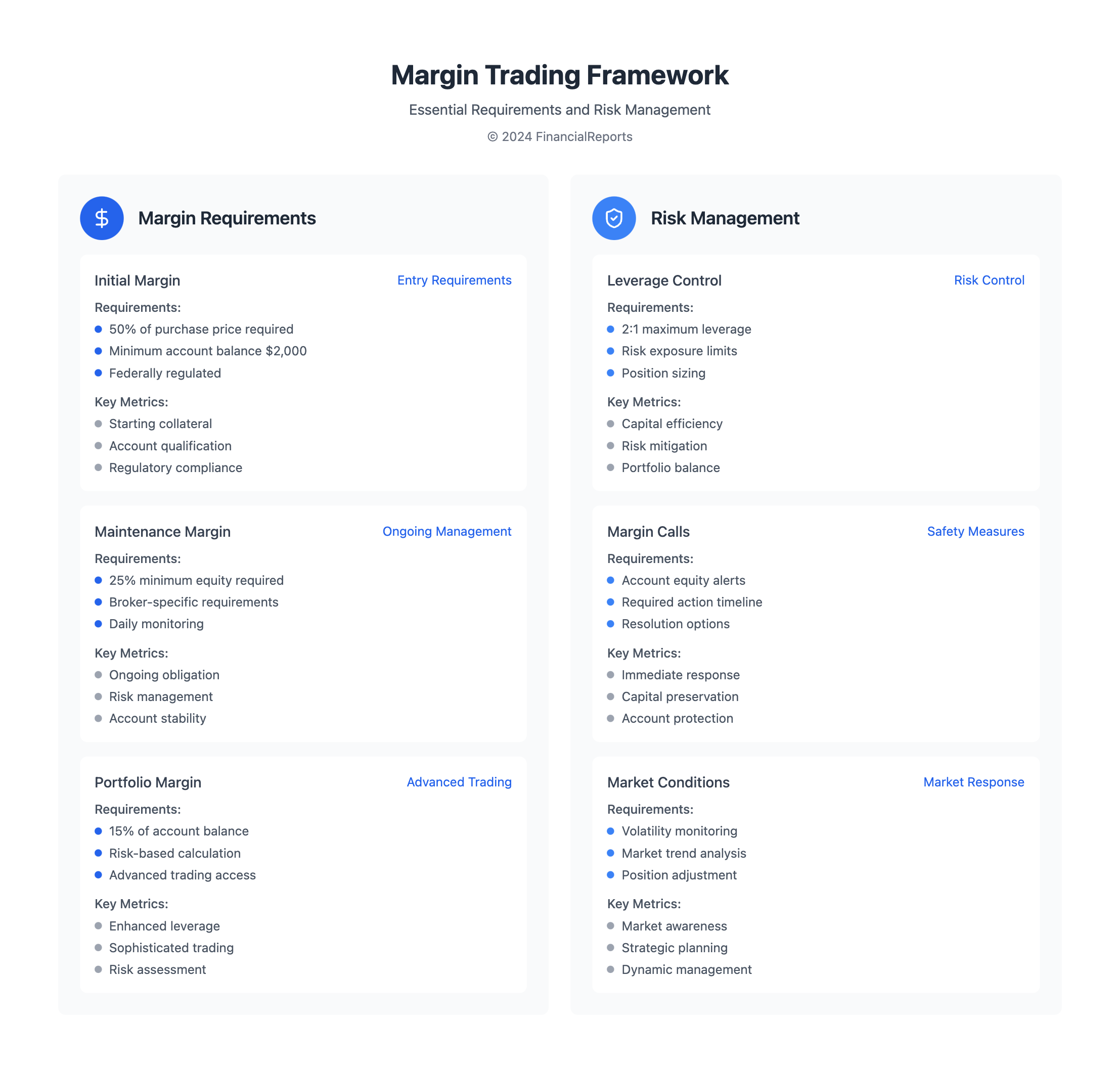
Only certain securities can be bought on margin. The Federal Reserve Board decides which ones. To start a margin account, you need at least $2,000. You can borrow up to 50% of a stock's price at first.
This means the value of your investment must stay above a certain level. This is to protect brokers from big losses in the market.
Types of Margins
There are different kinds of margins. The initial margin is the money needed to start a trade. The maintenance margin is the minimum to keep a trade going.
Regulators or brokers might set the maintenance margin higher for risky investments. This is to keep investors safe.
Importance of Margin
Margin is important because it lets investors trade more. This can lead to bigger gains. But, it also brings risks like margin calls and forced sales.
Understanding margin helps investors make smart choices. It lets them manage their risks better.
How Margins Work in Trading
Understanding what is margin requirement is key in trading on margin. Marginable securities act as collateral for a loan from a brokerage firm. This allows investors to use more money, potentially leading to higher returns. But, it also means higher risks due to the unpredictable nature of the margin economy.
With a margin account, investors can borrow to buy securities, using those securities as collateral. The maintenance margin requirement is the minimum equity needed to avoid a margin call. If the balance drops below this, investors must add more funds or sell securities to meet the requirement.
Here are some key points to consider when trading on margin:
- The initial margin requirement is the amount of money needed to start a position
- The maintenance margin requirement is the minimum equity needed in the account
- Margin calls happen if the account balance falls below the maintenance margin requirement
- Investors can lose more than their initial investment if the market goes against them
It's vital to grasp the risks and rewards of margin trading before opening a margin account. This way, investors can make smart choices and possibly increase their earnings. They also need to be aware of the risks and take steps to reduce them.
| Margin Type | Initial Margin Requirement | Maintenance Margin Requirement |
|---|---|---|
| Reg T Margin | 50% of purchase price | 25% of account balance |
| Portfolio Margin | 15% of account balance | 10% of account balance |
| Futures Margin | 3-15% of contract value | 2-10% of contract value |
Calculating Margin
To grasp the margin requirement in finance, it's key to know how to calculate it. The margin finance define is vital in trading. It's the amount needed to start a trade, shown as a percentage of the total trade value. For example, a 50% margin means you need $5,000 to trade $10,000 worth of stocks.
The margin formula is simple: Margin = (Total Trade Value - Initial Cash Deposit) / Total Trade Value. Let's say you aim to buy $10,000 worth of stocks with a 50% margin. You'd need $5,000 as the initial cash deposit. This means you're using $5,000 of your money and borrowing $5,000 from the broker.
Examples of Margin Calculation
Here are a few examples to show how margin calculation works:
- To buy $10,000 worth of stocks with a 50% margin, you'd need $5,000 as the initial cash deposit. The margin would be $5,000.
- To buy $5,000 worth of stocks with a 25% margin, you'd need $1,250 as the initial cash deposit. The margin would be $3,750.
Understanding margin in finance is key for smart investment choices. The margin requirement changes based on the broker, trade type, and market conditions. Knowing how to calculate margin helps avoid margin calls and maximizes trade benefits.
| Trade Value | Margin Requirement | Initial Cash Deposit | Margin |
|---|---|---|---|
| $10,000 | 50% | $5,000 | $5,000 |
| $5,000 | 25% | $1,250 | $3,750 |
Different Types of Margin
It's key for investors and financial pros to know about margin types. Margin equity is vital in figuring out how many securities you can buy. Knowing about initial, variation, and equity margin is a must.
Margin often means the money needed to start a trade. For marginable securities, the initial margin is the starting cash. The variation margin is the cash needed to cover losses in a day.
Key Types of Margin
Here are the main margin types:
- Initial Margin: The cash needed to start a trade.
- Variation Margin: The cash to cover losses in a day.
- Equity Margin: The cash left to cover losses.
In short, knowing about margin types is key for smart investing. By understanding margin equity and its types, investors can handle marginable securities better.
Margin Trading: Benefits and Risks
Margin trading lets you borrow money to invest, which can increase your gains and losses. The margin definition in finance is the money needed to start a trade. The margin meaning in trading means using borrowed money to buy more. In finance, margin finance define the rules for borrowing and paying back money.
Advantages of Margin Trading
Margin trading offers more buying power, the chance for bigger returns, and flexible investment plans. But, it's key to know the margin definition in finance and the risks involved.
Risks Associated with Margin
The downsides of margin trading include bigger losses, margin calls, and forced sales. It's important to manage risk and keep enough money in your account to avoid margin calls. Here's a table showing the main risks and benefits of margin trading:
| Risk/Benefit | Description |
|---|---|
| Amplified Gains | Potential for higher returns due to increased purchasing power |
| Amplified Losses | Potential for significant losses due to market downturns |
| Margin Calls | Requirement to deposit additional funds or sell securities to meet minimum equity requirements |
To lessen risks, understanding the margin meaning and margin finance define in trading is vital. By managing risk and keeping enough equity, investors can handle the benefits and risks of margin trading well.
Margin in Business and Accounting
In business and accounting, margin is the difference between what a company earns and what it costs to make or sell something. It shows how well a company can keep profits up. Knowing about different margins, like gross, operating, and net profit margins, helps understand a company's financial health.
A strong margin is key for a business to stay afloat over time. It's important to look at these margins to see if a company can keep making money.
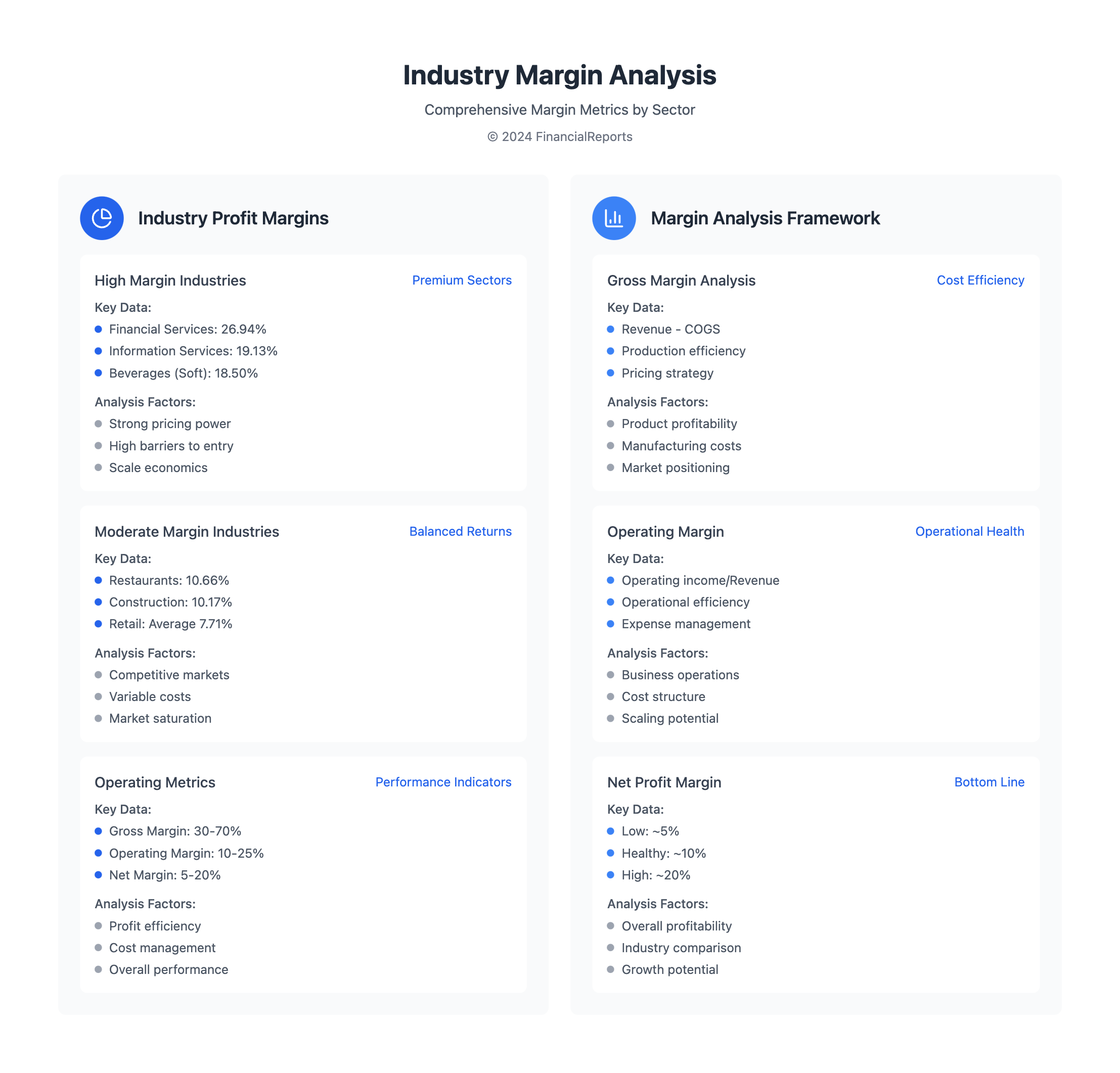
The margin concept is key to checking a company's financial health. By looking at gross, operating, and net profit margins, businesses can see if they can keep making profits. For example, the average net profit margin is 7.71%. Some industries, like financial services, have much higher margins, up to 26.94%.
Here are some examples of average net profit margins by industry:
- Beverage (soft): 18.50%
- Drugs (pharmaceutical): 18.38%
- Information services: 19.13%
Gross Margin
Gross margin is the difference between what a company earns and what it costs to make or sell something. It shows if a company can keep making money. For example, the Construction industry has a 19% gross profit margin, while Restaurants have a 67% margin.
Operating Margin
Operating margin is the difference between what a company earns and its total expenses, minus interest and taxes. It shows how well a company can make money from its operations. For instance, Amazon's operating profit margin was 5.29% as of March 2020.
Net Profit Margin
Net profit margin is the difference between what a company earns and its total expenses, including interest and taxes. It's the best measure of a company's profitability. A good rule of thumb is: a low margin is about 5%, a healthy one is around 10%, and a high one is about 20%.
How Margin Affects Investment Decisions
Understanding what is a margin and its requirements is key when making investment choices. Margin equity is vital in deciding how much risk and leverage you can take on. Brokers usually set a margin requirement, often around 50% of the security's price.
Investors face both benefits and risks with margin trading. It can increase your buying power but also raises the chance of big losses. Keeping enough margin equity, more than the minimum, helps avoid these risks and protects your investments.
Leverage and Margin
Margin can make your profits and losses bigger. It's important to think about your investment strategy and how much risk you can handle. Knowing the margin requirement and keeping a good margin equity level helps manage your risks and returns.
Balancing Risk and Reward
To balance risk and reward, consider these strategies:
- Maintain a diversified portfolio to minimize risk
- Set clear investment goals and risk tolerance
- Monitor and adjust margin levels regularly
- Understand the terms and conditions of margin agreements
By carefully considering these factors and understanding margin's role, investors can make smart choices. These choices should match their financial goals and risk tolerance.
| Margin Requirement | Margin Equity | Potential Leverage |
|---|---|---|
| 50% | $10,000 | 2:1 |
| 30% | $5,000 | 3:1 |
Regulatory Framework Around Margin
The rules around margin are complex. They involve the Securities and Exchange Commission (SEC) and the Financial Industry Regulatory Authority (FINRA). To define margin in finance, knowing the rules is key. The margin definition in finance is about the equity needed for a security in an account.
In the U.S., the SEC and FINRA are key in setting margin rules. For example, FINRA's Regulatory Notice 24-13 from 10/29/2024 talks about day trading rules. It stresses the need for brokerages to manage marginable securities well.
Some important rules for margin include:
- Regulation T, which requires 50% of the security's purchase price as initial margin
- Regulatory Notice 21-15, which reminds about options account rules and margin
- Regulatory Notice 18-39, which talks about sudden market closures
International rules also shape margin requirements. For example, the Basel Committee on Banking Supervision (BCBS) sets guidelines for non-centrally cleared derivatives. These rules help keep the financial system stable by ensuring everyone knows and follows the margin definition in finance.
| Regulation | Description |
|---|---|
| Regulation T | Sets the initial margin requirement at 50% of the purchase price of a security |
| Regulatory Notice 21-15 | Reminds members about options account approval, supervision, and margin requirements |
| Regulatory Notice 18-39 | Mentions the unexpected close of securities markets |
Strategies for Margin Management
Effective margin management is key for traders to boost their returns and cut down risks. It's vital to grasp what margin means and how to define it in trading. Margin equity is important as it shows how much money is ready for trading.
Traders can use several ways to manage their margins well. They can limit risk, keep collateral above the minimum, and spread out their assets. This helps reduce losses and increase gains. It's also wise to set stop-loss targets and pay interest on time to avoid margin calls.
Some key strategies for margin management include:
- Monitoring margin requirements and adjusting positions as needed
- Keeping a cash reserve to cover margin calls
- Diversifying trading portfolios to reduce risk
By using these strategies, traders can handle their margins better and reach their goals. Knowing about margin equity and defining financial margin are key. They help traders make smart choices about their trading.
| Strategy | Description |
|---|---|
| Limiting Risk Exposure | Reducing the amount of capital at risk to minimize possible losses |
| Maintaining Collateral | Ensuring enough funds are available to meet margin needs |
| Diversifying Marginable Assets | Spreading investments across different asset classes to reduce risk |
Common Misconceptions About Margins
Understanding the def of margin is key in finance. It affects how we invest and manage risks. Yet, many think margins always increase profits. But, the truth is more complex, influenced by costs and the securities used.
To define margin right, we must know the different types. This includes initial and maintenance margins. Misconceptions include:
- Thinking higher margins mean more profits, ignoring other factors.
- Believing margin trading is safe, when it can also increase losses.
- Not seeing the need to check and adjust margins often to stay financially stable.
Clearing up these myths needs a solid grasp of finance and objective data analysis. By understanding margin's subtleties, investors and experts can make better choices. This leads to better financial results.
| Misconception | Reality |
|---|---|
| Higher margins always mean higher profits. | Profits are influenced by multiple factors, including operating expenses and the type of securities involved. |
| Margin trading is risk-free. | Margin trading can amplify both gains and losses, requiring careful risk management. |
Conclusion: The Role of Margin in Finance
As we wrap up our look at margins in finance, it's clear margins are key. They help figure out how profitable financial markets are. Whether you're investing, trading, or running a business, knowing about margins is vital. It helps you make smart choices in the complex world of finance.
We've talked about different types of margins, like initial and variation margins. Each has its own role in the financial world. We've also seen how margins affect investment strategies. It's all about finding the right balance between risk and reward when using margin trading.
Regulations around margins are changing too. Bodies like the Federal Reserve and FINRA make rules to keep markets stable and protect investors. These rules are important for everyone involved in finance.
Looking ahead, margins will likely change with new tech in finance. Automated systems and data analytics will become more important. They'll help manage margins better and reduce risks. As finance keeps changing, knowing how to handle margins will stay a key skill for investors and business leaders.
FAQ
What is a margin in finance?
In finance, a margin is the money needed to start trading. It acts as a safety net for traders. This money helps protect against losses.
What are the different types of margins?
There are several types of margins. Initial margin is the money needed to start trading. Variation margin covers daily changes in profit or loss. Equity margin is the trader's own money in the account.
How do margins work in trading?
Margin trading lets investors use borrowed money to buy securities. This increases their trading power. But, they must keep enough money in their account to avoid losing everything.
How is margin calculated?
To calculate margin, you divide the total value of the trade by the margin needed. For example, if you need a 50% margin on a $10,000 trade, you need $5,000.
What are the benefits and risks of margin trading?
Margin trading can make profits bigger, but it's risky. The good side is more buying power and bigger returns. The bad side is higher interest costs, margin calls, and the chance of losing money when markets drop.
How do margins apply in business and accounting?
In business, margins show how profitable a company is. They include gross margin, operating margin, and net profit margin. These numbers help investors and analysts see how well a company is doing.
How do regulators govern margin requirements?
Rules like the Federal Reserve's Regulation T control margin trading. These rules set minimum margin requirements. They help keep investors safe by limiting how much risk they can take.
What are some effective strategies for managing margins?
Good margin management includes setting stop-loss targets and paying off interest quickly. It's also smart to diversify and watch the market closely. A balanced approach between risk and reward is key to success.