Understanding High Margin Meaning | Boost Profits
Profit margin shows how much money a company makes from its sales. It's the percentage of sales revenue left as profit after costs are subtracted. Knowing about high margin meaning is key for businesses wanting to increase profits and stay financially healthy.
High margin meaning is about the profit a company keeps from its sales. It's a vital part of understanding business margins. This concept is important for financial analysis, helping investors, lenders, and businesses see how well a company is doing.
An NYU report found an average net profit margin of 7.71% across various industries. This shows how understanding high margin meaning can help businesses find ways to improve. It can also guide them in setting better prices to increase profits.
Key Takeaways
- High margin meaning refers to the percentage of sales revenue retained as profit after deducting all costs.
- Business margins definition is vital for financial analysis and evaluating a company's performance and future.
- Knowing about high margin meaning helps businesses spot areas to get better and set better prices.
- Profit margins vary by industry, with different sectors showing different average net profit margins.
- Improving profit margins can be done by cutting costs, removing underperforming products, and building brand loyalty.
- The average net profit margin across different industries is 7.71%, with 5% seen as low, 10% as healthy, and 20% as high.
What is High Margin in Business?
Knowing about high margin is key for businesses to make more money and stay financially strong. Margin meaning in business is the gap between what a company makes and what it spends on products or services. What does margin mean in business is a big question for entrepreneurs and finance experts. It affects how profitable a company can be and how much it can grow.
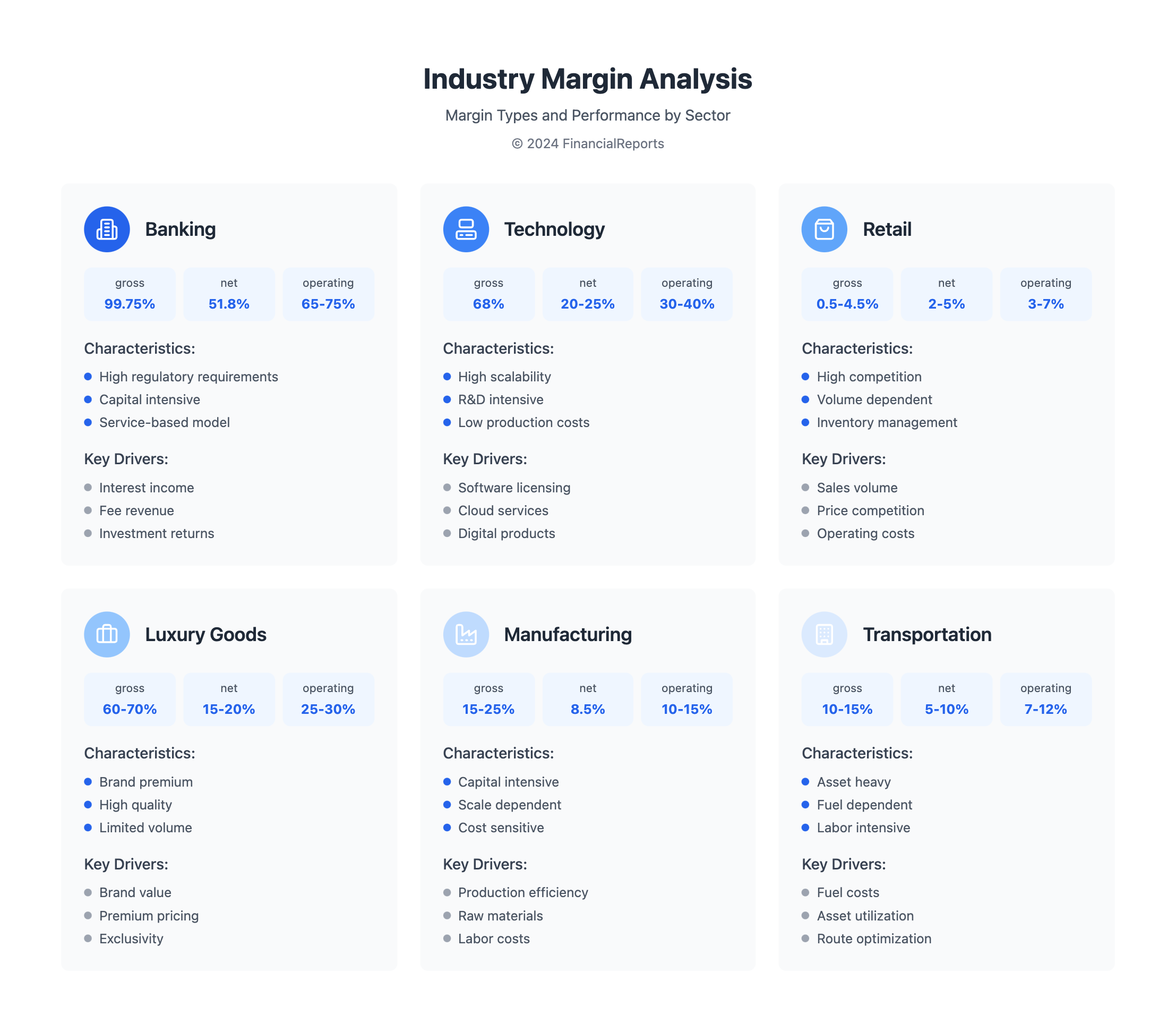
A high margin means a company makes a lot more than it spends. For example, tech giants like Microsoft often see high profit margins. On the other hand, stores like Walmart and Target have lower margins. This shows why understanding margin meaning in business and finding ways to boost it is so important.
Some fields, like tech and pharma, usually have high margins. These areas spend a lot on research but make a lot of money from their products. For instance, Microsoft's gross margin was about 68% in 2022. This shows how critical what does margin mean in business is for a company's success.
| Industry | Gross Profit Margin |
|---|---|
| Regional Banks | 99.75% |
| Automotive Businesses | 9.04% |
| Technology Companies (e.g., Microsoft) | 68% |
By grasping the idea of high margin and its role in business, companies can find ways to make more money. This helps them stay financially stable for the long run.
Types of Profit Margins Explained
It's key for businesses to know about different profit margins. This helps them check their financial health and make smart choices. There are four main types: gross, operating, pretax, and net profit margins. Each one gives insights into how well a company does financially.
The gross profit margin shows how much profit a company keeps after making products. It's found by subtracting the cost of goods sold from net sales and then dividing by net sales. This margin is vital for setting prices and controlling costs.
Gross Profit Margin
Gross profit margin is very important for businesses. It shows how well they manage costs and stay profitable. A higher margin means a company keeps more of its revenue as profit.
Operating Profit Margin
Operating profit margin looks at how much revenue is left after all daily business costs are paid. It's found by dividing operating income by revenue. This margin helps businesses see how efficient they are and how well they manage expenses.
Net Profit Margin
Net profit margin shows how well a company turns income into profit. It includes all expenses, taxes, debts, and extra income. This margin is key for checking a company's overall financial health and success.
How to Calculate High Margin
To figure out high margin, knowing what business margins are is key. The gross profit margin formula is a common tool. It's calculated as [(Net sales – COGS) ÷ Net sales] × 100. This shows how well a company can keep prices up and control costs.
Let's look at an example. A clothing store sells $20 T-shirts for $10 each. This means they have a 50% gross profit margin. You get this by subtracting the cost of making the T-shirts from the sales, then dividing by the sales. Lastly, multiply by 100 to get a percentage.
Formula for High Margin Calculation
Calculating high margin involves knowing different profit margins. These include gross, operating, and net profit margins. Each one gives insight into a company's financial health. This helps in making smart business choices.
Step-by-Step Calculation Example
Let's say a company makes $600,000 in revenue and has $260,000 in deductions. Its net profit margin is 56%. Another company with $12,000 in operating income and $50,000 in revenue has a 24% operating profit margin. These numbers are important for understanding margins and improving profits.
Factors Influencing High Margins
High margin meaning is key for businesses to make money. Several things affect high margins, like pricing, cost control, and demand. A smart pricing plan can greatly boost margins by affecting how much money comes in and how much goes out.
Cost control is also vital for keeping margins high. Companies can control costs by better vendor relationships, optimizing sales, and making operations smoother. Market demand also matters a lot. Knowing what customers want and market trends helps businesses adjust their pricing and cost control to get high margins.
Some sectors, like retail and transport, have lots of sales but small profits. On the other hand, luxury goods might sell less but make more profit per item. To get high margins, businesses need to balance pricing, cost control, and demand. This way, they can make more money and stay ahead in their markets.
| Industry | Typical Profit Margin |
|---|---|
| Retail | 2-5% |
| Luxury Goods | 15-20% |
| Transportation | 5-10% |
By knowing what affects high margins and using good strategies, businesses can grow their profits. Whether it's through smart pricing, controlling costs, or understanding demand, high margins are critical for success. They help businesses stay competitive and do well in their markets.
Benefits of High Margin Products
Knowing what margin means in business is key for making more money. High margin products help companies make more profit, stay flexible financially, and grow. For example, software or gaming companies can make a lot of money by selling many copies with little extra cost.
High margin products give businesses the money to grow and expand. Companies like SaaStr, Inc. have margins of 18-20% and are making more money each year. This means they can invest in new ideas and stay ahead in the market.
Increased Profitability
High margin products help companies make more money, which is important for growing. By focusing on these products, businesses can earn more and improve their financial health. For instance, internet/software companies can make over $1 million per employee, making them very profitable.
Financial Flexibility
High margin products also give businesses the freedom to invest in new things and handle unexpected costs. For example, a company might lose $400,000 on an event, but their high margins help them cover it. This flexibility is key for staying competitive and adapting to market changes.
| Company | Blended Margins | Bookings |
|---|---|---|
| SaaStr, Inc. | 18-20% | $10m-$11m (2017), $20m (2018) |
In summary, high margin products are vital for businesses to grow, stay flexible, and innovate. By understanding margins and focusing on high margin products, companies can achieve success and stay competitive.
High Margin vs. Low Margin Products
Businesses often face a big decision: to focus on high margin or low margin products. This choice greatly affects a company's profits and growth. High margin products are pricier but cost less to make, leading to more profit. Low margin products are cheaper but cost more to produce, making less profit.
Companies like transportation firms deal with changing fuel costs and keeping drivers happy. This can lower their profits. Walmart, though, sells lots of products at low prices, attracting budget-conscious shoppers and benefiting from a big customer base.
Key Differences
High margin and low margin products differ in price, volume, and business strategy. High margin companies sell fewer items but at a higher value. Low margin companies sell more items to make a profit. The choice depends on the product and target market.
Pros and Cons of Each
High margin products are more profitable but sell less. Low margin products attract more customers but struggle to profit. Here's a table comparing the two:
| Product Type | Pros | Cons |
|---|---|---|
| High Margin | Higher profitability, financial flexibility | Limited sales volume, higher product price |
| Low Margin | Attracts larger customer base, lower product price | Lower profitability, higher sales volume required |
Knowing about margin types is key for businesses to choose wisely. By weighing the pros and cons, companies can boost their profits and growth in a tough market.
Strategies to Increase Margins
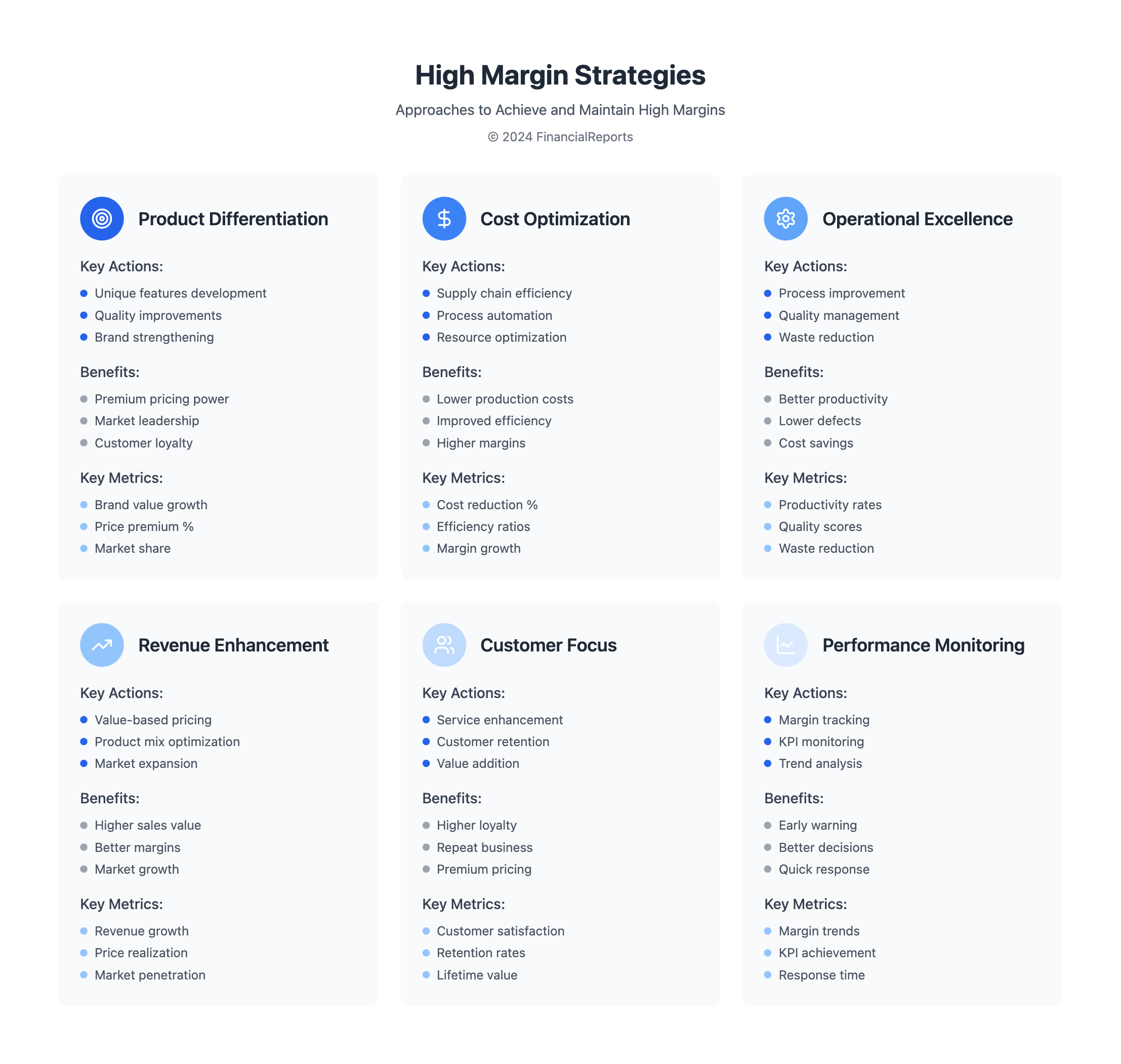
To boost business margins, companies can try different strategies. They can increase revenue, cut costs, or do both. One way is to make their products stand out, so they can charge more and make more money.
Another method is to cut costs without lowering quality. This means making supply chains better, getting better deals from suppliers, and improving how things are made. Also, adding extra services can make customers happier and more loyal, giving a business an edge.
Some key strategies to increase margins include:
- Product differentiation to command higher prices
- Cost reduction techniques to optimize operations
- Offering value-added services to enhance customer loyalty and margins
By understanding what business margins are and using these strategies, companies can make more money. They can also stay ahead in their markets.
| Industry | Average Net Profit Margin |
|---|---|
| Industrial banks | 51.8% |
| Manufacturing | 8.5% |
| Brick-and-mortar retailers | .5% - 4.5% |
Analyzing Your Margins
Regularly checking your margins is key to keeping your finances healthy. It helps spot where you can get better. Knowing what margin meaning in business is helps you make smart choices. Profit margins show how well you're doing now compared to before and others.
Businesses use tools and software to check margins. They look at gross profit margin, operating profit margin, and net profit margin. These are found using formulas like Gross Margin = ((Revenue − COGS) / Revenue) × 100, and others.
When you analyze margins, think about a few things:
- Industry benchmarks
- Past data
- Contribution margin
- SWOT analysis and Porter’s Five Forces
- Data visualization tools
By keeping an eye on margins, you can find ways to improve. This helps you grow and stay profitable. Knowing the margin meaning in business is essential for success today.
Case Studies of High Margin Success
Companies with high margins stand out by keeping a high margin meaning in their fields. The NYU Stern School of Business found that banks, oil and gas, and tobacco companies lead in profit margins in the U.S. as of Jan. 2024.
High-margin companies show how vital high margin meaning is for success. By studying their strategies and finances, we learn valuable lessons. These lessons can help other businesses grow.
- Implementing effective pricing strategies to maximize revenue
- Controlling costs and optimizing operational efficiency
- Developing unique products or services that command a premium price
Understanding what makes margins high and using these strategies can boost a business's profits. The high margin meaning is a key to growing and staying competitive. Companies focusing on it are more likely to succeed in their markets.
Challenges in Achieving High Margins
Businesses often face big challenges in getting and keeping high margins. Market competition is a big factor. In competitive markets, keeping prices high can be tough, leading to lower margins. For example, the car industry has low margins because of high costs and uncertain demand.
Cost changes also affect margins a lot. Industries with unpredictable costs, like raw materials or labor, see margins drop. Also, when customers start looking for value, it can hurt margins. Knowing what does margin mean in business helps in tackling these issues and keeping margins up.
To beat these hurdles, companies can focus on making their products stand out, controlling costs, and setting the right prices. Some effective strategies include:
- Product differentiation to keep prices high
- Cost management to cut down expenses
- Pricing strategy optimization to balance income and profit
By understanding what affects margins and using smart strategies, businesses can keep margins high and succeed in the long run. It's key to regularly check margins and be ready to adjust to market changes.
| Industry | Average Margin | Key Factors Affecting Margins |
|---|---|---|
| Automotive | Low | High operational expenses, uncertain consumer demand |
| Ecommerce | Variable | Market competition, cost fluctuations, consumer behavior changes |
Future Trends in High Margin Products
Businesses must keep up with new trends in high margin products. The high margin meaning of a product is key to its success. Knowing the types of margin helps make smart choices about what to sell.
Emerging Markets
New markets offer chances for high margin growth. Companies can tap into these opportunities by creating products that meet these markets' needs. For example, luxury goods often have high profit margins because they can be priced higher and have lower costs.
Technology's Impact on Margins
Technology changes margins in many industries. It makes processes more efficient and cuts costs. This helps businesses increase their profit margins. Also, tech lets companies sell high margin products at higher prices, boosting their earnings.
Adapting to Consumer Preferences
Consumer tastes are always changing. Businesses need to keep up to stay profitable. By making products that meet their customers' needs, companies can stand out and charge more. This leads to more money and growth.
Conclusion: Embracing High Margins for Profit Optimization
High business margins are key for making more money and lasting success. The definition of high margin in business is usually 10-20%. But, what's best for you depends on your field and how you run things.
To get and keep good profit margins, you need a few things. You must set smart prices, control costs well, and make your supply chain better. By looking at your margins often, using data, and changing your plans as the market changes, you can grow your business a lot.
There's no single way to boost margins. The goal is to balance making money now and being strong for the future. Always be ready to adjust to new things in your industry. With the right approach and the tips from this article, you can raise your business margins and increase your profits.
FAQ
What is the definition of high margin in business?
High margin means the profit made from selling a product or service. It's the difference between what you sell it for and how much it costs to make or get. This is key for making money, growing, and staying stable financially.
Why are high margins important for business success?
High margins help businesses grow and stay strong. They give the money needed for new ideas, to innovate, and to handle tough times. They also let companies expand and try new things more easily.
What are the different types of profit margins?
There are three main types of profit margins: 1. Gross Profit Margin: Shows how much profit a product or service makes, without counting overhead costs. 2. Operating Profit Margin: Shows how much profit a business makes from its main activities, including expenses. 3. Net Profit Margin: Shows how much profit a business makes after all costs, including taxes, are subtracted.
How do you calculate high margin?
To find high margin, use this formula: High Margin = (Selling Price - Cost of Goods Sold) / Selling Price. This shows how much profit is made per item sold, which is important for a business's health and success.
What factors influence high margins in businesses?
Several things affect high margins. These include how you price things, keeping costs down, and how much people want what you sell. To keep margins high, businesses can set smart prices, cut costs, and sell in markets where demand is strong.
What are the benefits of focusing on high margin products or services?
Focusing on high margin items can make a business more profitable. It gives them the chance to grow, try new things, and stay flexible financially. High margins also let companies invest in new ideas and keep up with market changes.
How do high margin and low margin products differ?
High margin items usually cost more to make but sell for more. They also sell in smaller numbers than low margin items. Businesses need to balance their offerings, considering market conditions and goals, to find the right mix.
What strategies can businesses use to increase their margins?
To boost margins, businesses can make their products stand out, cut costs, and offer extra services. By doing these things, they can charge more, run more efficiently, and keep customers coming back, all of which helps profits.
Why is it important to regularly analyze business margins?
Keeping an eye on margins is key for a business's health. It helps spot areas to improve. By watching key numbers like gross and net profit margins, businesses can make smart choices, compare themselves to others, and adjust to stay profitable.
What are some common challenges in achieving and maintaining high margins?
Businesses face many hurdles, like tough competition, changing costs, and shifting customer wants. To overcome these, they can differentiate their products, manage costs, and innovate. This is vital for keeping margins high in a changing market.