Understanding EBITDA and Gross Margin Essentials
EBITDA, or earnings before interest, taxes, depreciation, and amortization, is key for checking a company's profit. Gross margin shows how much profit a company makes from selling its products or services. Both are important for those who look at a company's financial health.
The ebitda margin gives a full picture of a company's profit by dividing EBITDA by revenue. Gross margin shows a company's profit ratio. Knowing how these two compare helps in making smart financial choices.
When looking at cash profit margin vs ebitda, it's important to know the differences. EBITDA shows how well a company runs day-to-day, ignoring some costs. Gross profit, on the other hand, looks at direct costs like labor and materials.
Gross Profit/Margin is useful for quick checks and comparing businesses. It helps in understanding a company's financial health. Knowing how ebitda and gross margin relate is key for smart financial decisions.
Key Takeaways
- EBITDA measures a company's operational profitability, excluding expenses like taxes, depreciation, and amortization.
- Gross margin provides a ratio expressing the profitability, calculated by dividing Gross Profit by Revenue.
- EBITDA margin is a critical metric for evaluating a company's financial health, giving a broader view of profitability.
- The ebitda margin is often higher than the profit margin, requiring caution when analyzing companies' financial performance.
- A good EBITDA margin for a business is typically between 15% and 25%, depending on factors like industry, size, and growth stage.
- Monitoring EBITDA margin changes over time can help identify cost reduction and operational improvement opportunities.
- Understanding the differences between ebitda and gross margin is essential for making informed decisions about a company's financial performance.
Introduction to Financial Metrics
Financial metrics are key for checking how well a company is doing and for making smart choices. EBITDA and gross margin are two important ones. EBITDA shows a company's real performance, ignoring non-operating costs and non-cash items. The ebitda margin formula shows how profitable a company is by dividing EBITDA by total revenue.
Gross margin, on the other hand, shows how much profit a company makes from selling its products. It's found by subtracting the cost of goods sold from total revenue and then dividing by total revenue. Knowing the difference between ebitda vs gross profit is important. It helps see how well a company runs and prices its products. Ebitda and ebitda margin are closely linked, showing how well a company can make cash from its operations.
Here are some key points to consider when evaluating EBITDA and gross margin:
- EBITDA is widely used to compare companies within the same industry.
- Gross margin is a key indicator of a company's profitability and operational efficiency.
- The ebitda margin formula provides a clear picture of a company's cash operating profit margin.
| Metric | Formula | Description |
|---|---|---|
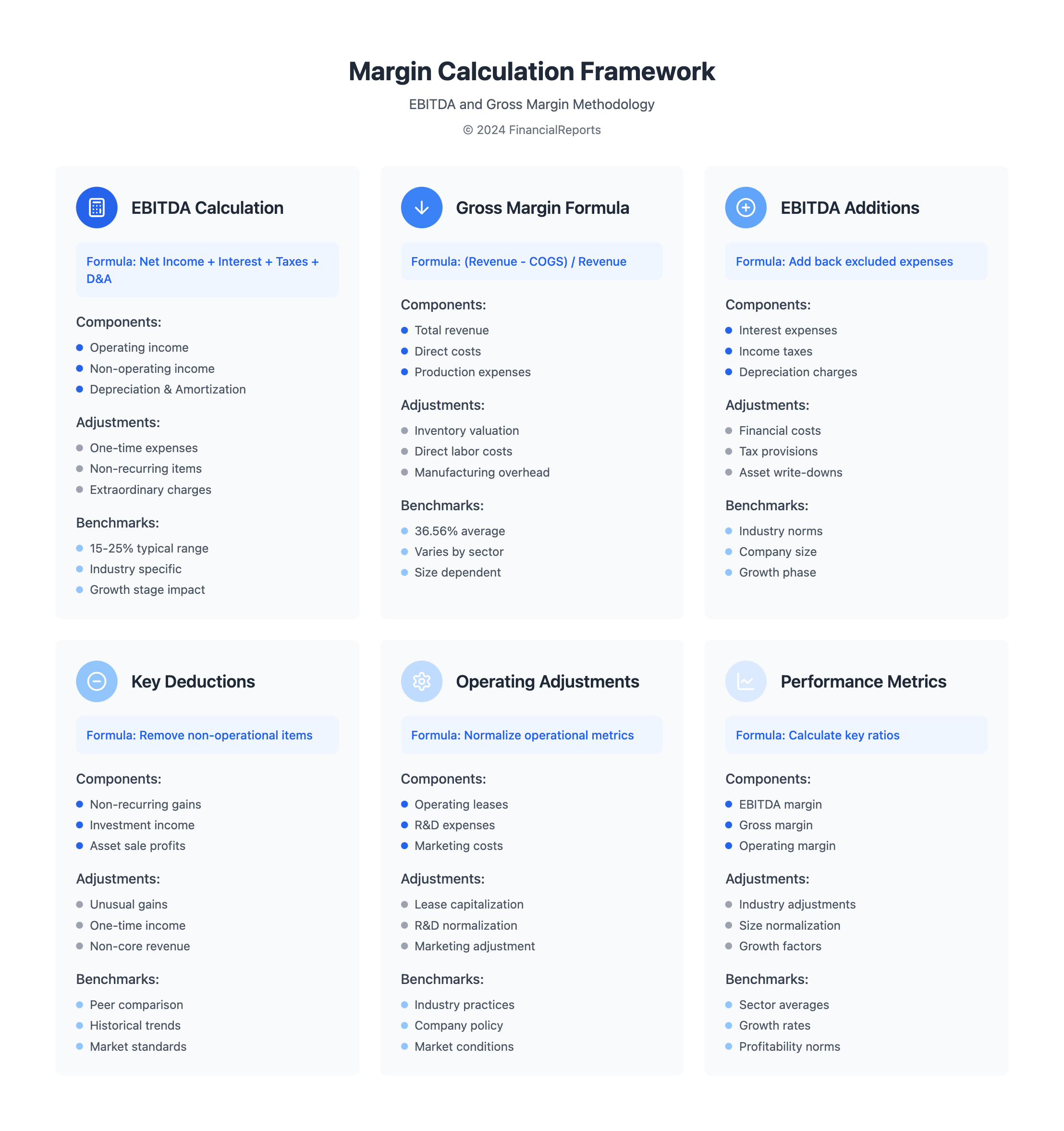
| EBITDA | EBITDA = Operating Income + Depreciation + Amortization | Measure of a company's operating performance before non-operating expenses and non-cash charges. |
| Gross Margin | Gross Margin = (Total Revenue - Cost of Goods Sold) / Total Revenue | Key indicator of a company's profitability and operational efficiency. |
The Importance of EBITDA in Business Valuation
EBITDA is key in business valuation. It shows how well a company runs and makes money. Unlike gross profit, EBITDA looks at more than just direct costs. It also considers operating income, depreciation, and amortization.
This makes EBITDA a better way to compare companies. It helps see how profitable a company really is.
How EBITDA Reflects Operational Performance
EBITDA shows how well a company operates. It ignores the impact of how a company is financed and its accounting choices. This makes it easier to compare profits between different companies.
For example, comparing gross margin vs ebitda helps see how well a company makes money from its main activities. It also looks at the company's overall financial health.
EBITDA vs. Net Profit: Key Differences
Net profit is important, but EBITDA gives more insight into a company's performance. Gross profit versus ebitda shows the difference between direct costs and overall financial health.
Many wonder if is ebitda the same as gross profit. The answer is no. EBITDA is more detailed, including operating income, depreciation, and amortization. It's a better measure of a company's earning power.
Gross Margin: A Key Indicator of Profitability
Gross margin shows how profitable a company is. It's the gross profit divided by revenue, shown as a percentage. For example, a 33.6% gross margin means 33.6% of what the company makes can go towards expenses and taxes.
This metric is key for checking if a company's prices and production are efficient. It helps see if the company can keep making money.
When looking at ebitda vs profit, it's important to see the ebitda percentage and how it compares to the gross margin vs ebitda margin. Gross margin shows if a company can stay profitable. Ebitda margin gives a broader view of how well a company runs.
By watching these numbers, businesses can spot where to get better and grow. They can make smart choices to boost their success.
Things like falling revenue, higher direct costs, and costs growing faster than sales can hurt gross margin. By keeping an eye on gross margin over time, companies can see if they're getting better at making money. They can then adjust to keep their margins high.
The table below shows why gross margin is important for a company's health:
| Metric | Description |
|---|---|
| Gross Margin | Percentage of revenue available to cover operating expenses, interest, and taxes |
| EBITDA Margin | Percentage of revenue available to cover operating expenses, excluding interest, taxes, depreciation, and amortization |
| Net Profit Margin | Percentage of revenue available as net income, after accounting for all expenses |
By looking at these numbers, companies can set good prices, see how they stack up against others, and find ways to grow. This helps them make more money and succeed.
The Relationship Between EBITDA and Gross Margin
When looking at a company's health, EBITDA and gross margin are key. EBITDA margin shows how profitable a company is, ignoring non-essential costs. It gives a clear view of how well a company operates, without the extra expenses.
EBITDA and gross margin give different views of a company's success. Gross margin shows how profitable each product is. EBITDA, on the other hand, looks at the whole company's efficiency. Together, they help understand a company's financial health fully.
Why Both Metrics Matter
Investors and financial experts find EBITDA and gross margin very useful. The EBITDA margin shows how well a company can make cash. Gross margin, on the other hand, shows how profitable each product is.
How They Impact Financial Health
EBITDA and gross margin are very important for a company's health. A company with high margins in both areas is likely to be financially strong. It can make a lot of cash. But, a company with low margins might struggle financially.
By looking at both, experts can really understand a company's financial state. This helps them make better choices.
| Metric | Definition | Importance |
|---|---|---|
| EBITDA Margin | A measure of a company's profitability, excluding non-core expenses and charges | Provides a clear picture of a company's operating performance |
| Gross Margin | A measure of a company's product-level profitability | Offers insight into a company's ability to generate revenue and maintain profitability |
Industry Comparisons: EBITDA and Gross Margin
When looking at a company's financial health, it's key to use industry benchmarks for EBITDA and gross margin. The ebitda margin formula helps compare companies in the same field. But, the cash profit margin vs ebitda can differ a lot between sectors.
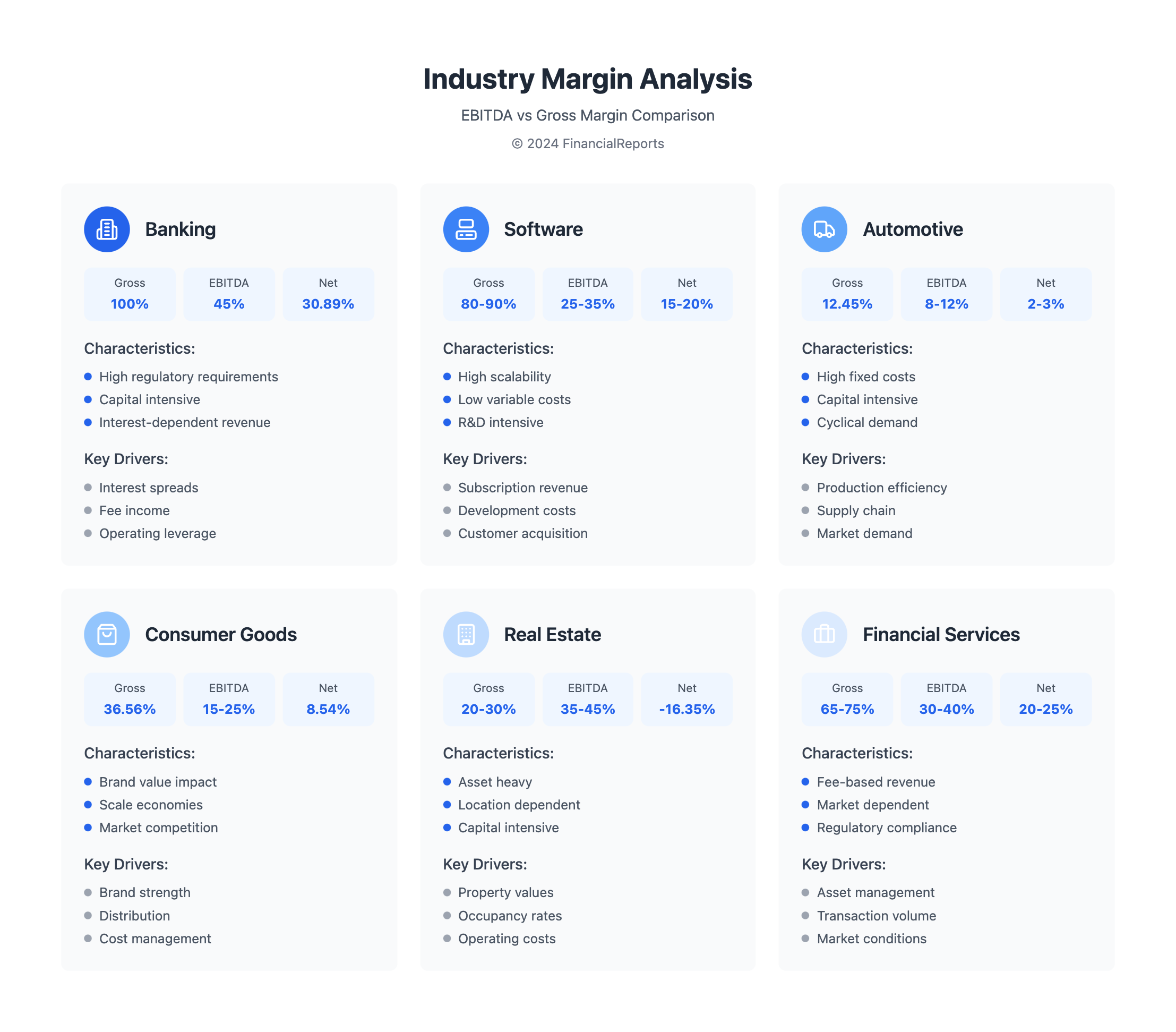
For example, software companies usually have a higher ebitda margin than retail or manufacturing. The average gross profit margin for all industries is 36.56%. The average net profit margin is 8.54%. Banking and finance have very high net profit margins, sometimes over 28%.
On the other hand, industries like broadcasting and consumer electronics often show negative net profit margins. This means they lose money after all costs are considered.
Sector-Specific Benchmarks
Knowing these benchmarks is vital for comparing companies. Here's a table with some key industry benchmarks:
| Industry | Average Gross Profit Margin | Average Net Profit Margin |
|---|---|---|
| Software | 80-90% | 15-20% |
| Banks (money centers) | 100% | 30.89% |
| Auto and Truck | 12.45% | 2-3% |
| Real Estate Development | 20-30% | -16.35% |
Understanding Variability Across Industries
These benchmarks show how different industries have varying ebitda and gross margins. By using these benchmarks, financial experts and investors can better judge a company's health and profits. The ebitda margin formula is great for comparing profitability. The cash profit margin vs ebitda helps spot areas for betterment.
EBITDA Adjustments: What to Consider
When looking at a company's finances, it's key to think about adjusted EBITDA. This figure removes items that don't show a company's true performance. It gives a clearer view of how a company is doing over time, helping to compare ebitda vs gross profit more accurately. Adjusted EBITDA can show a company's strength compared to others, making it a vital tool for valuing businesses.
When figuring out adjusted EBITDA, you might need to remove things like non-operating income and non-cash expenses. These adjustments are important for understanding a company's financial health. They help when comparing gross profit versus ebitda. By looking at these adjustments closely, experts and investors can better see how well a company is doing, including its ebitda and ebitda margin.
Some important things to remember about adjusted EBITDA include:
- Adjusted EBITDA removes one-time, irregular, and non-recurring items that distort EBITDA
- Adjusted EBITDA provides a normalized number undistorted by irregular gains, losses, or other items
- Adjusted EBITDA can position a company above its competitors in a side-by-side comparison
Strategies for Improving EBITDA and Gross Margin
Boosting EBITDA and gross margin is key for businesses to get stronger financially. Companies can cut costs and increase revenue to do this. Increasing EBITDA means better supply chain management, more efficiency, and smart pricing.
Understanding gross margin vs ebitda is vital. Is ebitda the same as gross profit? No, EBITDA shows a company's true profit, while gross profit only looks at direct costs. EBITDA vs profit shows EBITDA's role in showing a business's real performance.
To better EBITDA and gross margin, try these:
- Optimize supply chain operations to reduce costs
- Improve operational efficiency to increase productivity
- Implement effective pricing strategies to enhance margins
By using these methods, businesses can boost their EBITDA and gross margin. This leads to better financial health and profits.
Analyzing Trends Over Time
To understand a company's financial health, we need to look at trends over time. This means tracking the growth of important metrics like EBITDA and gross margin. The ebitda percentage shows how profitable a company is. Comparing it to the gross margin vs ebitda margin gives us deeper insights into its financial health.
When we define ebitda margin, we're looking at a company's earnings before interest, taxes, depreciation, and amortization. This is shown as a percentage of its revenue. It's key for investors and financial experts to see if a company can make profits from its main operations. By looking at EBITDA and gross margin trends, companies can spot areas to improve and make smart decisions to grow and boost profits.
Some important things to consider when analyzing trends include:
- Revenue growth
- Operating expenses
- Capital expenditures
- Debt levels
By looking at these factors and tracking EBITDA and gross margin changes, companies can understand their financial path better. For instance, a company with high gross margin vs ebitda margin is likely to grow well. But a company with falling margins might need to rethink its operations to stay competitive.
| Company | Gross Margin | EBITDA Margin |
|---|---|---|
| Microsoft | 68% | 42% |
| Regional Banks | 99.75% | N/A |
| Automotive Businesses | 9.04% | N/A |
By studying trends and comparing ebitda percentage and gross margin vs ebitda margin, companies can learn a lot about their finances. This knowledge helps them make smart choices to grow and succeed.
Conclusion: Navigating Financial Metrics for Success
EBITDA and gross margin are key to understanding a company's health and efficiency. EBITDA shows how profitable a company is before non-operating costs. On the other hand, gross margin tells us how well the core business is doing.
Knowing how these metrics work together helps leaders and investors make better choices. They can see how a company is doing and where it might grow. Watching how EBITDA and gross margin change over time can reveal a lot. It shows if a company can control costs, set good prices, and stay profitable.
The importance of EBITDA and gross margin will keep growing as the financial world changes. Learning to use these metrics well can help professionals deal with today's business challenges. It can also help them find ways to improve their company's finances.
FAQ
What is EBITDA?
EBITDA stands for Earnings Before Interest, Taxes, Depreciation, and Amortization. It shows a company's profit before accounting and financing choices. This helps understand how well a company operates.
What is Gross Margin?
Gross Margin is the profit from sales minus the cost of goods sold, as a percentage. It shows how much of the revenue is left for expenses and profits.
How does EBITDA differ from Net Profit?
EBITDA ignores a company's financing, taxes, and accounting choices. This gives a clearer view of its real performance. Net Profit, on the other hand, includes all financial aspects, giving a wider view of profitability.
What factors can affect Gross Margin?
Several things can change Gross Margin. These include pricing, production costs, supply chain, and competition. Understanding these can help see how well a company operates and prices its products.
Why is it important to consider both EBITDA and Gross Margin?
EBITDA and Gross Margin give different views of a company's health. EBITDA shows operational efficiency, while Gross Margin shows pricing and cost control. Together, they give a full picture of a company's performance and profits.
How can EBITDA Adjustments impact financial analysis?
Adjustments to EBITDA, like removing one-time costs, change how we see a company's finances. Knowing why these changes are made is key to accurate analysis.
What are some strategies for improving EBITDA and Gross Margin?
To boost EBITDA and Gross Margin, companies can cut costs and improve efficiency. They can also set prices that increase margins without losing competitiveness.
How can analyzing EBITDA and Gross Margin trends over time be valuable?
Looking at EBITDA and Gross Margin trends helps understand a company's financial path. It helps in making smart decisions and planning for the future. Trends show patterns and areas for growth.