Profitable Day Trading Strategies for Consistent Gains
Day trading means buying and selling financial items in one day. It aims to make money from small price changes. To do well, traders must have good strategies and know how to trade profitably.
Day trading needs hard work, learning, and a bit of luck. It takes a lot of time for research, tracking, and trading. Knowing the basics helps traders make smart choices and succeed.
Key Takeaways
- Developing effective day trading strategies is key to success.
- Understanding day trading basics, like benefits and risks, is vital for smart decisions.
- Day traders should focus on making money by having a solid plan and managing risks.
- Good strategies mix technical analysis, risk control, and discipline.
- Traders should aim for steady gains through careful planning and strategy execution.
- Keeping capital safe is critical, with traders advised not to risk more than 1% per trade.
- Watching price wave measurements helps traders see profit chances and avoid unrealistic goals.
Understanding Day Trading
Day trading means making quick trades during market hours to make money. It needs a good grasp of trading methods and quick strategies. Traders aim to profit from short-term price changes in stocks, options, and more.
Popular strategies include technical analysis and momentum trading. These use charts and indicators to spot good trades. It's also key to manage risks, like setting stop-loss orders and controlling position sizes.
What is Day Trading?
Day trading involves holding positions for a day or a week. It's about buying and selling fast to profit from small price changes. Traders use technical analysis and momentum trading to find good trades.
Key Differences from Other Trading Strategies
Day trading is different from swing or position trading. Day traders aim for quick profits, while others hold positions longer. Knowing these differences helps traders develop effective strategies and manage risks.
Essential Tools for Day Traders
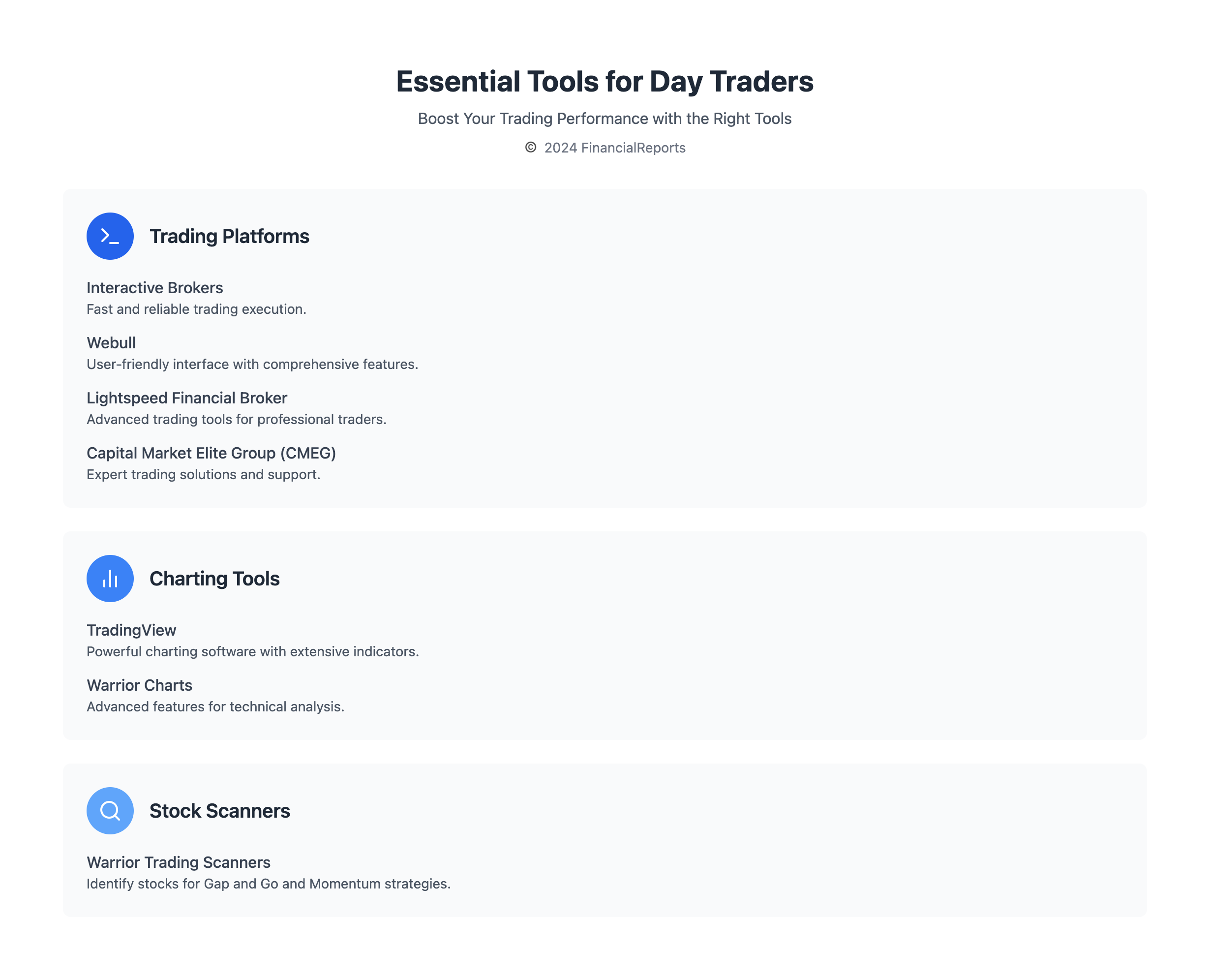
Day trading needs the right tools and software to analyze markets and make smart decisions. With the right strategies, traders can boost their success and learn to make money. Key tools include trading platforms, charting tools, and indicators.
Platforms like Interactive Brokers and Webull let traders make trades fast and easy. Tools like TradingView and Warrior Charts offer technical analysis and indicators. These help traders spot trends and analyze markets.
Trading Platforms and Software
Choosing a trading platform is important. Look at speed, commissions, and support. Popular platforms for day traders are:
- Lightspeed Financial Broker
- Capital Market Elite Group (CMEG)
- Interactive Brokers
- Webull
Charting Tools and Indicators
Charting tools and indicators are vital for analyzing markets and spotting trends. Popular tools include:
- TradingView
- Warrior Charts
- Warrior Trading Scanners
Using these tools and strategies can enhance trading performance. It increases the chance of success in making money trading.
| Tool | Description |
|---|---|
| TradingView | A charting software used by over 30 million traders globally |
| Warrior Charts | A charting software with many features, including technical analysis and indicators |
| Warrior Trading Scanners | A stock scanning tool for finding stocks for Gap and Go and Momentum strategies |
Developing a Trading Plan
A good trading plan is key for day traders. It sets goals, manages risk, and guides decisions. By using day trading methods and quick strategies, traders can boost their success. A plan should outline profit goals and risk management to keep traders focused and disciplined.
Key elements of a successful trading plan include:
- Clear goals and objectives
- Risk management strategies, such as position sizing and stop-loss orders
- A well-defined approach to trading, including the types of trades to take and the criteria for entering and exiting positions
- A plan for managing emotions and staying disciplined
Having a solid plan reduces emotional trading and avoids impulsive moves. It boosts confidence, which is vital for market ups and downs. A plan also helps keep capital safe by setting risk limits and ensures consistent trading decisions.
| Trading Style | Risk-Reward Ratio | Risk Percentage |
|---|---|---|
| Day Trading | 1:3 or higher | Less than 2% |
| Scalping | 1:2 or higher | Less than 1% |
Following a detailed trading plan boosts success and lowers big loss risks. It's important to update the plan often to keep it effective and in line with market changes.
Popular Day Trading Strategies
Day trading uses many strategies to make money from the markets. Traders need to know these strategies well. They must pick the right ones for their trading style and goals.
Learning how to trade well can boost your success. By mastering day trading strategies, you can do better in the market.
Some well-known strategies include momentum trading, scalping, and swing trading. Each strategy has its own way of trading. For instance, momentum trading looks for stocks with strong momentum.
Momentum Trading
Momentum trading focuses on stocks with high momentum. It uses tools like the Relative Strength Index (RSI) and Moving Averages. These help find stocks that are moving fast.
Scalping
Scalping is about making money from small price changes. It needs quick decisions and a lot of discipline. Traders must act fast to make profits from tiny price swings.
Swing Trading
Swing trading holds positions for a short time, like overnight or a few days. It uses technical analysis to spot trends. Traders must understand market analysis and technical indicators to succeed.
Knowing these strategies can help you find your way in day trading. Remember, each strategy is unique. Choose the one that matches your style and goals.
| Strategy | Description |
|---|---|
| Momentum Trading | Focusing on stocks with high momentum |
| Scalping | Taking advantage of small price movements |
| Swing Trading | Holding positions for shorter periods |
Risk Management Techniques
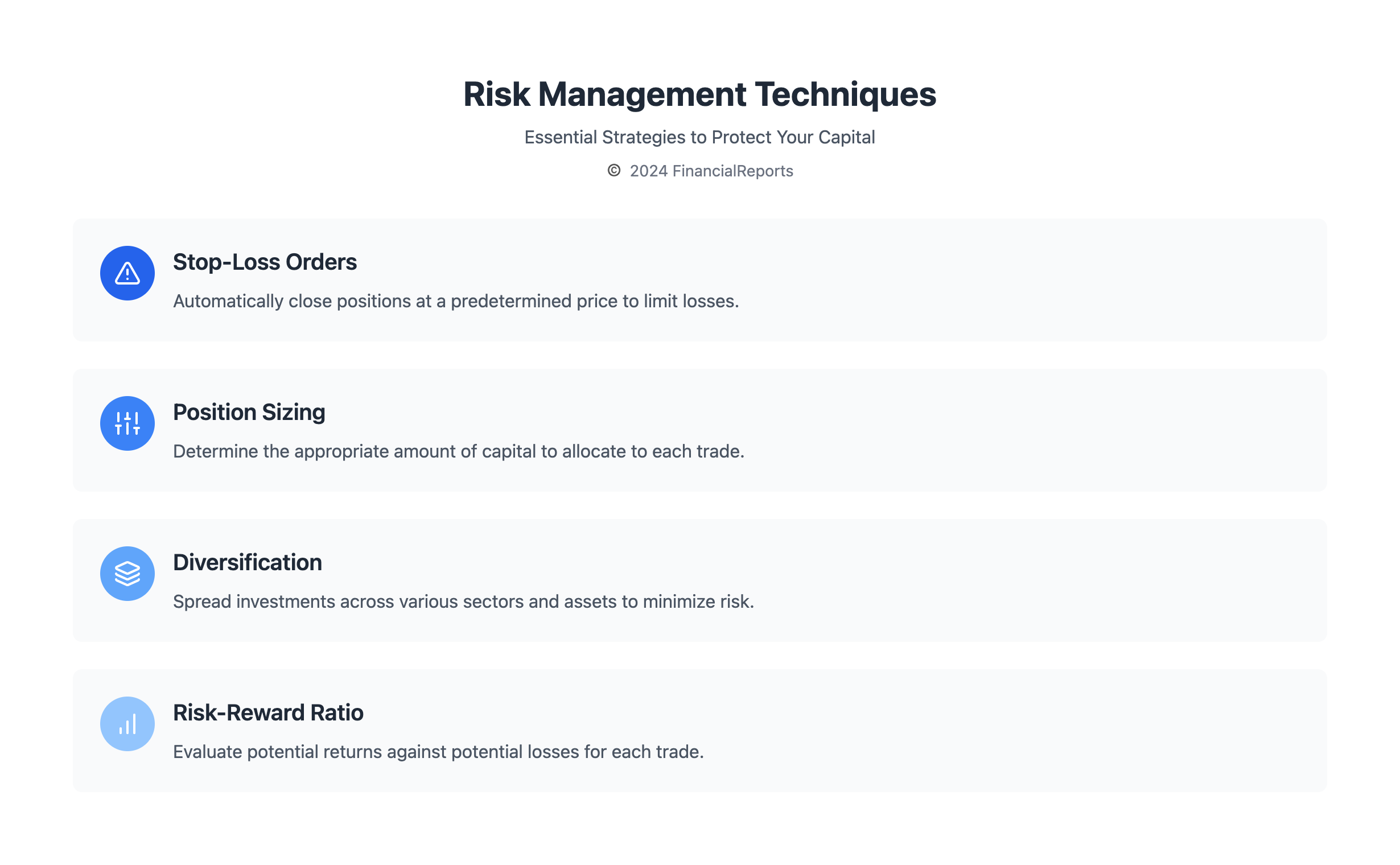 Effective risk management is key for day trading success. It involves using different methods to reduce losses. One important technique is setting stop-loss orders. These orders automatically close a trade when it hits a certain price.
This helps limit losses and keeps capital safe. Quick trading strategies also include setting how much money to use for each trade. This is called position sizing.
Traders can use formulas to figure out a trade's expected return. For example, they can use [(Probability of Gain) x (Take Profit % Gain)] + [(Probability of Loss) x (Stop-Loss % Loss)]. This helps them make smart trade choices.
Diversifying investments is also vital to manage risk. Traders should spread their investments across different sectors, sizes, and locations.
Some important stats for day trading include:
- Never invest more than 1% of total account value in a single trade
- Use key moving averages, such as the 5-, 9-, 20-, 50-, 100-, and 200-day averages, to set stop-loss and take-profit points
- Adjust stop-loss points according to market volatility to prevent unnecessary executions
By using good risk management, like planning trades and using stop-loss orders, traders can keep their capital safe. This is essential for long-term success and making the most of trading opportunities.
| Risk Management Technique | Description |
|---|---|
| Stop-Loss Orders | Automatically close positions when a certain price level is reached |
| Position Sizing Guidelines | Determine the amount of capital allocated to each trade |
| Diversification | Spread investments across industry sectors, market capitalizations, and geographic regions |
Analyzing Market Trends
Day trading strategies heavily rely on understanding market trends. Technical analysis is key, using tools like moving averages and RSI to spot trends. This helps traders make smart decisions to increase their profits.
Knowing support and resistance levels is also critical. These levels help predict price changes, guiding traders to adjust their plans. To succeed in day trading, grasping technical analysis is essential.
Some important technical indicators for day trading are:
- Moving Average Convergence Divergence (MACD)
- Relative Strength Index (RSI)
- On-Balance Volume (OBV)
These tools help traders confirm trends, decide when to enter or exit trades, and predict market shifts. By using these indicators and understanding trends, traders can craft winning strategies.
| Indicator | Description |
|---|---|
| MACD | Helps determine stock trends based on the position of its lines in relation to the zero line |
| RSI | Shows overbought conditions above 70 and oversold conditions below 30 |
| OBV | Reflects buying and selling pressure by aggregating volume data |
Mastering these indicators and market trends is vital for day trading success. Whether you're experienced or new, analyzing trends is a must for achieving financial goals.
Psychological Aspects of Day Trading
Day trading can be very stressful. It's key to manage emotions and stress to do well. Traders need to stay focused and disciplined, even when the market is all over the place. By building psychological discipline, traders can do better and have a higher chance of winning.
Traders often face challenges like cognitive biases and emotional biases. These include confirmation bias and loss aversion bias. To beat these, traders can use strategies like setting stop-loss orders and following position sizing rules. This helps control losses and keeps confidence up.
To get better at discipline and patience, traders can:
- Make a trading plan and follow it
- Set achievable goals and expectations
- Know their emotions and be self-aware
- Use risk management to lessen losses
By using these strategies, traders can get better at managing their mind. Remember, psychology is 80% of a day trader's success or failure. So, mental preparation and discipline are very important when using quick trading strategies.
Continuous Learning and Improvement
To succeed in day trading, it's key to keep learning and getting better. This means staying up-to-date with market news and trends. This helps traders predict price changes and adjust their strategies. By using resources like continuous learning in trading, traders can improve their skills and knowledge. This leads to more effective ways to make money trading.
Some important parts of continuous learning and improvement in day trading include:
- Staying informed about economic indicators, such as GDP and inflation rates, to better understand market trends
- Joining trading communities to share knowledge and insights with other traders
- Utilizing technical indicators, such as moving averages and Bollinger Bands, to analyze market trends and make informed decisions
- Practicing risk management techniques, such as setting stop-loss orders and position sizing, to minimize losses
By always learning and improving, traders can make their strategies better. They can adapt to market changes and make consistent gains. Effective risk management and disciplined trading are key to success. Continuous learning helps traders develop these important skills.
As traders keep learning and improving, they can make their trading more successful. By combining continuous learning with good trading strategies, traders can stay ahead. They can reach their financial goals.
| Aspect of Continuous Learning | Benefits for Day Traders |
|---|---|
| Staying updated with market news | Anticipate possible price changes and adjust strategies |
| Joining trading communities | Share knowledge and insights with other traders |
| Utilizing technical indicators | Analyze market trends and make informed decisions |
Evaluating Trading Performance
It's key to always check how well you're doing in day trading. Keeping a trading journal helps you see how you're doing, find what needs work, and get better at day trading methods. Look at things like total profit, profit factor, and how often you win trades. Also, check your average profit per trade and the biggest loss you've had.
Looking at your trade history, performance charts, and how your returns change over time helps a lot. This lets you make smart choices to improve your quick trading strategies. Always be ready to change your plan based on what you learn. This way, you can keep getting better and make more money.
FAQ
What is day trading?
Day trading is a way to make money by buying and selling things like stocks or currencies in one day. It's about making quick profits from small price changes. You need a good plan to do well.
How does day trading differ from other trading strategies?
Day trading means making quick trades during the day and closing them before the market closes. It's different from longer-term strategies like swing or position trading.
What tools and software are essential for day traders?
Traders use platforms like Interactive Brokers or Webull to make trades fast. Charting tools help spot trends. Indicators like moving averages give extra insights.
Why is developing a trading plan important for day traders?
A good plan sets clear goals and risk rules. It guides how to trade and when to enter or exit. This keeps traders focused and disciplined.
What are some popular day trading strategies?
Momentum trading looks for stocks with strong price and volume trends. Scalping uses small price changes for quick profits. Swing trading holds positions for a few days.
How can day traders manage risk effectively?
Using stop-loss orders limits losses by closing trades at set prices. Position sizing rules help manage risk by controlling trade sizes.
How can day traders analyze market trends?
Technical analysis uses tools like moving averages to spot trends. Knowing support and resistance levels helps predict price moves.
What psychological skills are important for successful day trading?
Traders need to stay focused and disciplined, even when markets are volatile. Discipline and patience help avoid bad decisions and stick to plans.
How can day traders continuously improve their skills?
Staying current with market news helps anticipate price changes. Trading communities offer insights and chances to share and learn.
How can day traders evaluate their trading performance?
Keeping a journal tracks progress and identifies areas for improvement. Adjusting strategies based on results can lead to better performance.