Options Defined: A Guide to Understanding Option Contracts
An option is a contract that lets the holder buy or sell an asset at a set price before a certain date. It's a key part of the options world. To understand options, knowing they offer a chance to manage risk and speculate on prices is key. This guide will cover the basics of options trading and what makes up an option contract.
For investors, knowing the options definition is vital. It helps them in the complex world of options trading. Options contracts usually deal with 100 shares of stock, giving investors leverage. With 70% of options closed before they expire, it shows options trading is popular. Knowing the options definition is key for making smart choices.
Key Takeaways
- Options give the holder the right, but not the obligation, to buy or sell an underlying asset at a specified price before a specified date.
- Understanding the options definition is vital for navigating the complex world of options trading.
- Options contracts typically represent 100 shares of the underlying stock, providing leverage opportunities.
- The option meaning can be complex, but it is essential to understand the various components that make up an option contract.
- Options trading involves the use of options contracts, which can be traded prior to expiration based on changing premiums.
- Knowing the options definition is vital for making informed decisions in options trading.
- Options can be used for hedging, speculation, income generation, and leveraging investment portfolios, making it essential to understand the options definition.
What Are Options?
Options are financial tools that get their value from something else. The option trading meaning is about a contract. It lets the buyer choose to buy or sell something at a set price before it expires. This is a big part of options trading definition, which helps you understand how to use options to guess the future price of something or protect against loss.
There are two main types of options: calls and puts. Call options let you buy something at a set price. Put options let you sell something at a set price. Knowing about option option and its features is key for smart investing.
Some important things about options include:
- Exercise style: European, American, and Bermudan options have different rules for when you can act on them.
- Expiration date: Options have a set end date, after which they are no longer valid.
- Strike price: This is the price at which you can buy or sell the underlying asset.
| Option Type | Description |
|---|---|
| Call Option | Gives the buyer the right to buy an underlying asset at a specified price. |
| Put Option | Gives the buyer the right to sell an underlying asset at a specified price. |
The Basics of Options Trading
Options trading is a financial transaction where people buy and sell options contracts. To understand options trading, knowing what an option is key. An option is a contract that lets the buyer choose to buy or sell an asset at a set price before a certain date. The buyer pays a premium to the seller for this right.
Options trading involves several important parts. These include the strike price, expiration date, and premium. The strike price is the price at which the asset can be bought or sold. The expiration date is the last day to exercise the option. The premium is what the buyer pays for the option.
Some key points to consider in options trading are:
- Options contracts can be used to speculate on the price movement of an underlying asset
- They can also be used to hedge against possible losses in a portfolio
- Options trading involves risk, and it's important to understand the risks and rewards before trading
Knowing what an option is and how options trading works is vital for making smart investment choices. By understanding options trading and its key components, investors can make better decisions and possibly increase their returns.
| Term | Definition |
|---|---|
| Strike Price | The price at which the underlying asset can be bought or sold |
| Expiration Date | The last day on which the option can be exercised |
| Premium | The price paid by the buyer for the option contract |
Types of Options Explained
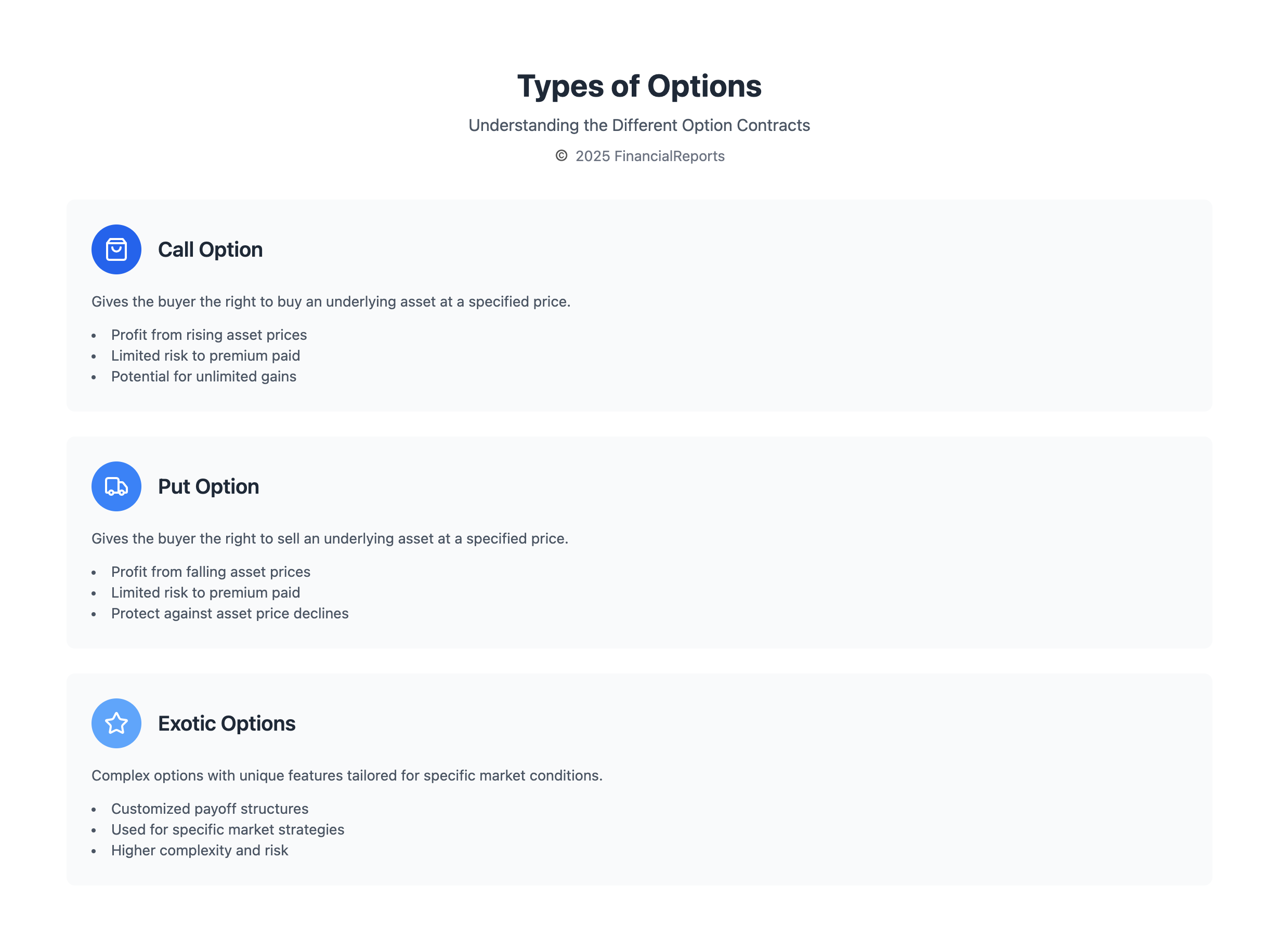 Understanding options is key for successful trading. Options trading includes calls, puts, and exotic options. Each option type has its own features and uses.
Knowing the different options is vital. It helps investors make smart choices and craft good trading plans.
Call Options
Call options let the buyer buy the asset at a set price. The profit comes from the market price minus the strike price. It's then multiplied by the asset's value, minus the option's cost.
Put Options
Put options allow the buyer to sell the asset at the strike price. The buyer's loss is capped at the option's cost. People use put options to protect against stock price drops.
Exotic Options
Exotic options are complex and less common than call and put options. They're used for specific market bets or risk protection.
By grasping the various options and their traits, investors can craft solid trading strategies. Whether it's call, put, or exotic options, each has its own role and risks. Knowing this is essential for trading success.
The Anatomy of an Option Contract
Understanding an option contract is key in options trading. It's complex, but breaking it down helps. An option contract lets the buyer choose to buy or sell an asset at a set price before it expires. This is a core part of the contract.
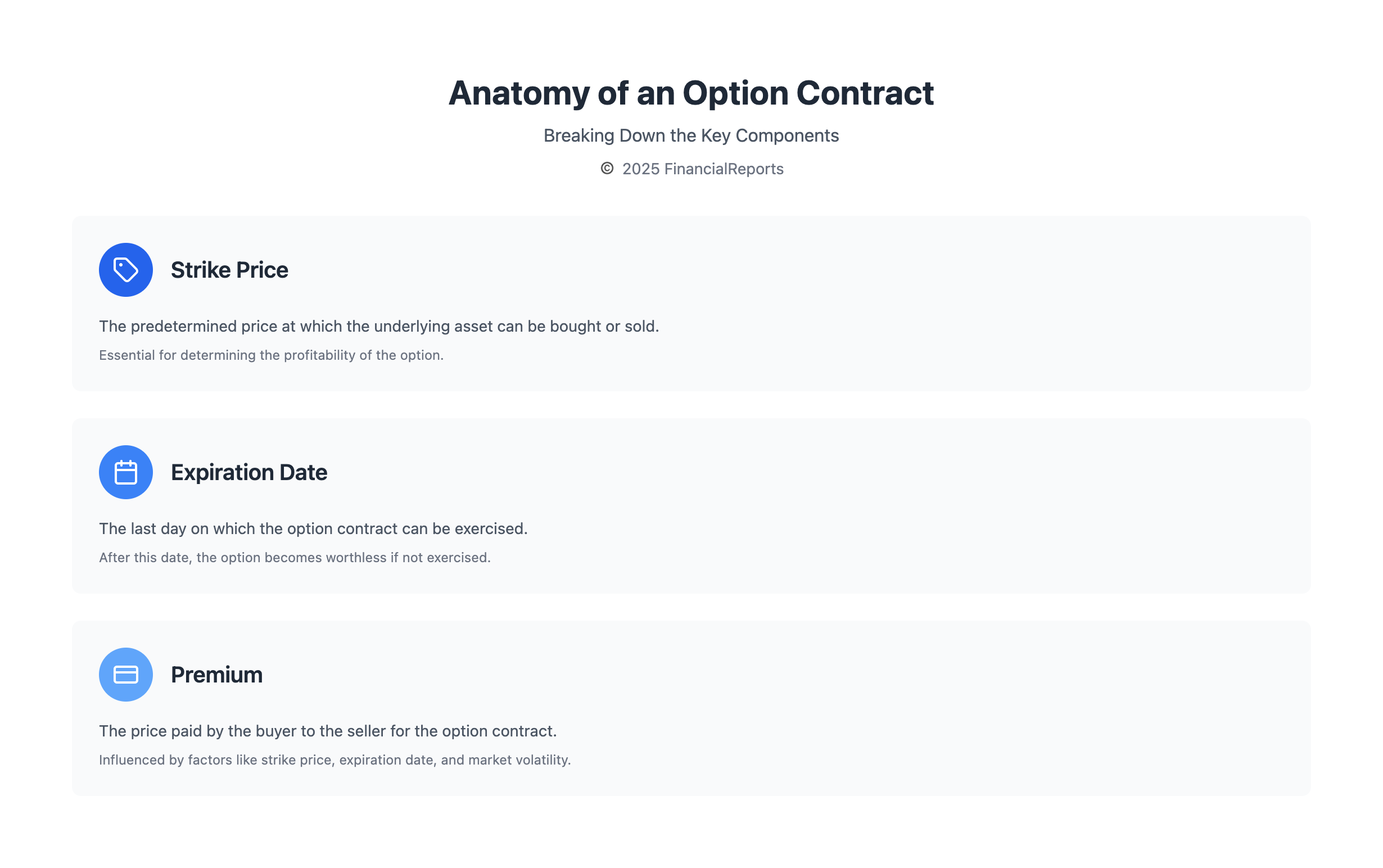
The main parts of an option contract are the strike price, expiration date, and premium. The strike price is the set price for buying or selling the asset. The expiration date marks the last day to use the option. The premium is the option's cost, influenced by several factors.
Key Components of an Option Contract
- Strike Price: The predetermined price at which the underlying asset can be bought or sold.
- Expiration Date: The last day on which the option contract can be exercised.
- Premium: The price of the option contract, which is determined by various factors, including the strike price, expiration date, and market volatility.
In options trading, knowing the contract's parts is vital. The option to buy or sell offers flexibility and profit chances. Learning about option contracts helps traders confidently move in the options market.
Understanding Options Pricing
Options pricing is complex, involving intrinsic value, time value, and volatility. Understanding these factors is key. Intrinsic value is how much the option is worth now. Time value is the chance for the option to grow in value before it expires.
The Black-Scholes model is a common tool for pricing options. It needs five key inputs: the strike price, the current stock price, how much time is left, the risk-free rate of return, and volatility. Implied volatility is critical for pricing and differs from historical volatility. Longer maturities and higher implied volatility mean higher option prices.
Several factors influence options pricing:
- Intrinsic value
- Time value
- Volatility
- Interest rates
- Strike price
These elements help determine an option's value. They are vital for grasping options and making smart trading decisions. By understanding these factors, investors can better manage their risks.
| Factor | Description |
|---|---|
| Intrinsic Value | The amount by which the option is in-the-money |
| Time Value | The chance for the option to grow in value before it expires |
| Volatility | A measure of the uncertainty of the underlying asset's price |
The Role of Underlying Assets
Underlying assets are key in options trading. They decide the option contract's value. For instance, if you buy a call option on a stock, the option's value goes up if the stock price does too.
The options trading definition is about the right to buy or sell something at a set price. This price is called the strike price. Knowing how the underlying asset's value impacts the option is vital. Common assets include stocks, commodities, and currencies.
Here are some examples of underlying assets:
- Stocks: Apple (AAPL), Amazon (AMZN), Google (GOOGL)
- Commodities: Gold, Oil, Agricultural products
- Currencies: US Dollar, Euro, Japanese Yen
Assets like stocks and commodities are often more stable than derivatives. But, they can be affected by speculation in derivatives markets. It's important to understand how options and underlying assets relate to make smart investment choices.
| Underlying Asset | Example | Affect on Option Value |
|---|---|---|
| Stock | Apple (AAPL) | Increases if stock price rises |
| Commodity | Gold | Increases if commodity price rises |
| Currency | US Dollar | Increases if currency value rises |
Strategies for Trading Options
Options trading offers a variety of strategies, from simple to complex. It's key to know what options are and how they work. Options let investors buy or sell assets at a set price before they expire.
To get into options trading, it's important to look at different strategies. These include basic strategies like buying calls or puts. There are also advanced techniques like spreads and straddles. Knowing these strategies helps investors understand options better and reach their goals.
Some common strategies for trading options include:
- Buying calls or puts to speculate on the price of an underlying asset
- Using spreads to reduce risk or increase possible returns
- Employing straddles or strangles to profit from big price changes
These strategies help investors understand options trading. They make it easier to make smart investment choices.
Benefits and Risks of Options Trading
Options trading can lead to high returns and offers flexibility in investment strategies. An option is a contract that lets the buyer choose to buy or sell an asset at a set price. This makes options useful for managing risks or speculating on price changes.
The benefits of options trading include:
- Potential for high returns: Options can offer greater returns than buying stocks.
- Flexibility: Options are versatile, used for income, hedging, or speculation.
- Risk management: They help protect against stock price drops.
But, options trading also comes with risks, like the chance of big losses. The risks are:
- Unlimited risk: Options trading can lead to unlimited losses, like for uncovered call option writers.
- Limited profit: Most strategies have limited risk but also limited profit.
- Initial investment risk: Options don't guarantee returns, and you can lose your entire investment.
| Benefits | Risks |
|---|---|
| Potential for high returns | Unlimited risk |
| Flexibility | Limited profit |
| Risk management | Initial investment risk |
Common Misconceptions About Options
Options trading can seem complex, but it offers big rewards with the right knowledge. Many people think options are only for taking risks, but they're actually great for managing risk and diversifying your portfolio.
Myths Versus Reality
Some think options trading is a zero-sum game, where one person loses what another gains. But, options can act like insurance, helping both sides win in different market conditions. Also, the idea that options trading is always risky is not true. With smart risk management, you can reduce losses.
Avoiding Common Pitfalls
To avoid common mistakes in options trading, learn about option contracts. This includes strike prices, expiration dates, and premiums. Diversifying your portfolio, controlling leverage, and staying disciplined are also important. By understanding the options market well, you can fully use this investment tool.
Starting your options trading journey? Knowing the basics and clearing up misconceptions is key to reaching your financial goals. With the right knowledge and strategy, options can open up new investment opportunities for you.
FAQ
What is an option?
An option is a financial contract. It lets the holder buy or sell an asset at a set price within a time frame. But, they don't have to do it.
What are the key characteristics of options?
Options have a few key features. The strike price is the price to buy or sell the asset. The expiration date is when the option must be used. The premium is what you pay for the option.
What are the different types of options?
There are two main types of options. Call options let you buy an asset. Put options let you sell an asset.
How do options work?
Options give you the right to buy or sell an asset at a set price. They have a time limit. The option's value changes based on the asset's price, the strike price, and market conditions.
What is the difference between a call option and a put option?
Call options let you buy an asset. Put options let you sell an asset. Call options gain value when the asset price goes up. Put options gain value when the asset price goes down.
What is the strike price in an option contract?
The strike price is the price to buy or sell an asset in an option contract. It's a key factor in determining the option's value.
What is the expiration date in an option contract?
The expiration date is when you must use the option. If not used by then, the option expires and is worthless.
What is the premium in an option contract?
The premium is the cost of the option contract. It's influenced by the asset's price, the strike price, the expiration date, and market conditions.
What are some common underlying assets for options?
Options can be based on stocks, bonds, commodities, currencies, and indices. The asset's price is a key factor in the option's value.
What are some basic strategies for trading options?
Basic strategies include buying calls, buying puts, selling calls, and selling puts. These can be used to speculate or to protect against risk.