Optimize Your Cash Account for Successful Day Trading
Day trading with a cash account needs a deep understanding of markets and trading strategies. It's about buying and selling financial instruments in the same day to make small profits. Knowing day trading rules, like pattern day trading, is key. With the right approach, you can make more money and lose less.
Only 1% of day traders make money consistently for five years. But, 72% lose money by the end of the year. With the right strategy and knowledge, you can beat the odds. Day traders try to predict price changes quickly to make fast profits. Success in day trading requires dedication, discipline, and careful money management.
Introduction to Cash Account Day Trading
Cash account day trading lets you trade without limits if you have enough money. The amount you need to trade is based on the cash in your account. It's important to manage your money well for day trading success. Also, knowing the difference between cash and margin accounts is key. Traders can't switch between them in the same day because of rules and broker policies.
Key Takeaways
- Understanding day trading rules and pattern day trading regulations is key to success.
- Cash account day trading requires a deep understanding of markets and risk management.
- Only 1% of day traders achieve consistent profitability over five years.
- Successful day trading needs dedication, discipline, and strict money management.
- Managing equity well is essential for day trading success.
- Cash account day trading allows for unlimited trades if funds are available.
Understanding Cash Accounts in Day Trading
A cash account lets you trade with the money you've deposited. You can't borrow funds. This means you can only use the money you have in your account. You can't use leverage to increase your trading power.
The pattern day trader rule applies to margin accounts. It requires a minimum of $25,000 for accounts doing four or more day trades in five business days.
Cash accounts don't have a minimum equity requirement for day trading. But, they follow the T+2 settlement rule. This means you can't use sale funds for trading until two business days after the sale.
It's important to know that can margin accounts day trade is yes, but they follow the pdt rule.
Using a cash account for day trading has some benefits:
- Lower risk, as you're not borrowing money to trade
- No daily interest rates charged by the firm
- No risk of margin calls, which can force you to sell at a loss
Understanding the differences between cash and margin accounts is key for day trading success. By choosing the right account and following rules like the pattern day trader rule, you can reduce risk and increase returns.
Regulatory Considerations for Cash Accounts
Day trading with a cash account involves important rules. The Securities and Exchange Commission (SEC) oversees these rules. They make sure firms watch and report any odd trading.
One key rule is about pattern day trading. This rule applies to margin accounts, not cash accounts. Knowing this helps avoid trading limits and ensures trading is legal.
Many wonder if day trading is legal. The answer is yes, if it follows SEC rules. Day traders need at least $25,000 in their margin account. They also can't trade more than their "day-trading buying power," which is usually four times the maintenance margin excess.
Here are some important points:
- Pattern day traders must have at least $25,000 in their margin account.
- They can't trade more than their "day-trading buying power," which is usually up to four times the maintenance margin excess.
- If a pattern day trader goes over the buying power limit, they have at most five business days to meet a margin call.
By following these rules, day traders can avoid restrictions. It's key to know the latest rules to trade successfully and legally.
| Regulation | Description |
|---|---|
| Pattern Day Trading Rule | Applies to margin accounts, requires minimum equity of $25,000 |
| Day-Trading Buying Power | Typically up to four times the maintenance margin excess |
| Trading Limit Day Changes | May be restricted to trading only on a cash available basis for 90 days if day-trading margin call is not met |
Funding Your Cash Account Effectively
Funding your cash account is key to day trading success. You need to know the rules for day traders and those trading under $25,000. It's also important to understand when you can sell stocks to make profits.
To fund your account well, start with a small amount of money. Then, increase your trading size as you get more experience and confidence. It's important to set aside a specific amount for trading and stick to it. This helps avoid risking too much money.
- Minimum requirements for cash accounts: Ensure you have enough money for your trades.
- Recommended funding strategies: Set aside a specific amount for trading and stick to it.
- Day trading rules: Know the rules for day traders and those trading under $25,000 to avoid problems.
By following these tips and knowing the rules for selling stocks, you can fund your account effectively. Remember, cash trading settles in one business day or T+1 for stock trades. Sales proceeds take T+2 days to settle in cash accounts. This means you can only make 2 day trades every 2 days in a cash account.
| Account Type | Minimum Requirements | Funding Strategies |
|---|---|---|
| Cash Account | Sufficient funds to cover trading activities | Set aside a specific amount of money for trading |
| Margin Account | $25,000 equity | Consider margin lending and interest on cash deposits |
Risks Associated with Cash Accounts
Using a cash account for day trading comes with risks. One major risk is the number of trades you can make. Too many trades can limit your account. The Financial Industry Regulatory Authority (FINRA) has rules for pattern day trading.
These rules are important to know. For example, making four or more day trades in five days can classify you as a pattern day trader. This can change how you trade.
The settlement period is another key factor in cash accounts. The T+2 rule means you can't use sale funds for two days. This can limit your trading in short periods. Knowing what counts as a day trade is also vital for your account status.
Key Considerations for Cash Accounts
- Understanding the pattern day trading rule and its implications for your account
- Recognizing the impact of the T+2 settlement rule on your buying power
- Being aware of the restrictions on day trading in a cash account
To avoid these risks, manage your trading capital well. Know the rules for cash accounts. This way, you can make smart trading choices and reduce losses.
Strategies for Successful Day Trading
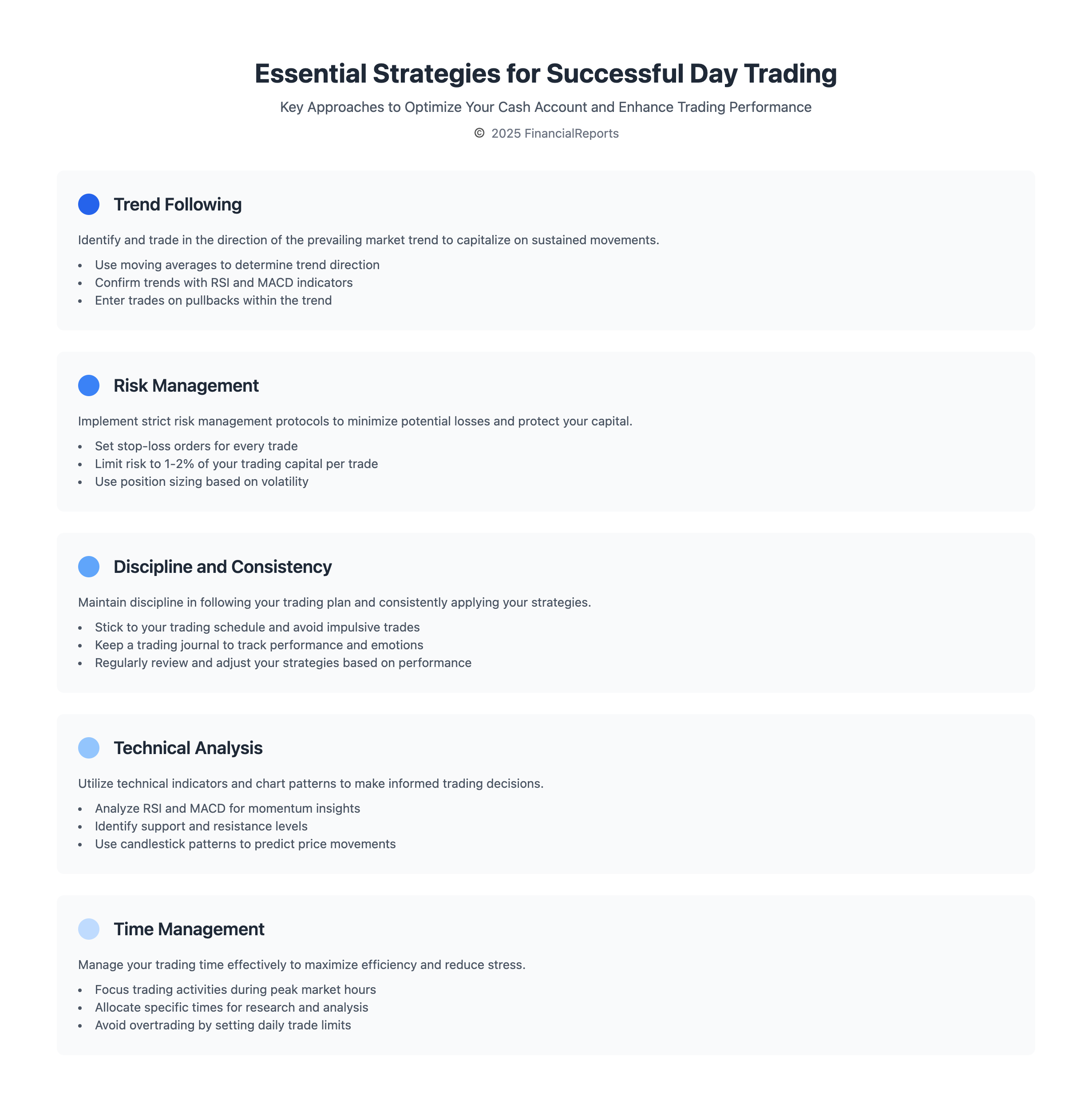
Day trading success comes from using technical analysis and managing risk well. Traders must stay focused, objective, and calm. It's key to follow pdt trading rules and restrictions to avoid big losses.
Day traders use various strategies like following trends and trading news. They also use technical tools like chart patterns to spot good trades. Knowing the rules helps them manage risk and make more money.
To control risk, traders set stop-loss orders and keep trade sizes small. This way, they can keep trading even when they lose. By following these steps and staying informed, traders can reach their financial goals.
| Technique | Description |
|---|---|
| Following the trend | Trading in the direction of the market trend |
| Contrarian investing | Trading against the market trend |
| Scalping | Making multiple small trades in a short period |
| Trading the news | Trading based on news and market announcements |
By mixing these strategies with a good grasp of trading rules, day traders can craft a winning plan. This plan helps them achieve their financial dreams.
Choosing the Right Brokerage for Cash Accounts
Choosing the right brokerage firm is key for day trading with a cash account. Look for low fees, quick order execution, and a reliable platform. Good customer service is also important.
Day trading buying power is vital. It shows how much money you can trade with. A day trade minimum equity call happens if your balance drops too low. A day trade limit limits how many trades you can make in a time.
Popular brokerages for day traders offer great prices, advanced tools, and top-notch support. When picking a brokerage, think about transaction fees, order execution speed, and trading platform reliability. Here's a comparison of some well-known brokerages:
| Brokerage Firm | Transaction Fees | Order Execution Speed | Trading Platform Reliability |
|---|---|---|---|
| Fidelity | $0 per trade | Fast | High |
| Charles Schwab | $0 per trade | Fast | High |
| Robinhood | $0 per trade | Fast | Medium |
In conclusion, picking the right brokerage firm for a cash account is essential for day trading success. Consider day trading buying power, minimum equity call, and trade limit. This helps traders choose a firm that fits their needs.
Tools and Software for Day Trading
Day trading needs the right tools and software to analyze market data. It's important to know what counts as a day trade, including options. Understanding FINRA's pattern day trader rule is also key.
Popular tools include Warrior Trading Scanners for stock scanning and Warrior Charts for charting. Lightspeed Financial Broker offers hot keys and direct access routing. Interactive Brokers is known for its wide range of tools and resources.
To beat day trading restrictions, knowing the markets well is essential. Having the right tools is also vital. Stay updated with market news and use economic calendars to find trading opportunities.
| Broker | Minimum Balance | Day Trading Restrictions |
|---|---|---|
| Lightspeed Financial Broker | $10,000 | No pattern day trader restrictions |
| Capital Market Elite Group (CMEG) | $500 | No pattern day trader restrictions |
| Interactive Brokers | $0 | Pattern day trader restrictions apply |
Using the right tools and software helps day traders make better decisions. It helps them overcome day trading restrictions and pattern day trading challenges.
Practice Makes Perfect: Simulated Trading
Simulated trading is key for getting ready to trade for real. It lets people try out strategies without losing money. The pdt rule cash account rules can be tricky, but it's easier to learn with simulated trading. For example, can you day trade with a cash account is a big question, and simulated trading is a safe place to find out.
When you wonder is it illegal to day trade, knowing the rules is vital. Simulated trading platforms, like TraderSync, have tools like customizable charts and order management. They let users practice and learn without risk. These platforms also let users create playlists of trades to practice specific strategies and track their progress.
Some main advantages of simulated trading are:
- Risk-free practice: It lets people trade without losing real money.
- Building confidence: As traders get better, they feel more confident in their skills.
- Refining trading techniques: It's a chance to improve trading skills, leading to better results in real trading.
Tax Implications of Day Trading
Day traders face capital gains tax on their profits. They must also report their trading to the IRS. Knowing the tax side of day trading is key to success. By using margin loans, traders can boost their day trade buying power. But, they must follow pattern day trading rules and other trading rules.
Some important tax points for day traders include:
- Capital gains tax on profits
- Reporting requirements for trading activity
- Potential deductions for expenses like equipment and education
Day traders report their sales on Schedule D and Form 8949. Making the Sec. 475(f) mark-to-market election can help. It lets them treat trading gains or losses as ordinary income or loss on Form 4797.
| Tax Implication | Description |
|---|---|
| Capital Gains Tax | Tax on profits from selling securities |
| Reporting Requirements | Day traders must report their trading activity to the IRS |
| Sec. 475(f) Election | Allows day traders to treat gains or losses as ordinary gains or losses |
Continuous Education and Improvement
Expanding your knowledge and updating your strategies is key in the fast-paced world of cash account day trading. Whether you're new or have experience, always keep learning. This mindset and time for education can lead to lasting success.
Resources for Learning Day Trading
Use a wide variety of resources to improve your day trading skills. This includes online tutorials, educational sites, and industry publications. Also, don't miss out on live webinars. Learn about technical analysis, managing your portfolio, and regulatory changes to stay on top.
Staying Updated on Market Trends
Keep a close eye on market trends, economic signs, and news that can change the trading scene. Being well-informed and flexible helps you make smart choices. This way, you can handle the market's constant changes.
FAQ
What is a cash account in day trading?
A cash account lets you trade with money you've deposited. You can't borrow funds. So, you trade only with what you have in your account.
What are the differences between cash and margin accounts?
Cash accounts don't let you borrow money. Margin accounts do. This means you can trade more with margin accounts, but you risk more too.
What are the benefits of using a cash account for day trading?
Cash accounts are safer because they don't use leverage. They're simpler to use and might have lower fees.
What is the pattern day trader rule?
The SEC's rule requires a $25,000 balance for more than three day trades in five days. It applies to both cash and margin accounts.
What are the minimum requirements for a cash account in day trading?
Brokers usually need a $2,000 deposit to open a cash account. You must keep this balance to trade.
What are some recommended funding strategies for a cash account?
Set aside money for trading. Avoid over-leveraging. Manage your capital well to reduce losses.
What are the risks associated with using a cash account for day trading?
Cash accounts have limited buying power. You might miss opportunities without leverage. You could lose more than you have.
What technical analysis techniques are useful for day trading with a cash account?
Use chart patterns, technical indicators like moving averages, and find support and resistance levels.
What are some important considerations when choosing a brokerage firm for day trading with a cash account?
Look at transaction fees, order quality, platform features, and customer support. These affect your trading experience.
What tools and software are essential for day trading with a cash account?
You need charting software, economic calendars, and news feeds. They provide market info and analysis.
How can I practice day trading with a cash account before using real money?
Use a demo account to practice. It lets you trade without real money. Start with real money slowly and carefully.
What are the tax implications of day trading with a cash account?
You'll face capital gains tax and must report your trading to the IRS. Understand the tax laws for day trading.
What resources are available for continuously educating myself on day trading with a cash account?
Take online courses, attend webinars, read industry publications, and network with other traders. These help you learn more.