Navigating the Complex International Hedge Fund Market
The international hedge fund market is changing fast. This is due to new rules, more investor attention, and tech progress. Now, investors and fund managers face many challenges. It's key to know the latest about the global hedge fund scene.
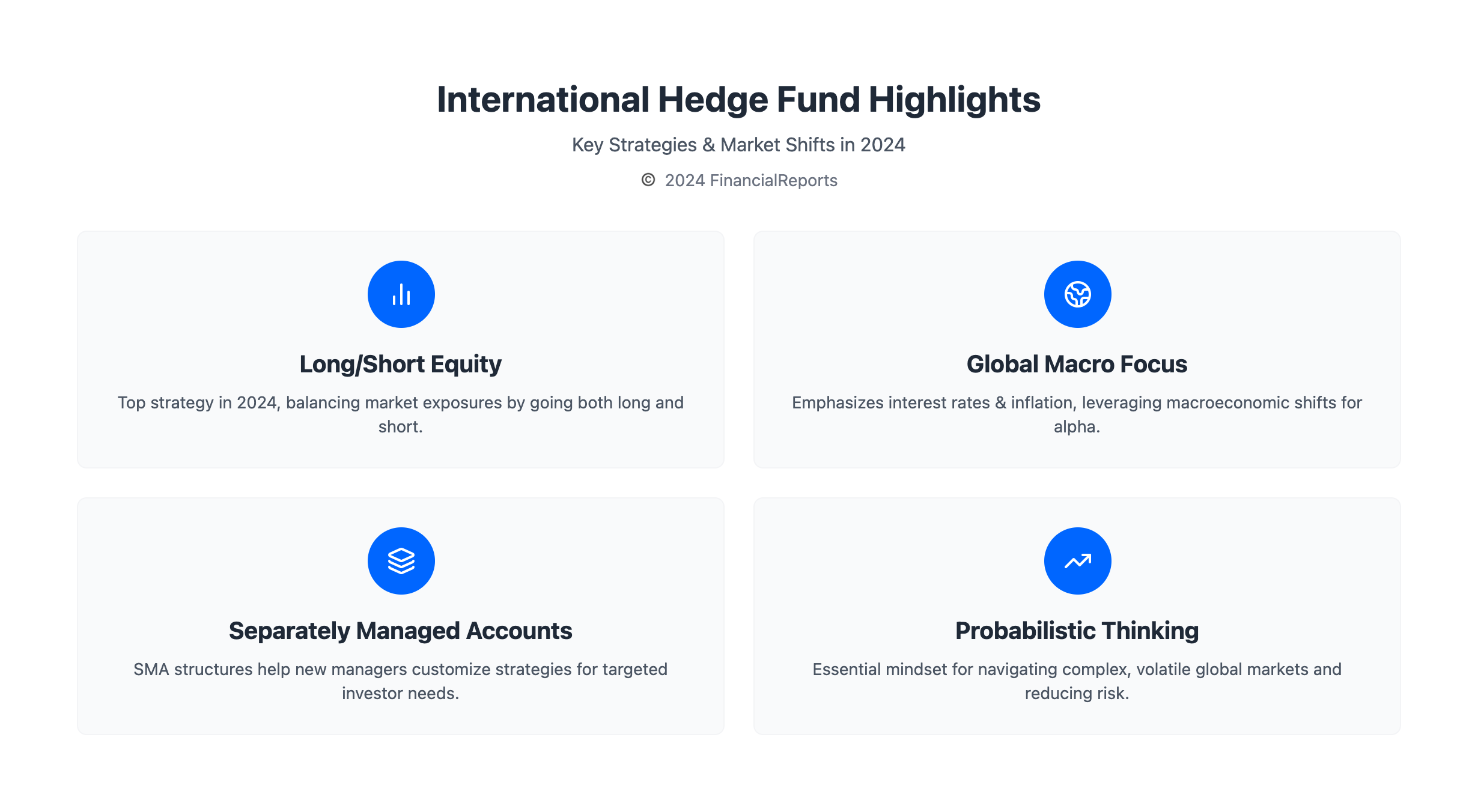
In 2024, Long/Short Equity is a top hedge fund strategy. Global Macro focuses on interest rates and inflation. Knowing how to deal with complex markets is vital. Also, having the right financial data is essential for success.
Introduction to Hedge Fund Market
Kumar Panja and Sam Diedrich talked about strategies for new managers. They highlighted the value of Separately Managed Accounts (SMAs) in hedge fund investing. They also stressed the need for probabilistic thinking in complex markets.
Key Takeaways
- The international hedge fund market is undergoing significant transformation due to regulatory changes and technological advancements.
- Long/Short Equity is one of the most widely adopted hedge fund strategies in 2024.
- Global Macro strategies are focused on the impacts of rising interest rates and inflationary pressures.
- Access to accurate and extensive financial data is key for hedge fund success.
- Using Separately Managed Accounts (SMAs) can be a strong tool in hedge fund investing.
- Probabilistic thinking is essential for navigating complex markets in the hedge fund global landscape.
Understanding Hedge Funds: A Global Perspective
Hedge funds are special investment vehicles that use different strategies to make money for their investors. They are flexible in how they invest and are mainly for wealthy individuals and big investors. A capital hedge fund pools money from many investors to buy various assets. Its goal is to make money while taking less risk.
A hedge fund management company looks after a hedge fund's investment strategy and operations. These companies charge fees to their investors. The management fee is a percentage of the fund's value, and the performance fee is a percentage of the profits.
Some key traits of hedge funds include:
- Flexibility in investment approaches
- Typically cater to high-net-worth individuals and institutional investors
- Charge management fees and performance fees
- Often have a lock-up period, during which investors cannot withdraw their capital
Andrew W. Lo, a top expert, says hedge funds are getting more popular. Over 8,000 funds now manage nearly $2 trillion. It's key for investors to grasp how hedge funds work and the role of hedge fund management companies in managing them.
| Hedge Fund Characteristic | Description |
|---|---|
| Management Fee | Typically 1-2% of net asset value |
| Performance Fee | Typically 10-20% of profits |
| Lock-up Period | Typically 1 year |
The Role of Hedge Funds in the Global Economy
Hedge funds are key players in the global financial markets. They help with liquidity, price discovery, and risk transfer. The hedge fund market is set to hit USD 1.42 trillion by 2028, growing at 6.20% annually. As an international hedge fund, they significantly influence the global economy.
Economic Contributions of Hedge Funds
Hedge funds make markets more efficient. They balance out traditional long-only strategies. They serve accredited investors like pension funds and wealthy individuals. These investors have the power and knowledge to make big moves.
Some big names include:
- Bridgewater Associates, with over $150 billion in assets under management.
- Soros Fund Management, led by George Soros, known for a big sterling sale in 1992.
Hedge Funds vs. Traditional Investment Vehicles
Hedge fund global investments have unique benefits and risks. For example, Gartmore Investment Management’s AlphaGen Aldebaran fund had a 16.9% annualised net return by January 2007. It had a 7.6% annualised volatility and a 0.48 correlation to the MSCI World Index. Here's a comparison:
| Investment Vehicle | Annualised Net Return | Annualised Volatility | Correlation to MSCI World Index |
|---|---|---|---|
| AlphaGen Aldebaran fund | 16.9% | 7.6% | 0.48 |
| Traditional Investment Vehicles | Varies | Varies | Varies |
Key Players in the International Hedge Fund Market
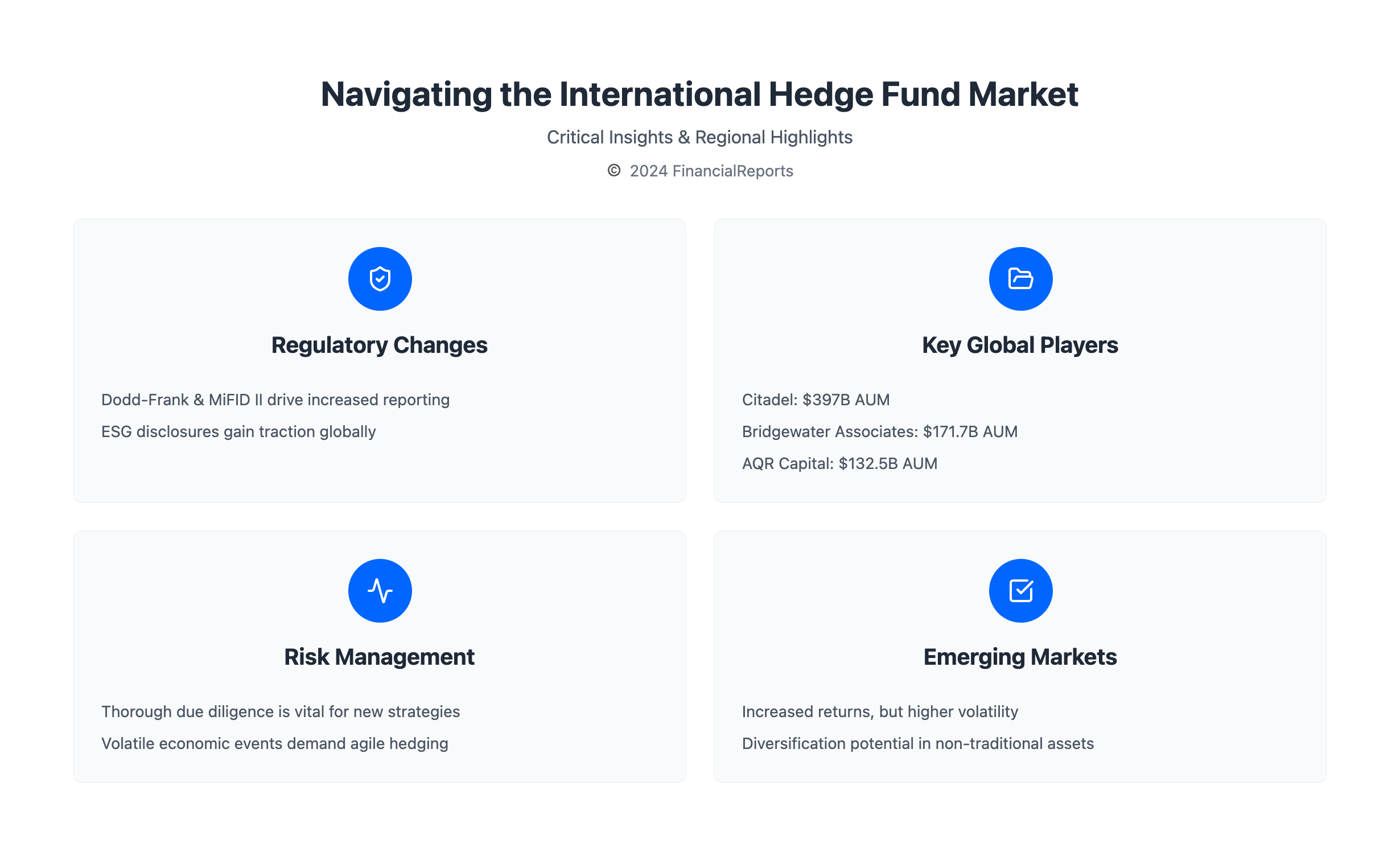
The international hedge fund market is led by big, well-known firms. The top 20 hedge fund firms manage over $1 trillion in assets. Citadel, with $397 billion, is a major player. Bridgewater Associates and AQR Capital Management also stand out with $171.7 billion and $132.5 billion, respectively.
These firms, along with others like D.E. Shaw and Renaissance Technologies, shape the market. They compete fiercely, focusing on different strategies and assets. They operate globally, covering the Americas, Asia-Pacific, and EMEA.
Some of the key players in the market include:
- Citadel: $397 billion in assets under management
- Bridgewater Associates: $171.7 billion in assets under management
- AQR Capital Management: $132.5 billion in assets under management
- D.E. Shaw: $120 billion in assets under management
- Renaissance Technologies: $89 billion in assets under management
The top 5 firms manage over $1.5 trillion in assets. The market is complex and always changing. Firms must keep up with new trends and conditions.
Investment Strategies Used by Hedge Funds
Hedge funds use many strategies to make money. A capital hedge fund might pick long/short equity, global macro, or event-driven strategies. These aim to make a hedge fund global portfolio profitable, no matter the market.
Some common strategies include:
- Long/short equity: This strategy bets on winners and losers to cut down market risk and boost unique gains.
- Global macro: It's about making trades based on global economic and political events, currency changes, and interest rates.
- Event-driven: It focuses on corporate actions, like mergers and acquisitions, and buys or sells securities based on expected results.
Hedge funds also use other tactics, like market neutral, merger arbitrage, and convertible arbitrage. The strategy choice depends on the fund's goals, risk tolerance, and market conditions. Knowing these strategies helps investors choose the right funds and how to spread their investments.
| Strategy | Description | Risk Level |
|---|---|---|
| Long/short equity | Betting on expected winners and losers in the market | Medium |
| Global macro | Making trading decisions based on global economic and political events | High |
| Event-driven | Focusing on corporate activity, such as mergers and acquisitions | Medium |
Risks and Challenges in Hedge Fund Investing
Investing in an international hedge fund can be complex and challenging. By 2005, there were about 9,000 hedge funds, with over $1.1 trillion in assets. This growth brings risks and challenges. A hedge fund management company must handle these risks to succeed.
Key risks include market volatility, regulatory issues, and operational challenges. The 2008 financial crisis showed the need for strong risk management. Funds of hedge funds also bring new challenges, like the need for careful monitoring.
To manage these risks, investors should:
- Do thorough research and due diligence on the fund and its management.
- Keep an eye on the fund's performance and risk level.
- Spread investments to reduce risk from any one fund or strategy.
Understanding these risks helps investors make better choices. They can work with a hedge fund management company to create a successful strategy.
The Impact of Regulations on Hedge Funds
The rules for hedge funds have changed a lot after the 2008 financial crisis. Laws like the Dodd-Frank Act in the US and MiFID II in Europe have brought new rules. These rules require more reports and protect investors, affecting the hedge fund global market. The international hedge fund industry has had to adjust to these new rules.
Some key regulations and their effects include:
- Dodd-Frank Act: Made hedge funds in the US register and report more.
- MiFID II: Made European hedge funds more transparent and follow best practices.
- ESG disclosure requirements: Hedge funds must now share their environmental, social, and governance practices.
The rules for hedge fund global and international hedge fund markets are complex. Bodies like the Financial Conduct Authority (FCA) in the UK are key in overseeing the industry. The FCA's Code of Practice stresses following the rules, with senior managers being held accountable.
| Regulation | Key Provisions | Impact on Hedge Funds |
|---|---|---|
| Dodd-Frank Act | Increased registration requirements and reporting obligations | Enhanced transparency and investor protection |
| MiFID II | Enhanced transparency requirements and best execution practices | Improved market conduct and reduced systemic risk |
| ESG disclosure requirements | Disclosure of environmental, social, and governance practices | Increased transparency and accountability |
In conclusion, the rules for hedge fund global and international hedge fund markets keep changing. New rules aim to make things more transparent, protect investors, and improve market conduct. Hedge funds must keep up with these changes to stay competitive.
Performance Metrics for Hedge Funds
When we look at a capital hedge fund or a hedge fund management company, we need to know about different metrics. These metrics help us see how well the fund does compared to its risk. Important metrics include the Sharpe ratio, Sortino ratio, and alpha.
The Sharpe ratio shows how much return you get for each risk you take. It lets us compare different assets or portfolios with different risks. Alpha, on the other hand, shows how much extra return you get above a benchmark, considering the risk. These metrics are key for investors looking to add hedge funds to their portfolios.
Understanding Hedge Fund Returns
Hedge fund returns can be seen in two ways: absolute or relative. Absolute returns show how well the fund did on its own. Relative returns compare the fund's performance to a benchmark. A hedge fund management company might use these to show how well its fund is doing.
Common Performance Benchmarks
There are common benchmarks for checking how well hedge funds do. The HFRI indices are one example. They give a wide view of the hedge fund world, helping us see how a fund stacks up against others.
| Metric | Description |
|---|---|
| Sharpe Ratio | Return percentage per unit of risk |
| Sortino Ratio | Return relative to downside risk |
| Alpha | Excess return above a benchmark |
Knowing these performance metrics helps investors make smart choices. They can pick the right capital hedge fund or work with a hedge fund management company.
Investor Considerations for Hedge Funds
Thinking about investing in an international hedge fund? It's key to check if it fits your portfolio. Hedge funds are mainly for the wealthy and big institutions because of their high entry fees and rules.
Choosing a hedge fund now requires more careful thought. Look at their investment plans, how they handle risks, and their setup. It's also important to check the manager's past, team, and fees.
Who Should Invest in Hedge Funds?
Hedge funds are for those who can handle big risks, have a long time to invest, and lots of money. They need to be ready for losses and understand the fund's strategy and risks well.
Due Diligence in Hedge Fund Selection
Choosing a hedge fund needs careful research. Investors should:
- Look at the fund's investment strategy and risk handling
- Check the manager's past and team
- Review the fund's setup and fees
Diversification Strategies
Spreading out your investments is important with hedge funds. Consider different strategies like long/short equity, global macro, and event-driven. This can reduce risk and increase gains.
The Future of International Hedge Funds
The hedge fund industry is changing fast. Trends like artificial intelligence and Environmental, Social, and Governance (ESG) investing are leading the way. A hedge fund management company needs to keep up to stay ahead.
Some key trends include:
- More use of alternative data and quantitative strategies
- Focus on ESG investing and sustainable investing
- More funds focused on cryptocurrency and decentralized finance (DeFi)
A capital hedge fund can profit from these trends. It can invest in new markets and use tech to improve strategies. Preqin's "Future of Alternatives 2025" study says global alternative assets will hit $4.3 trillion by 2025. This makes them the second-largest asset class after private equity.
| Trend | Description |
|---|---|
| ESG Investing | Growing focus on Environmental, Social, and Governance investing |
| Alternative Data | Increased use of alternative data and quantitative strategies |
| Cryptocurrency | Rise of cryptocurrency-focused funds and decentralized finance (DeFi) |
In conclusion, the future of international hedge funds is bright. With new trends and investments, a hedge fund can grow and succeed. It's all about adapting and innovating.
How Economic Events Affect Hedge Fund Strategies
Big economic events like the 2008 financial crisis and the COVID-19 pandemic have really changed how hedge funds work. An international hedge fund that focuses on global macro strategies does well when there's a lot of world tension. Hedge fund managers need to change their plans as the economy changes. They use strategies like tail risk hedging and dynamic asset allocation to keep up.
Having a hedge fund global view is key to understanding how economic events shape hedge fund strategies. Some important things to think about include:
- Geopolitical tensions: Hedge funds that focus on global macro can do well when markets are very volatile.
- Financial crises: Hedge funds that focus on credit or event-driven strategies might stay strong during financial troubles.
- Economic downturns: Hedge funds with a wide range of investments and a long-term view can handle economic downturns better.
In short, knowing how economic events influence hedge fund strategies is vital for both investors and hedge fund managers. By studying how big economic events affect hedge fund performance and strategy, investors can make smarter choices about their investments in an international hedge fund or a hedge fund global portfolio.
| Hedge Fund Strategy | Performance During Economic Downturns |
|---|---|
| Global Macro | Tends to perform well during periods of heightened geopolitical tension |
| Credit | May be more resilient during times of financial stress |
| Event-Driven | May benefit from increased volatility in financial markets |
Hedge Funds in Emerging Markets
Emerging markets are now a big deal for hedge funds. They have a lot of assets focused on these areas. A capital hedge fund can invest in things like commodities, real estate, and currencies. They also look at stocks and bonds.
Hedge fund management companies see the chance for big returns and diversification in these markets.
Some interesting facts about emerging markets are:
- About 20% of the world's countries are emerging markets.
- These countries have around 80% of the world's population.
- Pension funds and endowments started investing in emerging market hedge funds in the early 2000s.
The risks in emerging markets are real. Illiquidity, big losses, high fees, and lack of transparency are some of the challenges. Yet, many hedge funds are doing well, with some making over 12.5% in recent years.
Conclusion: Strategic Insights for Hedge Fund Investors
The global hedge fund industry is growing fast, reaching over $X trillion in 2023. To succeed, investors need to understand the market, do thorough research, and build smart portfolios. This section offers key advice for those investing in international hedge funds.
Investors should carefully look at different hedge fund strategies and how they manage risks. They also need to consider the rules and the state of the economy. It's important to check the fund managers' skills, their investment approach, and how they run their operations.
Building a diverse hedge fund portfolio is key. It should include different strategies, investments in various places, and enough cash to meet needs. This approach helps reduce risks and can increase returns.
Hedge funds are becoming more important in big portfolios. They are seen as valuable tools for achieving specific goals. As the industry changes, investors must stay alert and ready to adapt to new market trends.
FAQ
What is the current state of the global hedge fund industry?
The global hedge fund industry is always changing. It's influenced by market size, growth, and how hedge funds affect the financial world.
How are hedge funds defined, and what are their key characteristics?
Hedge funds are special investment options. They have unique fees, strategies, and rules. Knowing these is key for investors.
What is the economic significance of hedge funds in the global economy?
Hedge funds are important in the world's finance. They help with market liquidity, price setting, and risk handling. It's vital to understand their role.
Who are the key players shaping the international hedge fund market?
Big names in hedge funds, major firms, and new players shape the market. They all add to the competition and market dynamics.
What are the primary investment strategies used by hedge funds globally?
Hedge funds use many strategies. These include long/short equity, global macro, and event-driven. Each has its own risks and results.
What are the key risks and challenges associated with hedge fund investing?
Investing in hedge funds comes with risks. These include market ups and downs, rule changes, and operational issues. It's important to manage these risks well.
How do regulations impact the international hedge fund industry?
Rules like the Dodd-Frank Act and MiFID II affect hedge funds a lot. They change how funds operate and what rules they must follow.
How are hedge fund performance metrics and evaluation techniques used?
Investors use metrics like Sharpe ratio and alpha to judge hedge fund success. This helps them make smart investment choices.
What factors should investors consider when approaching hedge fund investments?
It's important to think about who can invest, do your homework, and diversify. These steps are key for investing in hedge funds.
What are the key trends and future outlook for the international hedge fund industry?
New trends like alternative data, quantitative strategies, and ESG are changing the industry. They're shaping the future of hedge funds.
How do major economic events and geopolitical tensions influence hedge fund strategies and performance?
Hedge funds face challenges from global economic and political issues. They must adjust their plans to handle risks and find opportunities.
What are the unique opportunities and challenges of hedge fund investing in emerging markets?
Investing in new markets can offer big returns and diversification. But, it also comes with unique risks that funds must manage carefully.