Mastering Day Trading: Essential Tips for Beginners
Day trading for beginners needs a good grasp of the markets and a solid strategy. It's about buying and selling financial items in one day to make money from small price changes. To start, learning the basics is key, including how to begin and the various trading strategies.
Day trading is tough but rewarding, and it takes time and effort to master. With the right mindset and approach, anyone can succeed. This article will share vital tips and strategies for beginners, covering risk management, market analysis, and trading plans.
Key Takeaways
- Day traders usually risk less than 1% to 2% of their accounts per trade for successful trading.
- Brokers like Interactive Brokers and Webull are great for day traders, providing reliable platforms.
- It's wise to avoid penny stocks in day trading because they're not liquid and have lower success rates.
- Successful day traders make money from about 50% to 60% of their trades, focusing on big wins over small losses.
- Having a trading strategy and sticking to it is key to avoid emotional decisions and stay consistent.
- Learning day trading involves four main steps: gaining knowledge, developing skills, following a trading process, and changing your mindset.
- Futures trading lets beginners start with as little as $500, which is more flexible than stock trading, needing a $25k minimum balance for more than 4 trades in 5 days.
Understanding Day Trading Basics
Day trading means buying and selling financial items in one day to make quick profits. It needs a deep market understanding and fast decision-making skills. When trading is allowed, people can join the day trade market. This market has chances for profit but also risks.
To succeed in day trading, knowing the best day trading stocks is key. It's important to understand the stock's liquidity, volatility, and trading patterns. Day traders look for stocks with good liquidity and some volatility for the best profit chances.
Key Concepts in Day Trading
Some important day trading concepts include:
- Bid and ask prices
- Stop-loss orders
- Leverage
Grasping these concepts is vital for smart trading decisions and risk reduction. Day trading can lead to quick losses if not careful. So, having a solid trading plan and risk management strategies is essential.
| Trading Strategy | Description |
|---|---|
| Scalping | Involve making multiple small trades in a short period |
| Trend Following | Involve trading in the direction of the market trend |
By learning day trading basics and using the right strategies, traders can boost their success in the day trade market.
Tools and Platforms for Day Trading
To start day trading stocks well, you need the right tools and platforms. First, pick a good online broker. Brokers like Interactive Brokers and Webull are great for day trading. They offer real-time quotes, charting tools, and complex order entry.
Learning to day trade means understanding the tools you need. This includes technical indicators, chart patterns, and risk management software. These tools help traders make better decisions and improve their results.
When choosing a day trading platform, look for these key features:
- Real-time data and streaming quotes
- Advanced charting tools and technical indicators
- Reliable customer support
- Ability to enter and modify complex orders
Choosing a platform with these features helps day traders succeed. It makes their trading experience better.
| Broker | Features | Fees |
|---|---|---|
| Interactive Brokers | Real-time streaming quotes, advanced charting tools | $0.00 for minimum deposit, stock trades, and $0.65 for options per contract |
| Webull | Real-time data, technical indicators, and chart patterns | $0.00 for minimum deposit, stock trades, and $0.00 for options per contract |
Developing a Day Trading Strategy
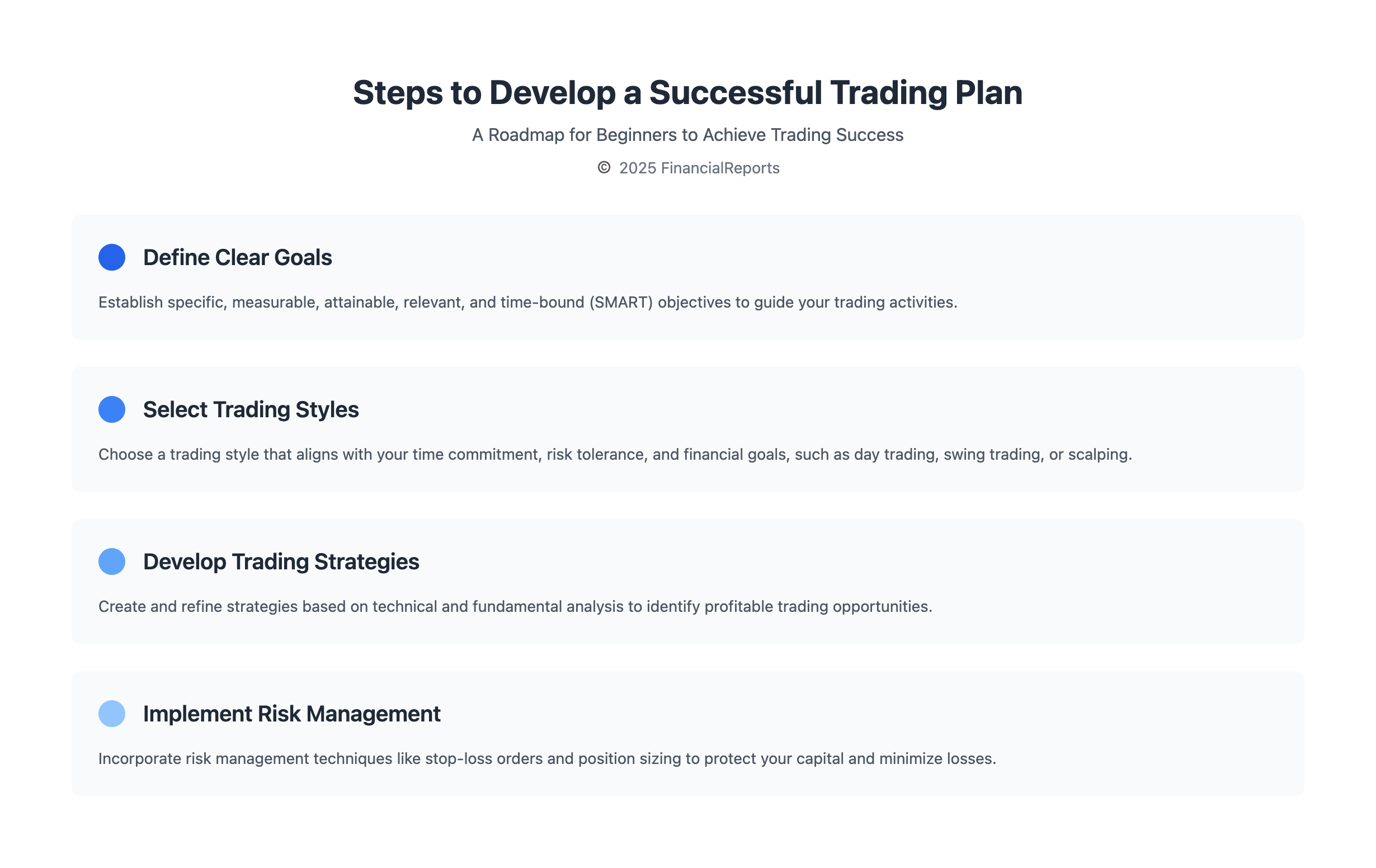
Day traders must have a solid strategy to succeed. They need to know different trading strategies and how to use them. Learning about trend following, scalping, and range trading is key.
A trading plan is vital for day traders. It helps them set goals, manage risk, and make smart decisions. Learning about risk management and trade management is essential. This includes setting stop-loss levels and monitoring market trends.
Key Components of a Trading Plan
- Clear goals and objectives
- Risk management techniques
- Trade management strategies
- Market analysis and research
Creating a detailed trading plan is important for day traders. It helps them stay on track and succeed. By keeping up with market trends and adjusting strategies, day traders can achieve their goals.
| Trading Strategy | Description |
|---|---|
| Trend Following | Identifying and following market trends |
| Scalping | Making multiple small trades in a short period |
| Range Trading | Buying and selling within a specific price range |
Risk Management Techniques
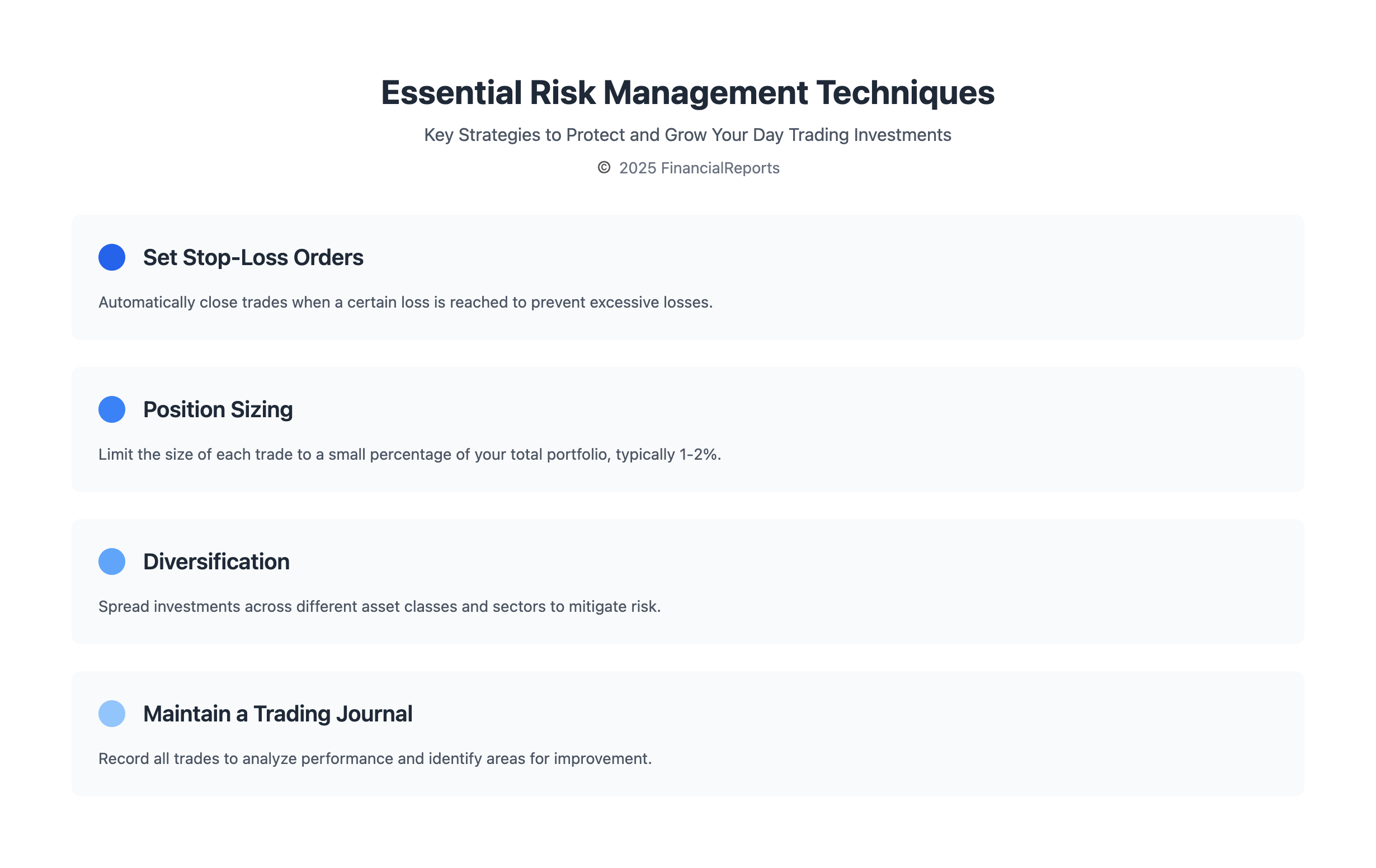
Effective risk management is key for day trading success. It helps reduce losses and boost gains. By setting stop-loss and take-profit levels, traders can control their risk. This is vital in volatile markets.
Traders should plan their risk management based on their goals and how much risk they can take. They should not risk more than 1% to 2% of their total account in one trade. This approach helps avoid big losses and keeps trading stable.
Understanding day trading success requires knowing about risk management. This includes how to size positions and set stop-loss levels.
Some important risk management techniques are:
- Setting stop-loss and take-profit levels to limit losses and secure gains
- Using position sizing strategies to manage risk exposure
- Diversifying investments across different asset classes and sectors to minimize risk
By using these techniques, traders can improve their success rate and reduce losses. Remember, risk management is an ongoing task that needs constant monitoring and adjustments for the best results.
Analyzing Market Trends
To succeed in day trading, it's key to learn the basics and understand market trends. This means using both technical and fundamental analysis. Technical analysis looks at past price and volume data. Fundamental analysis digs into financial and economic factors.
By mixing these methods, traders can make smart choices. They can spot the best stocks for day trading. This helps them make money in the fast-paced market.
Many investors use both technical and fundamental analysis. For instance, day traders might use simple trendlines and volume indicators. On the other hand, swing or position traders might look at chart patterns and technical indicators.
Popular tools for finding stocks include TradingView, Finviz, and Yahoo! Finance. It's also wise to test trading strategies to see how they would have done in the past.
Some important points to remember when analyzing market trends include:
- Using a mix of technical and fundamental analysis
- Testing trading strategies
- Using stock screeners like TradingView and Finviz
By following these tips and keeping up with market trends, day traders can boost their success. They can make better choices about which stocks to trade.
Building a Trading Routine
Creating a daily trading routine is key to success in the markets. Day trading tips stress the need for discipline and emotional control. These can be gained by sticking to a routine. To succeed, one must understand that day trading is hard and needs dedication and persistence.
A good trading routine includes time for chart analysis, market watch, and planning trades. It's important to keep charting separate from trading to avoid quick decisions. Focusing on end-of-day data and daily charts helps make better choices. Weekly charts also help spot key levels, trends, and market conditions.
Some important parts of a trading routine are:
- Daily chart analysis to find support and resistance levels, market conditions, and price action signals
- Market watch lists to get familiar with preferred markets
- Setting up trades with entry, stop loss, and profit target placement
By adding these elements to a routine, day traders can do better and have a higher chance of success. Remember, day trading tips are not for everyone. It's vital to find a routine that fits you and your trading style.
Common Mistakes to Avoid
Learning to find stocks for day trading comes with its own set of pitfalls. One major mistake is overtrading, often caused by impatience and lack of discipline. To sidestep this, traders should craft a detailed trading plan and adhere to it. This approach helps avoid making rash decisions driven by emotions.
Effective risk management is another critical area. Neglecting it can result in big losses, even for seasoned traders. To manage risk, traders must carefully select stocks based on volatility, liquidity, and market trends. This strategy helps reduce the risk of losses and boosts the chances of making profits.
Overtrading Pitfalls
Overtrading is a major hurdle for day traders, including those new to the field. To overcome this, setting clear goals and sticking to a trading plan is essential. Traders must also be mindful of their emotions, avoiding decisions made out of fear or greed.
Ignoring Risk Management
Another common error is neglecting risk management, which can lead to substantial losses. Day traders must prioritize risk management, employing tools like stop-loss orders and position sizing. These strategies help safeguard capital and enhance the likelihood of success over time.
Some key statistics to remember when day trading include:
- Average loss and profit per trade metrics are vital for assessing trading performance.
- Fear of missing out (FOMO) can prompt irrational trading decisions, often driven by news or trending topics.
- Day traders who average down or add to losing positions risk further losses by throwing more money into a failing trend.
| Mistake | Consequence | Solution |
|---|---|---|
| Overtrading | Significant losses | Develop a solid trading plan and stick to it |
| Ignoring risk management | Substantial losses | Prioritize risk management using techniques such as stop-loss orders and position sizing |
Resources for Continued Learning
Day trading means buying and selling financial assets in one day to make money from quick price changes. To do well, you need to know how to day trade. There are many resources to help you get better at day trading. For example, learning how to pick stocks for day trading can be done through online courses, books, and communities.
Books like "Trading in the Zone" and "The Disciplined Trader" offer great advice for day traders. Online courses and communities, such as those at Investopedia, also help. When picking day trading stocks to buy, consider market trends and analysis.
Day traders can also learn from webinars, workshops, and other educational materials. These help keep you updated on market trends and analysis. By using these resources, day traders can do better and have a higher chance of success in the fast-paced world of day trading.
| Resource | Description |
|---|---|
| Online Courses | Provide day traders with the knowledge and skills they need to succeed |
| Books | Offer valuable insights and strategies for day traders |
| Communities | Provide day traders with support and networking opportunities |
Evaluating Your Progress
Starting your day trading journey means you need to check your progress often. It's key to track important metrics like
profit and loss, risk-reward ratios, and win-loss ratios
. These help you understand your trading strategies better. You can then make smart changes to get better.
Watching your profit factor (R) is vital. It shows how much you win compared to what you lose. For example, an R-value of 1.65 means you make $1.65 for every $1 lost. This shows you're making money.
Also, keep an eye on your maximum drawdown. This is how much you lose from the highest point. It helps you manage risk and keep your money safe.
Success in day trading isn't about beating others. It's about beating your own goals. Studies say 85% to 90% of traders don't make a profit regularly. So, it's important to set your own goals and track your progress.
By focusing on your profits and drawdowns, you can improve your skills. This increases your chances of doing well in the long run.
FAQ
What is day trading?
Day trading means buying and selling financial items in one day. The goal is to make money from small price changes.
What are the key terms I need to know as a beginner day trader?
Beginners should know about bid and ask prices, stop-loss orders, and leverage. These terms are key to understanding day trading.
What are the essential tools and platforms for day trading?
You need a good trading platform with real-time data and charts. It should also have reliable customer support. Learn about technical indicators and risk management tools too.
What are the different types of day trading strategies?
There are trend following, scalping, and range trading strategies. It's important to pick one that fits your goals and risk level.
How can I effectively manage risk in day trading?
Use stop-loss and take-profit levels to manage risk. Also, size your positions wisely and diversify your trades.
How can I analyze market trends and patterns as a day trader?
Use technical analysis with charts and indicators. Also, look at economic data for fundamental analysis. This helps spot trends and make smart trades.
What are the daily habits and routines of successful day traders?
Successful traders have a set routine and stay disciplined. Keeping a trade journal is also important.
What are the common mistakes that day traders should avoid?
Avoid overtrading and revenge trading. Also, don't let emotions control your decisions.
What resources are available for continued learning and improvement in day trading?
Use books, online courses, and trading communities to learn. These resources help improve your skills.
How can I effectively evaluate my progress as a day trader?
Track your profit and loss, risk-reward ratios, and win-loss ratios. This helps you see how you're doing and adjust your strategies.