Markup Percentage: Calculate Profit Margin Accurately
Markup percentage is key for businesses to set prices and make profits. It's the extra amount added to a product's cost to get the selling price. For example, adding $90 to a $110 product makes it $200.
The formula for markup is important. It's the gross profit margin divided by the unit cost. This is usually shown as a percentage, like a 25% markup rate, which means a 20% gross margin.
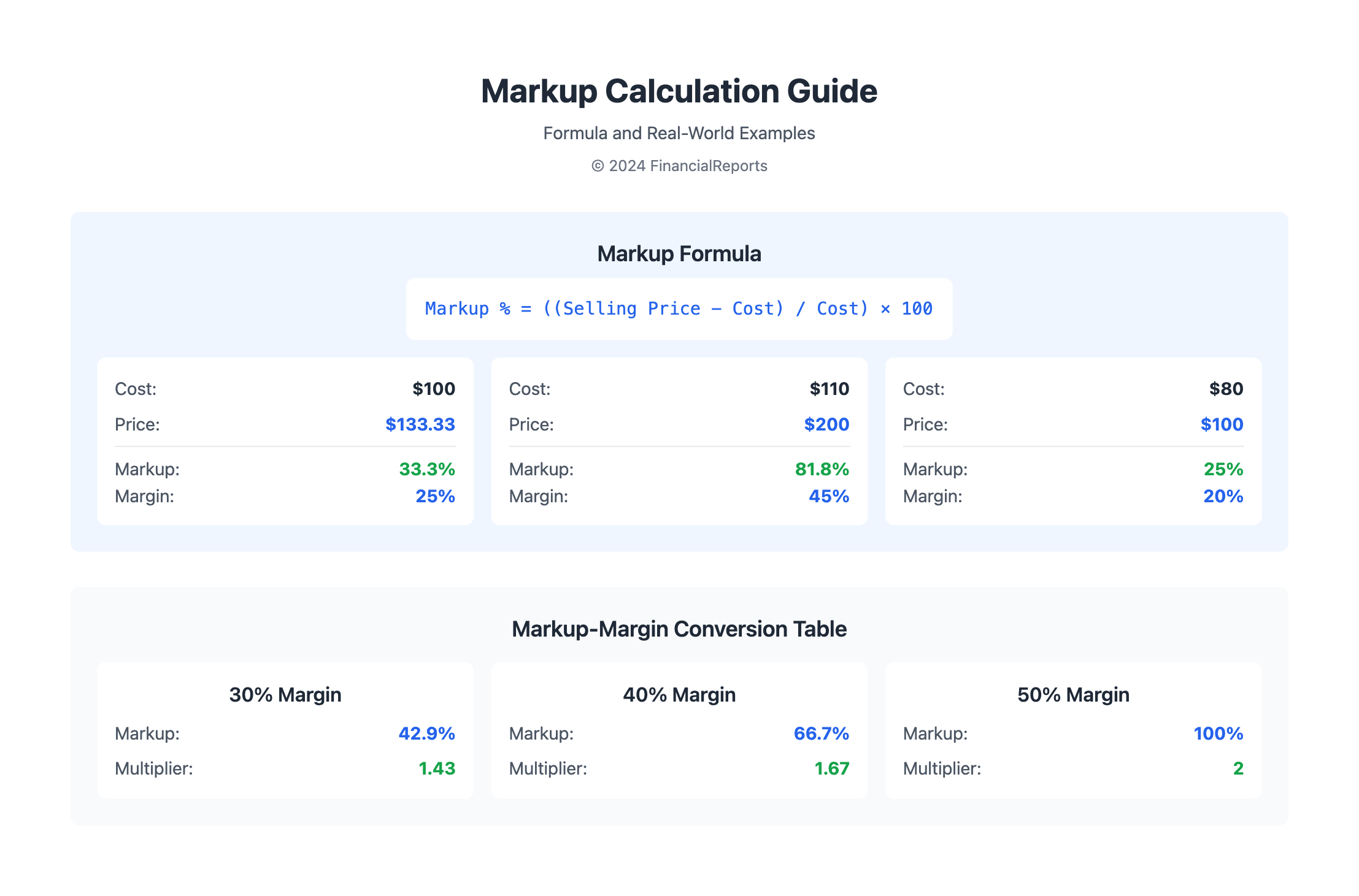
Markup and profit margin are closely linked. A higher markup means more profit but less revenue. To find the selling price for a certain profit margin, divide the cost by the inverse of the gross margin equation. For a 25% margin, the selling price would be $133.33, with a 33.3% markup.
Getting the markup percentage right is critical. The right formula is essential to avoid mistakes.
Key Takeaways
- Markup percentage is the amount by which the cost of a product is increased to obtain the selling price.
- The business markup formula is used to calculate the markup percentage, which is the gross profit margin divided by the unit cost.
- A higher markup can lead to greater profit for a product category but might reduce revenue.
- Accurate calculation of markup percentage is vital to determine selling prices and ensure profitability.
- Using the correct business markup formula is essential to avoid errors in calculating markup percentage.
- Understanding the difference between markup and margin is critical for accurate profit calculation in various industries, including recruitment.
- The markup formula involves finding the gross profit by subtracting the cost from the price and dividing it by the cost, then multiplying by 100 to express the markup as a percentage.
Understanding Markup Percentage
Markup percentage is key in business. It's important to know what it means and why it matters. The omni markup calculator helps figure out markup on cost. But, what exactly is markup?
Markup percentage is the difference between what you sell something for and what it costs. It's shown as a percentage of the cost. For example, if you sell something for $100 that cost $80, you made a 25% profit.
To find the markup percentage, you use a simple formula. It's ((Selling Price – Cost Price) / Cost Price) x 100. So, if you sell something for $100 and it cost $80, the markup is 25%. This shows you made a 25% profit on the cost.
Definition of Markup Percentage
Markup percentage is the selling price minus the cost price, divided by the cost price. It's a way for businesses to make sure they're profitable. It helps cover costs like inventory and manufacturing.
Importance in Pricing Strategy
Markup percentage is very important for pricing. Businesses need to price things right to make money. The right markup helps them set prices that cover costs and make a profit.
Using an omni markup calculator helps find the best selling price. Knowing about markup is key for smart pricing decisions.
| Cost Price | Selling Price | Markup Percentage |
|---|---|---|
| $80 | $100 | 25% |
| $70 | $90 | 28.57% |
In short, knowing about markup percentage is essential for businesses. It helps them set prices that make money. By using the omni markup calculator, businesses can find the best selling price.
The Difference Between Markup and Margin
It's important for businesses to know the difference between markup and margin. Markup is the extra amount added to a product's cost to set its selling price. Margin is the profit made from selling a product compared to its cost. To find markup, you use the formula: (Selling Price - Cost Price) ÷ Cost Price.
For example, if a product costs $100 and is sold for $150, the markup is 50%. This shows how much profit is made on each product.
To find the mark up price, you need to know the difference between what you sell it for and what it costs. Use the formula: ((Selling Price - Cost Price) ÷ Cost Price)(100). For instance, if a product is sold for $200 and costs $120, the markup is 66.7%.
How They Are Calculated
Markup and margin are calculated differently. Markup is found by subtracting the cost price from the selling price, then dividing by the cost price. Margin is found by subtracting the cost of goods sold from the selling price, then dividing by the selling price.
Knowing how to calculate these helps businesses set their prices. It's key to understanding how to make more profit.
Key Distinctions Between the Two
Markup and margin are different because of how they're calculated and what they show. Markup shows profit on a specific item compared to its cost. Margin shows profit as a percentage of revenue.
By understanding these differences, businesses can use markup to their advantage. This helps in making smart pricing decisions, which can boost profitability.
Why Businesses Use Markup Percentage
Businesses use markup percentage to make sure they earn money on each sale. They use the formula for markup on cost to find the best price for their products or services. Knowing what is mark up and how it affects profits is key for smart pricing choices.
The what is markup price is very important for a company's pricing plan. It directly affects how much money they make. By keeping an eye on markup, businesses can stay profitable, adjust to market changes, and make smart choices about what to sell and at what price. Some benefits of tracking markup include:
- Simplifying pricing decisions
- Ensuring cost coverage
- Facilitating financial forecasting
Markups vary by industry due to different indirect costs. For example, food businesses often have higher markups, while manufacturing has lower ones because of less storage and labor costs. By understanding these factors, businesses can tweak their prices to stay competitive and reach their goals.
How to Calculate Markup Percentage
To figure out the markup percentage, businesses use a simple formula. This formula helps them understand what markup rate and pricing mean. It's all about subtracting the cost from the selling price, then dividing by the cost. This can be shown as: Markup Percentage = (Sales Price – Unit Cost)/Unit Cost.
For example, if the selling price is $133.33 and the cost is $100, the markup is 33.3%.
Simple Formula for Calculation
The formula for markup percentage is easy: Markup = ((Selling price – Cost price) / Cost price) x 100. It shows how much more the selling price is than the cost price. This helps businesses see how profitable their pricing is.
Examples of Markup Calculation
Different industries use different markup percentages. For instance, fashion often uses a 150% markup, or 2.5 times the cost. On the other hand, grocery stores usually have a 15% markup.
Knowing these differences is key for businesses to set good prices. They can then see how profitable they are. Common multiples include 1.25 (25% markup), 1.5 (50% markup), and 2 (100% markup).
By using the markup formula, businesses can make smart pricing choices. This affects their profits and how competitive they are in the market.
Factors That Influence Markup Percentage
Businesses must think about several things when setting their markup percentages. These include industry standards, the cost of goods sold, and the target market. For example, retail companies might use a parts markup calculator to get the right markup for their items.
The math behind markup is key to finding the best markup percentage. The formula is: Markup (%) = [(Selling Price − Cost Price) / Cost Price] × 100. This helps businesses figure out the best price for their products. Different industries use different markups based on their products, target markets, and competition.
Industry Standards and Cost of Goods Sold
Industry standards are very important in setting markup percentages. Each industry has its own standard markups, based on things like competition, demand, and costs. The cost of goods sold also plays a big role in markup decisions. Businesses need to look at all costs involved in making or buying a product to decide on the markup.
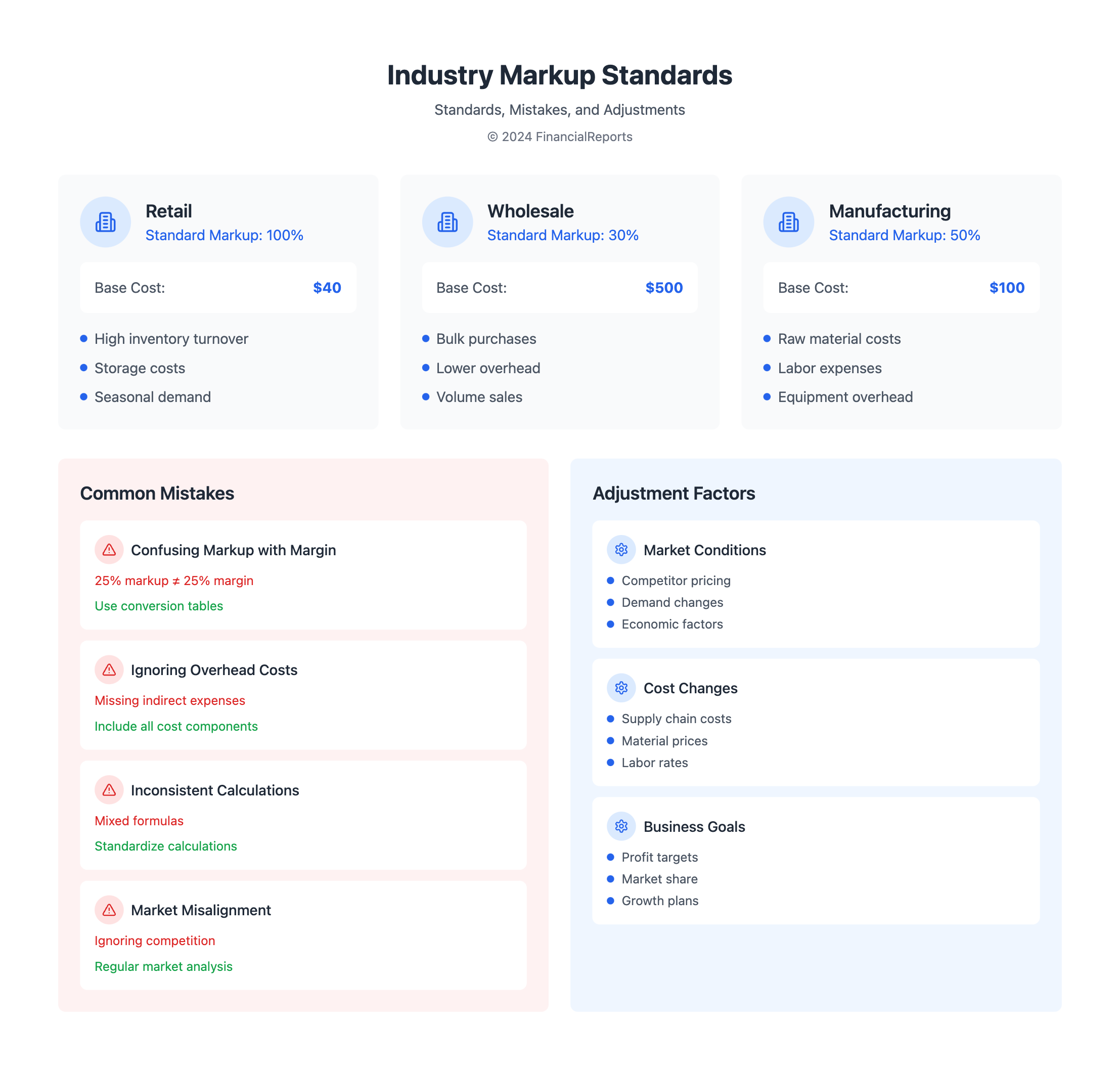
| Industry | Standard Markup | Cost of Goods Sold |
|---|---|---|
| Retail | 100% | $40 (cost of product) |
| Wholesale | 30% | $500 (cost of product) |
| Manufacturing | 50% | $100 (cost of raw materials) |
Understanding what affects markup percentages helps businesses make smart pricing choices. This ensures they apply the right markup to their products.
Common Markup Percentage Mistakes
Businesses often make mistakes when calculating markup on selling price. It's important to know what markup is and how it affects pricing. A common error is confusing markup with margin. For example, a 25% markup rate actually results in a 20% gross margin, not 25%.
To avoid these mistakes, businesses need to accurately calculate all costs. This includes mark up cost, overhead, and marketing expenses. The table below shows how markup percentages relate to margin percentages:
| Desired Margin % | Markup % | Markup Multiplier |
|---|---|---|
| 30.0% | 42.9% | 1.43 |
| 40.0% | 66.7% | 1.67 |
| 50.0% | 100.0% | 2.00 |
Using this table helps businesses calculate markup on selling price correctly. Knowing what markup is and its impact on pricing is key. It helps make informed decisions and reach business goals.
Adjusting Markup Percentages
Setting your markup as a percentage above cost helps you keep earning as costs go up. To adjust your markup well, businesses should check it often. Look at changes in production costs, market conditions, or what competitors are doing. A business markup formula can make this easier.
Using an omni markup calculator is a smart move. It helps you set prices that cover costs and make a profit. Knowing how markup percentage affects your gross profit margin helps you make better pricing decisions.
Here are some ways to adjust your markup:
- Slowly change your markup percentages when market conditions change
- Use different prices for different customer groups
- Price based on the value your product or service offers
By making decisions based on data and using financial tools, businesses can adjust their markup. This keeps them competitive and profitable.
Tools to Calculate Markup Percentage
Knowing what does markup mean is key for businesses to price right. Markup is the difference between what a product costs and what it's sold for, shown as a percentage. To find the best markup, businesses can use online calculators like the one at markup calculator tools.
When looking at markup in business, getting the markup percentage right is vital. You need to know the cost of goods, operating expenses, and the profit you want. The formula for markup percentage is (Selling Price - Unit Cost) / Unit Cost x 100%. Tools and software can make this easier, helping with accurate pricing.
To how to find markup, follow these steps:
- Calculate the unit cost of the product.
- Determine the desired selling price based on market conditions and financial goals.
- Use a markup calculator or software to find the ideal markup percentage.
By using these tools and understanding what affects markup, businesses can price their products right. This balance between profit and competitiveness is key to success in the market.
Tracking Markup Percentage Over Time
Keeping an eye on markup percentages is key for businesses. It helps them spot trends, predict market shifts, and set prices wisely. By knowing the formula for markup on cost, they can figure out their mark up price. This lets them tweak their pricing plans as needed.
Most companies aim for a 50% markup. But this number can change based on the industry, market, and other factors. By watching how their markup percentage changes, businesses can find ways to get better. They can use this info to make smart pricing choices.
Some perks of watching markup percentages include:
- Spotting trends and patterns in pricing and profits
- Getting ready for market changes and adjusting prices
- Deciding ahead of time to boost pricing and profits
Tools like the free Markup Calculator from FreshBooks can help. They make it easier to work out markups and margins. This way, businesses can make better choices about their prices.
| Markup Percentage | Gross Margin | Revenue | COGS |
|---|---|---|---|
| 20% | 16.7% | $120k | $100k |
Real-World Applications of Markup Percentage
Markup pricing is key in retail, manufacturing, and more. Knowingwhat is markup pricehelps businesses make more money. By using the rightformula for price markup, they can pay for expenses and make a profit.
For example, a product costing $10 sells for $15, making awhat is markup rateof 50%. Markup pricing ensures businesses make money and cover costs. It boosts profits by making sure products add to the company's earnings.
Markup pricing is easy to use for quick price setting. It's great for selling lots of items and keeps profits steady. Businesses can adjust markup rates to meet financial goals and stay competitive.
FAQ
What is markup percentage?
Markup percentage is how much a business adds to a product's cost to set its selling price. It's key for making profits and keeping margins high.
Why is markup percentage important in business pricing strategy?
It helps businesses cover costs and make profits. It lets them price products right, adjust to market changes, and plan their product lines.
What is the difference between markup and margin?
Markup is the extra amount added to cost for the selling price. Margin is the profit part of the selling price. Knowing the difference helps in financial planning and pricing.
How do businesses use markup percentage to maintain profitability?
Businesses use it to track pricing, cover costs, and forecast finances. Adjusting markup helps them stay profitable by adapting to market changes and optimizing products.
What is the formula for calculating markup percentage?
The formula is: Markup Percentage = (Selling Price - Cost) / Cost x 100. It helps set the right selling price for profit and cost.
What factors influence a business's markup percentage decisions?
Factors include industry norms, Cost of Goods Sold (COGS), competition, target market, and business goals. Businesses must weigh these to set the best markup.
What are common mistakes in applying markup percentage?
Mistakes include overpricing, underpricing, and not accounting for all costs. These errors can hurt a business's profits and stability.
When should businesses adjust their markup percentages?
Businesses should adjust markup when costs change, market conditions shift, or competition evolves. Regular review and adjustment keep pricing competitive and profitable.
What tools are available to help businesses calculate and manage markup percentages?
Tools range from simple spreadsheets to advanced software. The right tool helps manage markup accurately and efficiently.
Why is it important to track markup percentage over time?
Tracking markup helps businesses spot trends, predict market shifts, and make timely pricing decisions. It ensures pricing strategies stay effective and profitable over time.