How to Find Sales Revenue: A Complete Guide
Sales revenue is the money a business makes from selling goods or services. It's recorded on the income statement when the product is delivered or the service is done. Knowing how to find sales revenue is key for a business's financial health.
It helps in making financial reports, planning strategies, and valuing the business. There's a difference between gross and net sales revenue. Gross revenue is the total money from sales. Net revenue is what's left after deducting the cost of goods sold from gross sales.
For businesses, knowing sales revenue is vital. It shows how well the company is doing. It helps check if products or services are working well. It also aids in making future plans and forecasting sales.
To find sales revenue, businesses need to look at different types of income. This includes main licensing income, training income, and total income. For example, selling 500 Xboxes at $249 each brings in $124,500 in total revenue.
Key Takeaways
- Accurate sales revenue calculation is essential for financial reporting and business valuation.
- Gross sales revenue is the total amount of money received from products or services sales.
- Net sales revenue is the total obtained after subtracting the cost of goods sold from the gross sales figure.
- Understanding sales revenue is critical for evaluating company performance and making strategic decisions.
- Businesses can use various strategies to ensure accurate forecasts, including clean data, forecasting for each revenue stream, and using AI sales tools.
- Sales revenue provides insights into company performance, facilitating evaluation of offerings' effectiveness and enabling accurate forecasting.
- Annual recurring revenue (ARR) is a key metric for businesses with subscription models, calculated by normalizing recurring revenue over one year.
Understanding Sales Revenue
Sales revenue is key for businesses, showing the total money made from selling things. To define sales revenue, it's the average sales price times the number of items sold. The sales revenue meaning includes gross and net sales revenue. Net sales revenue is what's left after subtracting returns, allowances, and discounts from gross sales.
Sales revenue is important because it helps with many financial decisions. It's used to figure out a company's value, track performance, and predict growth. It's different from other types of income, like non-operating income, which comes from less common sources.
Some important things about sales revenue are:
- Revenue recognition: how well a company gets paid what it's owed
- Net income: what's left after subtracting expenses from revenue
- Net revenue formula: (Quantity Sold * Unit Price) - Discounts - Allowances - Returns
In short, knowing about sales revenue is essential for businesses to grow. By understanding the sales revenue meaning and its parts, companies can set better prices, reach more customers, and focus on customer satisfaction to boost sales.
Key Components of Sales Revenue
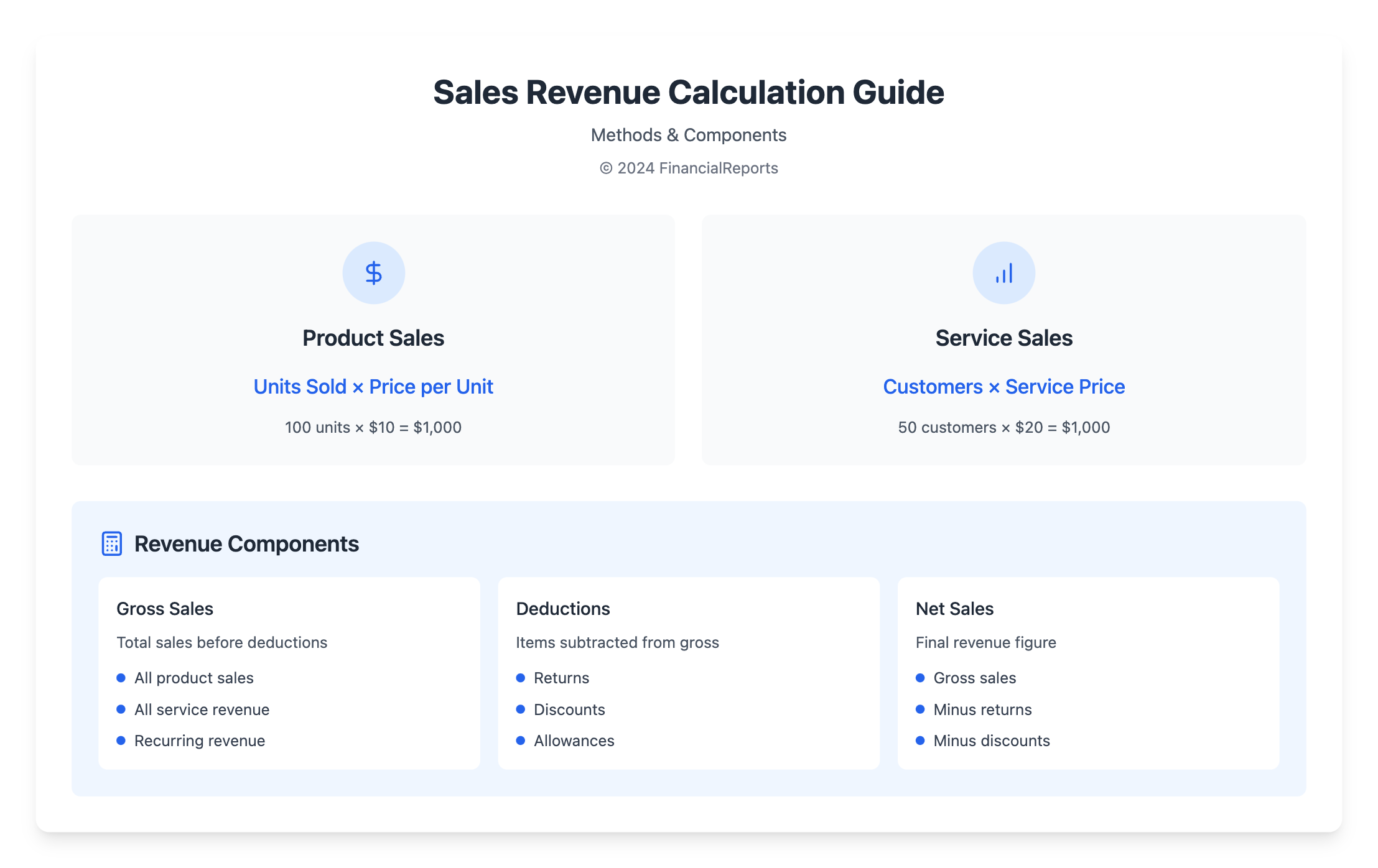
To grasp sales revenue, we must understand its main parts. It's the top sign of how well a business is doing, checked every day, month, and year. The formula for sales revenue is Sales Revenue = Number of Units Sold x Selling Price per Unit. There are two ways to record sales: accrual basis and cash basis.
When figuring out sales revenue, it's key to look at gross sales vs. net sales. Gross sales revenue is the total money made from sales, ignoring discounts or returns. Net sales revenue shows the real money made after discounts, returns, and allowances are subtracted. Businesses must track these parts well to report their finances accurately and make smart decisions.
Some important things to think about when figuring out sales revenue include:
- Discounts and returns, which can greatly change net sales revenue
- Price elasticity of demand, which helps set prices
- Tax effects on how people buy, shown by comparing gross and net sales revenue
By knowing these key parts and how to figure out sales revenue, businesses can make better choices to grow sales and boost profits. Sales revenue is a key way to measure sales success in an industry. Getting it right is vital for financial reports and making decisions.
| Component | Description |
|---|---|
| Gross Sales Revenue | Total income from sales, ignoring discounts or returns |
| Net Sales Revenue | Real money made from sales after discounts, returns, and allowances are taken out |
Different Methods to Calculate Sales Revenue
Understanding a company's financial health starts with calculating sales revenue. There are many ways to do this, like simple formulas or using accounting software. For companies that sell products, you multiply the number sold by the average price. Service-based businesses multiply the number of customers by the average service cost.
Using Simple Formulas
The basic formula for sales revenue is Total Revenue = Price x Quantity Sold. This works for both product and service businesses. For instance, if a company sells 100 units at $10 each, their total revenue is $1000.
Using Accounting Software
Accounting software can also help calculate sales revenue. It makes the process easier and less prone to mistakes. QuickBooks and Xero are popular choices. They help businesses manage their finances better and make smarter choices.
| Method | Formula | Example |
|---|---|---|
| Product-based | Number of Units Sold x Average Price | 100 units x $10 = $1000 |
| Service-based | Number of Customers x Average Price of Services | 50 customers x $20 = $1000 |
Using the sales revenue formula and equation helps businesses understand their finances better. This knowledge is key to growing and staying profitable.
Sales Revenue and Business Performance
Sales revenue is key to knowing how well a company is doing financially. It shows if a business is growing or not. To find sales revenue, you need to look at how it affects the company's overall performance.
For instance, Exxon Mobil Corporation made about $87.7 billion in sales for September 2024. This was a bit less than the $88.5 billion they made in September 2023. This shows how important sales revenue is for a company's financial health.
To figure out sales revenue, you use this formula: Sales Revenue = Average Sales Price x Number of Units Sold.
How Sales Revenue Impacts Profitability
Sales revenue directly affects a company's profits. By increasing sales revenue, a business can make more money. This is why revenue management is so important. It helps predict demand to sell more and make more money.
Sales Revenue as an Indicator of Growth
Sales revenue also shows how much a company can grow. By looking at sales revenue trends, businesses can find new opportunities. They can also see if their marketing is working well.
The table below shows why sales revenue is important for business performance:
| Company | Sales Revenue | Net Income |
|---|---|---|
| Exxon Mobil Corporation | $87.7 billion | $10.4 billion |
In summary, sales revenue is very important for a company's financial health and growth. By understanding sales revenue and its impact on business, companies can make better decisions. This helps them grow and become more profitable.
Recording Sales Revenue
To record sales revenue accurately, businesses need to follow key steps. They must keep detailed records of all sales, including the date, amount, and type. When a sale is made, cash is debited and revenue is credited.
For example, if a product is sold for $700 with a 10% sales tax, the entry is made. It involves crediting cash and debiting several accounts like cost of goods sold and revenue from sales.
Businesses use tools like accounting software and spreadsheets to track sales. These tools make recording sales easier and provide up-to-date financial reports. For product sales, the formula is Revenue = Number of units sold x average price. For services, it's Revenue = Number of customers x average price of services.
It's important to report revenue regularly. Companies usually report monthly, quarterly, or annually. The reporting frequency depends on the business needs and laws. By following these steps and using the right tools, businesses can record sales revenue accurately. This is key for making smart financial decisions and growing the business.
| Type of Sale | Journal Entry |
|---|---|
| Cash Sale | Debit Cash, Credit Revenue |
| Credit Sale | Debit Accounts Receivable, Credit Revenue |
| Returned Item | Debit Sales Returns and Allowances, Credit Cash |
Analyzing Sales Revenue Trends
To find sales revenue and make smart business choices, it's key to look at sales trends. This means checking past data for patterns and guessing future trends. This way, companies can spot their best sales areas and make choices based on data to grow.
There are many ways to analyze sales trends. For example, comparing sales over weeks, years, or months. This shows if sales are going up or down. Tools like KPIs help understand trends in B2B sales and how sales change.
Some good things come from analyzing sales:
- Better decision-making
- Understanding market trends
- Increasing company profits
- Enhancing customer satisfaction
With these insights, companies can fine-tune their sales plans. They can also make customers happier and grow their revenue. Keeping up with sales trends is vital for staying ahead and reaching goals.
Common Challenges in Finding Sales Revenue
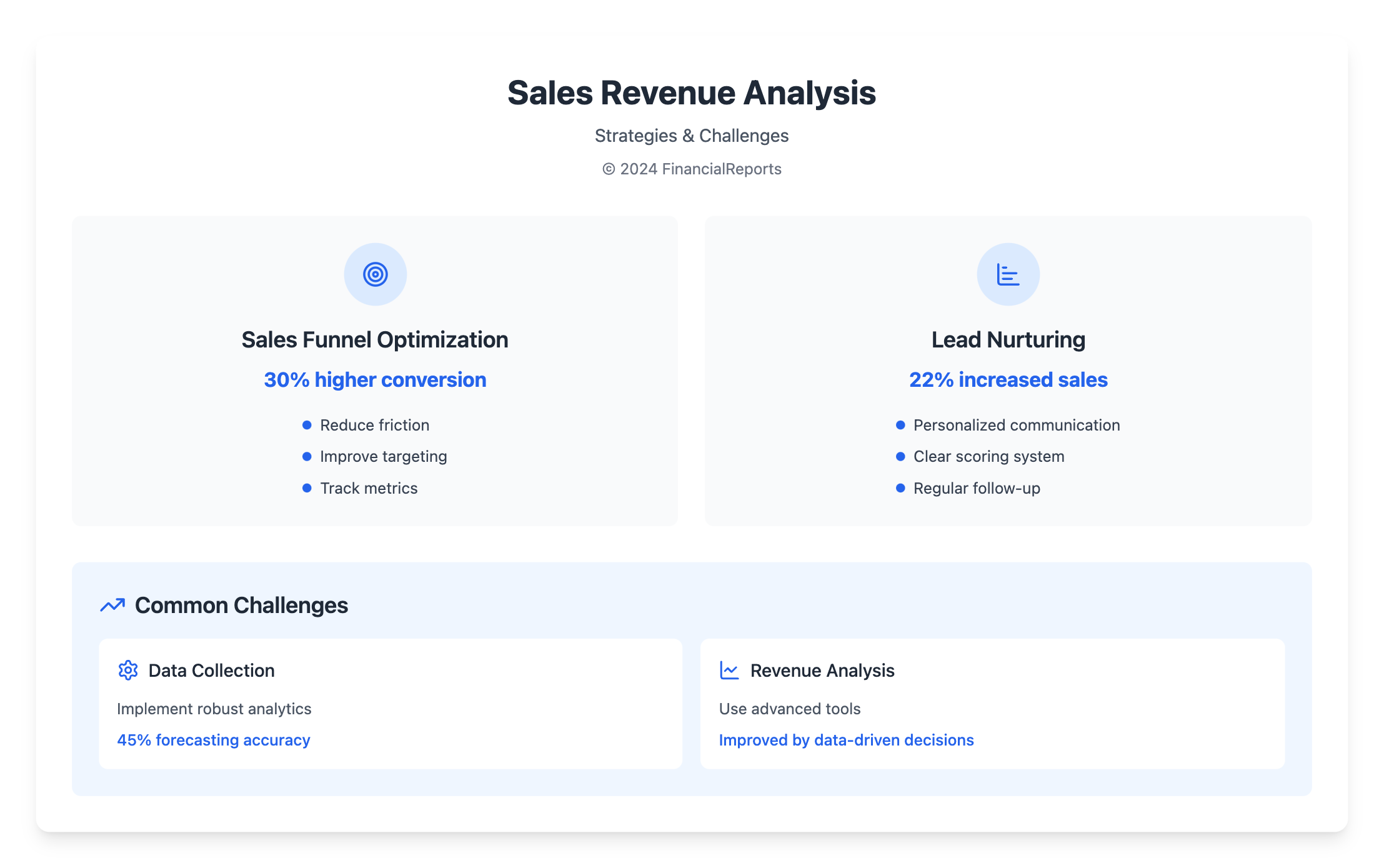
Businesses face many challenges when figuring out their sales revenue. One big issue is data collection. Only 45 percent of sellers are sure about their forecasting accuracy. This doubt can lead to wrong sales revenue reports, affecting business growth and decisions.
To tackle these problems, it's key to know how to find sales revenue and keep data reliable. This means using strong analytical tools and making decisions based on data. Some common hurdles include:
- Issues with data collection, such as incomplete or inaccurate data
- Misinterpretation of sales figures, including failing to account for seasonal variations or misunderstanding the impact of discounts and returns
By tackling these issues and ensuring accurate sales revenue reports, businesses can make better decisions and grow. Companies can improve their sales processes, use effective marketing, and technology to make sales revenue easier to calculate and analyze. This way, they can reach their full sales revenue and make smart decisions for success.
Getting sales revenue right is vital for businesses. It helps them check profits, price strategies, and plan expenses. By understanding how to find sales revenue and solving common problems, companies can see their sales clearly. This lets them make smart choices and grow.
Strategies to Improve Sales Revenue
To boost sales revenue, knowing how to find and track it is key. Analyzing sales trends helps spot areas for growth. Improving sales processes, like the sales funnel, is a good start.
Effective marketing is also vital for sales growth. This includes targeted ads, content marketing, and keeping customers happy. By working together, sales and marketing can grow revenue. For instance, personalized lead nurturing communication can raise sales by 22%. A clear lead scoring system can boost conversion rates by 30%.
Some top strategies for better sales revenue are:
- Optimizing the sales funnel to reduce friction and increase conversions
- Improving lead qualification to ensure that sales reps are targeting high-potential leads
- Implementing effective customer relationship management systems to build strong relationships with customers
- Using data and analytics to inform sales and marketing decisions
By using these strategies and keeping an eye on performance, businesses can grow their sales revenue. Understanding how to find and track sales revenue is the first step to improving it.
Conclusion: Mastering Sales Revenue
Sales revenue is key to understanding a company's financial health and growth. It helps businesses make smart choices for long-term success. By knowing how to use sales revenue data, companies can grow and thrive.
This guide showed the difference between gross and net sales revenue. It also covered how to calculate sales revenue and its role in business success. We talked about ways to boost sales, like improving sales processes and using marketing and data.
For businesses to excel in sales revenue, they need to keep monitoring and analyzing. They should track trends, find seasonal patterns, and use advanced analytics. This way, they can stay ahead and make decisions based on solid data, driving growth.
FAQ
What is the definition of sales revenue?
Sales revenue is the total money a business makes from selling its products or services. It doesn't include discounts, returns, or allowances.
Why is sales revenue important for a business?
Sales revenue is key for a business. It's the base for many financial indicators and decisions. It shows a business's health, growth, and guides pricing, marketing, and operations.
What is the difference between gross sales and net sales revenue?
Gross sales is the total sales before any deductions. Net sales is the total after deductions. Net sales gives a clearer picture of actual revenue.
How can sales revenue be calculated?
Sales revenue can be calculated in several ways. You can use simple formulas or accounting software. The method depends on the business and its revenue streams.
How does sales revenue impact business performance?
Sales revenue shows a company's financial health and growth. It affects profitability, market share, and competitiveness. It's important to analyze with other financial metrics for a full picture.
What are the best practices for recording and tracking sales revenue?
Keeping accurate records and using the right tools are key. These practices ensure reliable reports and help make informed decisions.
How can businesses analyze sales revenue trends?
Analyzing revenue trends helps businesses understand the market. Tools and data visualization can reveal patterns. This information guides inventory, staffing, and marketing.
What are the common challenges in accurately determining sales revenue?
Challenges include data integrity and consistency issues. Misinterpreting sales data, like ignoring seasonal changes or discounts, can distort revenue reports.
What strategies can businesses use to improve their sales revenue?
To boost sales, improve sales processes and the sales funnel. Use customer relationship management and targeted marketing. These strategies help attract and keep customers.