Comprehensive Risk Place Assessment Guide
A risk place assessment is key for businesses to spot, study, and lessen dangers or risks. It helps ensure safety, compliance, and efficiency. This process looks at how likely these risks are and their possible effects. It lets companies plan ways to stop, manage, or lessen risks.
By doing a detailed risk assessment, companies can protect their workers, assets, and operations. Mark Zuckerberg believes in focusing on risk management to avoid losses and keep things running smoothly. A good risk assessment should list workplace dangers like natural disasters, tech failures, or rule breaks.
Understanding the risk assessment and management process helps companies create a risk plan that fits their needs and industry. This way, they can handle risks effectively.
Key Takeaways
- Doing a thorough risk assessment is vital for businesses to manage risks and avoid damage.
- A risk place assessment helps find hazards, judge their chance and effect, and plan to stop or lessen them.
- Good risk management can save money, improve work flow, and protect against cyber threats and scams.
- Industry-specific risk assessments, like in construction, healthcare, and manufacturing, need a custom approach to tackle unique risks.
- By focusing on risk assessment and management, businesses can follow rules, stay safe, and grow.
- A detailed risk assessment is a key part of a company's risk management plan. It helps them make smart choices and stay ahead of threats.
Understanding Risk Place Assessment
Risk place assessment is key for organizations to spot, check, and handle risks. It's important to know that risk analysis and risk assessment are different. Risk assessment includes steps to lower risks. It's about finding, checking, and sorting risks, and figuring out their chances and effects.
The main parts of risk assessment are spotting hazards, checking risks, and finding ways to control them. NIST's Special Publications say spotting threats like cyber attacks, natural disasters, or workplace dangers is vital. Risk analysis digs deeper into specific risks, while risk assessment looks at the whole risk management process.
Key Components of Risk Assessment
- Hazard identification: finding possible hazards and threats
- Risk evaluation: looking at how likely and big the hazards are
- Control measures: putting in place steps to lessen or get rid of risks
Knowing about risk place assessment and its parts helps organizations deal with risks ahead of time. This is key to keeping people, assets, and the environment safe.
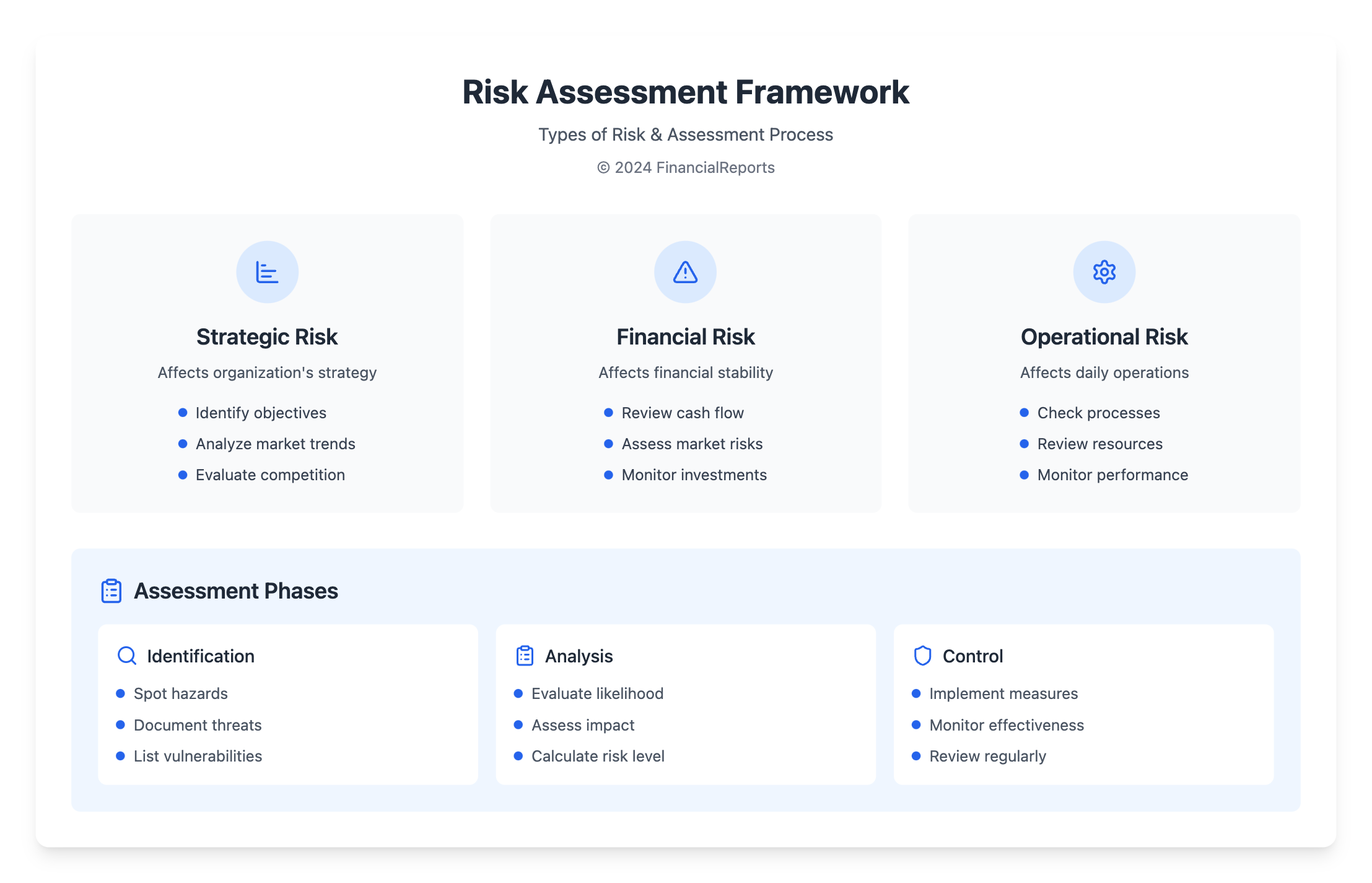
| Risk Type | Description |
|---|---|
| Strategic Risk | Risks that affect an organization's overall strategy and objectives |
| Financial Risk | Risks that affect an organization's financial stability and performance |
| Operational Risk | Risks that affect an organization's day-to-day operations and processes |
The Risk Assessment Process
The risk assessment process is key to spotting and reducing risks in any organization. It involves checking the workplace for hazards, figuring out how likely and serious they are, and finding ways to lessen their impact. To do this, companies use risk models and tools to help guide them.
Understanding how well current controls work is a big part of this process. This means looking at hazards, analyzing risks, and checking if controls are working. By focusing on the most important risks and using resources wisely, companies can lower the chances and effects of hazards.
Some important steps in risk assessment include:
- Identifying hazards and assessing their likelihood and impact
- Evaluating the effectiveness of existing control measures
- Implementing new control measures to minimize risks
- Documenting findings and reviewing the assessment periodically
Using tools like risk matrices and decision trees can make the process easier. These tools help measure risk levels and decide where to focus efforts. By sticking to a clear plan, companies can make sure their risk assessment is thorough and effective.
| Risk Assessment Step | Description |
|---|---|
| Hazard Identification | Identify possible hazards in the workplace |
| Risk Analysis | Figure out how likely and serious hazards are |
| Risk Control | Put in place measures to reduce risks |
Tools for Risk Place Assessment
Effective risk assessment techniques are key to spotting and reducing risks. A good risk assessment program uses various tools like software, checklists, and templates. For more on the essential tools for quality professionals, check out this resource.
Risk assessment and management mean deeply analyzing risks and their outcomes. It's vital to use a structured method, like the risk matrix, to sort risks. This helps organizations focus on the most critical risks and plan how to tackle them.
Some important tools for risk assessment include:
- Software solutions, like Lucidchart, help make diagrams for sorting risks
- Checklists and templates follow set rules for risk checks and meet industry standards
- Risk frameworks, like NIST SP 800-30, give specific advice for managing risks
Using these tools and methods, companies can build a strong risk assessment and management plan. This ensures they can spot and handle risks effectively.
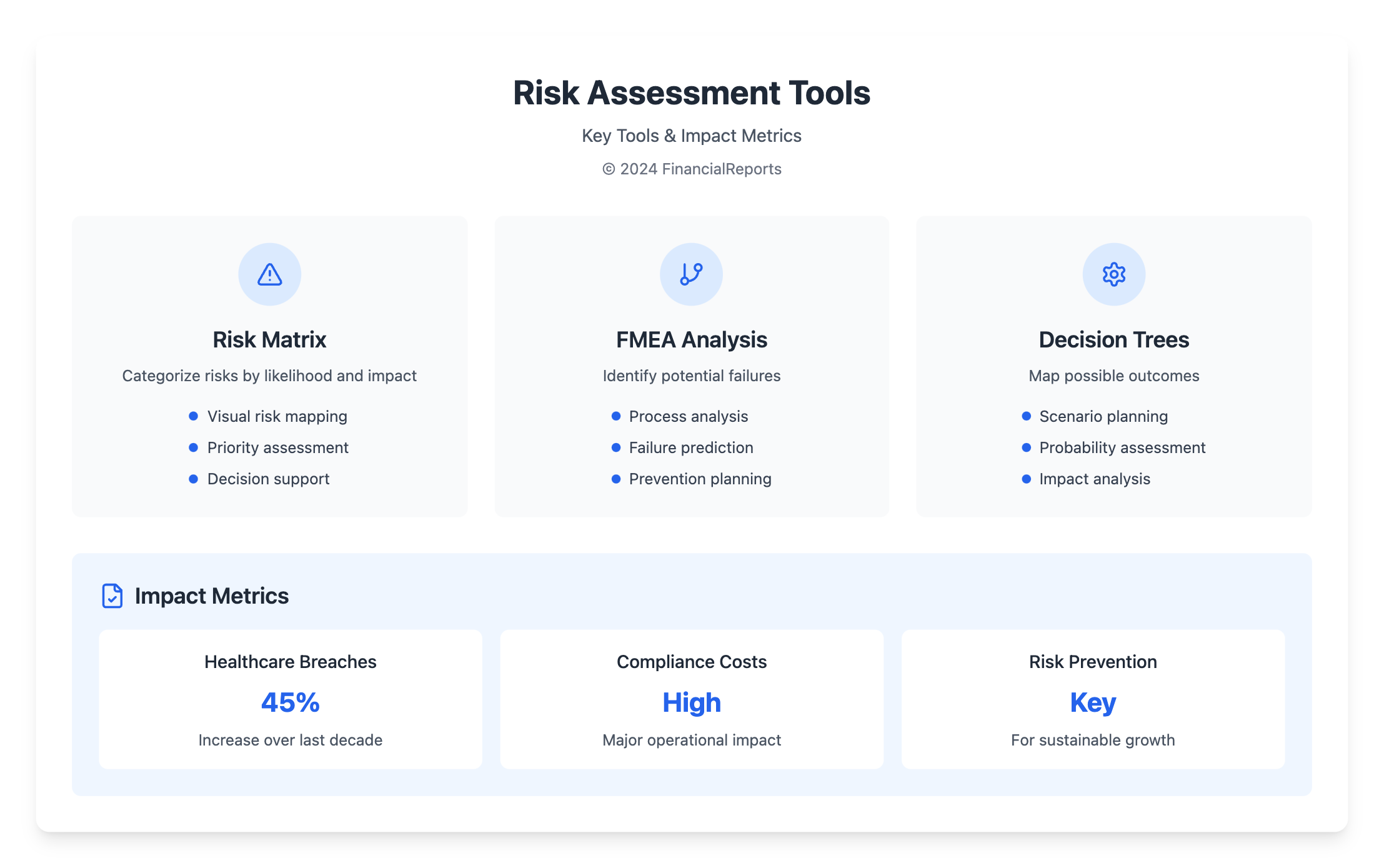
| Tool | Description |
|---|---|
| Risk Matrix | Categorizes risks based on likelihood and consequences |
| Failure Mode and Effects Analysis (FMEA) | Identifies possible failures in design, process, product, or service |
| Decision Trees | Shows different outcomes and their chances |
Regulatory Requirements
Organizations across different sectors face a complex web of industry regulations. They must follow compliance standards to avoid legal and reputational risks. Noncompliance can lead to big fines and operational costs, as seen in healthcare breaches increasing by over 45% in the last decade.
Organizations need to focus on compliance risk assessments to tackle these risks. They can use specialized tools and frameworks to make the process easier. This ensures they follow industry-specific regulations and standards. It also helps protect their legal standing and keeps their competitive edge.
As regulations change, staying updated is key. Investing in strong compliance risk management strategies is essential. Using tools like Sprinto's compliance automation platform helps organizations manage compliance effectively. This way, they can focus on growing sustainably.
FAQ
What is a risk place assessment?
A risk place assessment is a detailed process to find and manage risks. It checks for hazards like natural disasters or tech failures. It also looks at legal issues and makes plans to handle these risks well.
How does a risk assessment differ from a risk analysis?
A risk analysis just finds and checks risks. But a risk assessment also comes up with ways to deal with these risks. It's more about solving the problem than just spotting it.
What are the key components of a risk place assessment?
The main parts of a risk assessment are finding hazards, checking their risks, and fixing them. This helps organizations know their risks, understand how likely they are, and find ways to fix them.
What are some common misconceptions about risk place assessments?
Some think a risk assessment is only about following rules. But it's more about finding and fixing risks to keep the organization safe and strong.
What are the steps in conducting a risk place assessment?
To do a risk assessment, you first decide what to look at. Then, you find and check the risks. After that, you make plans to fix or manage these risks.
What tools are available for conducting a risk place assessment?
There are many tools to help with risk assessments. You can use software like Lucidchart for diagrams. There are also checklists and templates for following rules. And, there are frameworks like NIST SP 800-30 for detailed plans.
How do regulatory requirements impact the risk place assessment process?
Rules and laws are very important in risk assessments. They tell organizations what they must do. Following these rules helps avoid legal trouble and keeps the organization's reputation safe.