Comprehensive Risk Assessment Training Programs
Risk assessment training is key for any company's safety and legal compliance. A good risk assessment course helps spot and reduce threats. This ensures a safe work environment. With safety and legal standards getting stricter, companies are looking for top-notch risk assessment training.
Putting money into risk assessment training is smart for businesses. It leads to safer work processes and helps companies grow over time. Knowing how to do risk assessments well is vital. Training programs, like those from RoSPA, teach people how to assess risks in different work places.
Introduction to Risk Assessment Training
Risk assessment training meets the legal needs set by the Management of Health and Safety Regulations 1999. These programs can be taken online or in person. After finishing the course, people learn how to assess risks and manage them in various work settings.
Key Takeaways
- Comprehensive risk assessment training programs are essential for organizational safety and regulatory compliance.
- Risk assessment courses provide participants with the skills and knowledge needed to conduct risk assessments in various workplace settings.
- Investing in risk assessment training is a key business strategy, contributing to better safety processes and long-term organizational success.
- Risk assessment training programs offer flexibility in delivery methods, including virtual classroom and face-to-face classroom options.
- Upon successful completion of the course, participants gain skills in risk assessment, controlling risks, and conducting risk assessments in different workplace settings.
- Risk assessment training programs are designed to meet the legal requirements outlined in the Management of Health and Safety Regulations 1999.
Introduction to Risk Assessment Training
Risk assessment training is key for any workplace safety plan. It helps employers and workers spot and lower risks. This training gives them the tools to do good risk assessments, which are vital for following health and safety rules.
A risk assessment course teaches about finding hazards, evaluating risks, and how to control them. It's made to fit the needs of different organizations or industries. With the right training, workplaces can be safer, reducing the chance of accidents and injuries.
The role of risk assessment training is huge for keeping workers safe. In fact,
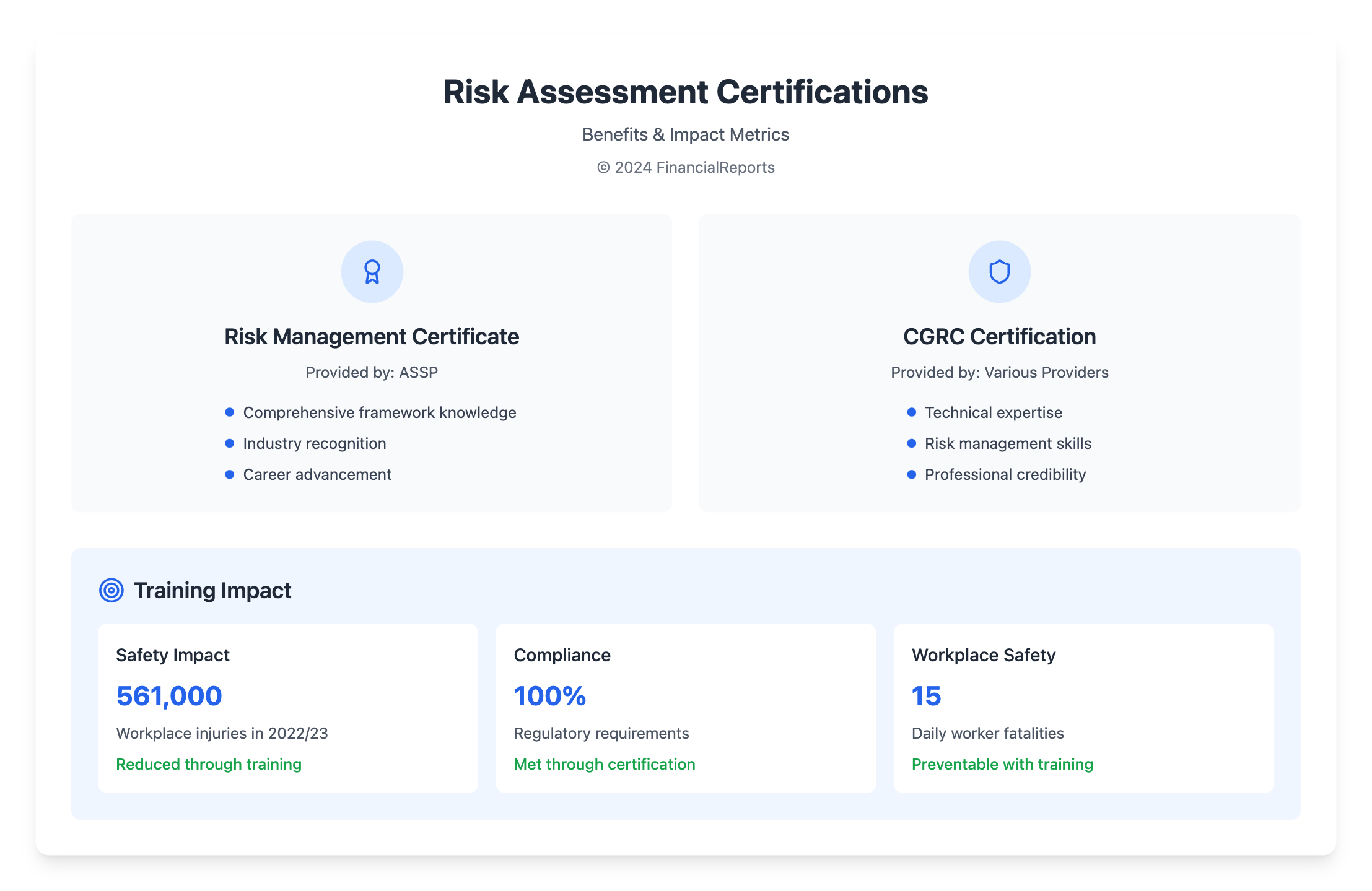
561,000 workers got hurt at work in 2022/23, showing the need for good risk management at work.
By investing in risk training, companies can stop such incidents. This makes work safer and more productive.
Some main perks of risk assessment training are:
- It helps follow health and safety rules better.
- It lowers the chance of accidents and injuries.
- It boosts worker knowledge and skills.
- It makes work more efficient and productive.
With the right training, workplaces can be safer and more productive. This also lowers the risk of accidents and injuries.
Types of Risk Assessment Training Programs
Risk assessment training is key for any organization's safety and compliance. Different training options are available to meet various needs. Courses can be customized for specific industries, ensuring knowledge is relevant.
Flexibility is important in risk assessment training. Online training offers convenience, while in-person workshops provide hands-on learning. Customized sessions focus on industry-specific risks, making training more effective.
Online Training Solutions
Online training is great for remote workers or those who like virtual learning. It's accessible anytime, anywhere. Risk assessment programs can include interactive elements to keep learners engaged.
In-Person Workshops
In-person workshops offer a traditional learning experience. They allow for interaction with instructors and peers. Customized sessions can cover specific industry needs, like healthcare or finance.
Customized Training Sessions
Customized sessions meet an organization's unique needs. They focus on specific risks, providing targeted knowledge. These sessions include case studies and interactive exercises for a deep understanding of risk assessment.

Key Components of Risk Assessment Training
Risk assessment training is vital for any organization's safety plan. A good course should cover risk identification, analysis, and evaluation. These are key to spotting and reducing workplace dangers.
Good training teaches learners how to find, analyze, and judge risks. It shows them how to use frameworks and score risks based on data. This way, employees can handle risks better.
Some important skills from risk training include:
- Risk identification and analysis techniques
- Risk evaluation and prioritization methods
- Control measures and risk mitigation strategies
These skills help keep workplaces safe and healthy. They're useful in many fields like healthcare, finance, and manufacturing. Risk training helps prevent accidents and boosts safety.
Industry-Specific Risk Assessment Training
Risk assessment training is key for many industries. Each one faces different challenges. For example, healthcare deals with biological hazards, while finance focuses on data security and fraud. A good risk assessment course helps companies find specific solutions to these problems.
OSHA reports that in 2019, 15 workers died every day in the U.S. This shows how important risk assessment training is. Hard Hat Training offers a quick risk assessment certification course. It covers identifying risks, controlling hazards, and evaluating the cost of safety measures.
Healthcare Sector Requirements
The healthcare field needs special risk assessment training because of biological hazards. A good course for this sector should teach about infection control and keeping patients safe.
Financial Services Risk Protocols
Financial institutions need training on data security and fraud risk. A course for this sector should include topics like cybersecurity and following OSHA rules.
Manufacturing Industry Standards
The manufacturing industry has its own risk assessment standards, like CAN/CSA rules. A course for this sector should teach about keeping workplaces safe and controlling hazards.
| Industry | Risk Assessment Requirements |
|---|---|
| Healthcare | Biological hazards, infection control, patient safety |
| Financial Services | Data security, fraud risk, cybersecurity, compliance with regulations |
| Manufacturing | Workplace safety, hazard control, CAN/CSA standards |
Developing Effective Risk Assessment Skills
Effective risk assessment needs both technical and people skills. To get better at this, people can join risk assessment training. These programs focus on thinking critically, making good decisions, and talking clearly. A good course teaches you to understand data, make smart choices, and talk to others to get their support.
Training in risk assessment helps you lead safety efforts and make wise choices. Key skills you can learn include:
- How to analyze data and spot risks
- Skills for making decisions when risks are complex
- Ways to communicate well and get others on board
By taking a risk assessment course, you can improve your skills and help your organization. You'll learn the latest in risk management and how to tackle tough situations. This way, you'll be ready to make informed decisions.
Best Practices for Conducting Risk Assessments
Risk assessment training is key to spotting and reducing workplace dangers. A good risk assessment course teaches employees how to do these assessments well. It's important to keep these assessments up to date to stay effective.
Getting everyone involved in risk assessments is also important. This includes employees, managers, and others. It helps create a safety-focused culture and keeps everyone on the same page.
For more tips on risk assessments, check out risk assessment resources. Key steps include finding hazards, evaluating risks, choosing control measures, documenting results, and regularly reviewing assessments. By following these steps and involving everyone, workplaces can become safer.
When assessing risks, consider categories like Fatality, Major or Serious Injury, Minor Injury, and Negligible Injury. For likelihood, use Very Likely, Likely, Unlikely, and Highly Unlikely. This helps focus on the most critical hazards.
| Consequence Category | Likelihood Category | Risk Level |
|---|---|---|
| Fatality | Very Likely | High |
| Major or Serious Injury | Likely | Medium |
| Minor Injury | Unlikely | Low |
Measurement and Evaluation of Training Effectiveness
Evaluating the effectiveness of risk assessment training is key. It ensures employees can use what they learned in real situations. This is done through feedback and performance metrics.
A risk assessment course needs a detailed evaluation plan. It checks if trainees understand and use the training. Kirkpatrick's Four Levels of Evaluation help with this, covering reaction, learning, behavior, and results.
Feedback Mechanisms
Feedback is vital for checking if risk assessment training works. Surveys, quizzes, or assessments can measure how well trainees grasp the material.
Performance Metrics
Performance metrics show if trainees can apply what they learned in real situations. This can be through observations, simulations, or job evaluations.
| Evaluation Level | Description |
|---|---|
| Level 1: Reaction | Measures the trainees' reaction to the training |
| Level 2: Learning | Measures the trainees' understanding of the training material |
| Level 3: Behavior | Measures the trainees' ability to apply the knowledge and skills learned in the training |
| Level 4: Results | Measures the impact of the training on the organization |
Using these methods, organizations can make sure their risk assessment training is effective. This ensures employees can do their jobs safely and well.
Certifications and Accreditations
Risk assessment training and courses are key for professionals to show their skills and dedication. Getting a certification from a trusted organization proves you're good at managing risks. It shows you're serious about your work.
Some top certifications are the Risk Management Certificate Program by the American Society of Safety Professionals (ASSP) and the Certified Governance, Risk, and Compliance (CGRC) Certification. The Risk Management Certificate Program teaches you about managing risks. The CGRC Certification shows you're skilled in keeping information systems safe.
The perks of getting certified are:
- It proves you're good at managing risks.
- It shows you're serious about your job.
- It helps you stand out in the job market.
- It can make you earn more.
These certifications meet industry standards and are known worldwide. By getting certified, you show you're dedicated and skilled. This can boost your career.
| Certification | Offered By | Benefits |
|---|---|---|
| Risk Management Certificate Program | ASSP | Comprehensive overview of risk management framework |
| CGRC Certification | Various providers | Demonstrates advanced technical skills and knowledge in risk management |
Future Trends in Risk Assessment Training
The business world is always changing, and so is risk assessment training. New technologies and rules will greatly influence this field.
Embracing Technological Advancements
Cognitive technologies like AI and data analytics will change risk assessment training. They will help find and manage risks better. This means less work for humans and more for machines.
Companies will use systems that watch and control things in real time. They will use sensors to stay ahead of risks.
Evolving Regulatory Landscape
New threats like cyber attacks and climate change will lead to more rules. Training programs will need to keep up with these changes. They will focus on being ready for risks, not just preventing them.
By using new tech and following new rules, training will prepare people for the future. It will teach them to adapt and learn constantly.
FAQ
What is the importance of risk assessment training for organizations?
Risk assessment training is key for keeping workplaces safe. It helps prevent accidents and meets legal standards. It teaches how to spot and handle risks, fitting the needs of each organization.
Who is the target audience for risk assessment training programs?
These programs are for those who handle safety, like risk managers and safety officers. They learn to find, analyze, and reduce risks in their workplaces.
What are the different types of risk assessment training programs available?
There are many types of training, like online courses and in-person workshops. They're designed for different needs and schedules. This way, organizations can meet their safety goals without wasting resources.
What are the key components of effective risk assessment training?
Good training teaches learners to spot and manage risks. It covers how to identify hazards, analyze risks, and control them. This knowledge is applied in real situations, making it useful.
How do risk assessment training programs address industry-specific requirements?
Training programs are tailored for each industry. For example, healthcare deals with biological risks, while finance focuses on data security. This ensures that each sector can handle its unique risks effectively.
What key skills are developed through risk assessment training?
Training focuses on both technical and people skills. It teaches learners to think critically, make decisions, and communicate well. These skills help them lead safety efforts.
What are the best practices for conducting ongoing risk assessments?
Risk assessments need regular updates to stay relevant. Involving everyone in the process helps build a safety culture. This keeps the workplace safe and compliant.
How can the success of risk assessment training be measured?
It's important to check if training is working. Using feedback and metrics shows if the training is effective. This helps improve future training.
What are the benefits of earning risk assessment certifications?
Certifications show you're good at risk assessment. They boost your career, show you're an expert, and gain trust. They're valuable for risk management professionals.
What are the future trends in risk assessment training?
The future of training will include new tech like AI and changing laws. Programs need to keep up with these changes. This ensures learners are ready for the complex risk management world.