Cash Basis Method: A Complete Guide to Business Accounting
The cash basis method is key in accounting, especially for those who prefer simplicity in financial management. It works by recording money when it actually comes in and notes expenses when they are paid out. This approach, a clear cash basis accounting example, attracts small business owners. They like its simplicity compared to more complex systems.
Corporations, notably S Corporations with less than $26 million in sales over three years, benefit from this method's flexibility. A cash basis balance sheet shows current finances without the confusion of owing or being owed. Companies must state their accounting method on their first tax return. This choice, noted on Schedule C for individuals and sole proprietors, guides their financial story going forward.
The cash basis accounting definition is all about keeping things simple. It helps prevent mistakes and confusion, making it easier for small businesses to keep track of their finances. Though it's not right for every business, such as those with a lot of inventory, it serves as a reliable guide for many. It offers a clear picture of financial health.
Key Takeaways
- Employing the cash basis method simplifies accounting, providing clarity for small business transactions.
- Qualification for using the cash basis method can hinge on the entity's structure and gross receipts.
- Small businesses frequently select cash basis accounting for its directness and reduced complexity.
- Cash basis financial statements prioritize current cash flow, although they may overlook larger financial trends.
- The transition to the cash basis method involves IRS qualification and adherence to specific tax reporting guidelines.
- Automation tools can facilitate the implementation and maintenance of the cash basis accounting approach.
- Cash basis accounting often aids in tax planning by allowing for strategic timing of income and expenses.
Understanding the Cash Basis Method
In accounting, the method you choose affects how you report and analyze finances. Cash basis accounting is popular, especially with small businesses. It focuses on simplicity and straightforward money management.
Definition and Overview
Cash basis accounting records transactions only when cash changes hands. It counts income when it's received and expenses when paid. This is different from accrual accounting, which records income and expenses when they're earned or incurred, not when money is actually exchanged. Cash accounting offers a clear, immediate look at cash flow.
Key Characteristics
The cash accounting method is simple, which helps small businesses and individuals. It has a few main features:
- Simplicity: It makes record-keeping easy because it doesn't track payables or receivables until there's cash movement.
- Immediate Reflection of Cash Flow: It shows exactly how much cash a business has at any time.
- Less Bookkeeping: This method keeps it simple by not needing adjustments or accruals.
- Regulatory Acceptance: Small businesses under $25 million in revenue can use this without issue, per IRS rules.
Knowing what is cash basis accounting helps in managing finances simply. It's perfect for small shops, freelancers, or service providers. This method lets them see cash flow clearly and how it affects daily business.
Deciding between cash basis accounting and accrual accounting depends on your business size and finances. Getting advice from professionals or using advanced software helps make this decision. It ensures you stay compliant and efficient in financial reporting.
Advantages of the Cash Basis Method
The cash basis method of accounting is great for small businesses and solo owners. It makes managing daily finances easier and makes the business's cash situation clear. We will look into the main perks of this method, using real data and trends.
Simple Record-Keeping
The cash basis accounting method makes keeping records simple. Only cash transactions are logged. This means no need to track what you owe or what's owed to you unlike in other methods. It's a big plus for smaller companies without big accounting teams. Thanks to the Tax Cuts and Jobs Act, even more small businesses can use this method. Now, if a business makes $30 million or less each year, it qualifies.
Better Cash Flow Management
Cash basis accounting is defined as logging money when it's actually received or paid out. This gives a true picture of what cash is on hand. It's key for making smart choices about where to spend, invest, or save. This clarity is especially important for small businesses needing to quickly adapt to changes.
- Direct Insight: Companies can easily see their current cash, aiding in planning and budgeting.
- Reduced Complexity: With no accrued expenses or unearned revenue to track, financial reports are simpler and cost less.
- Regulatory Benefits: More small businesses can now choose cash basis accounting thanks to new tax laws. This makes managing taxes and paperwork easier.
In summary, the cash basis method offers simplicity and flexibility, especially for smaller businesses. It streamlines bookkeeping and gives a clear view of a company's financial state. This helps in keeping businesses liquid and stable.
Disadvantages of the Cash Basis Method
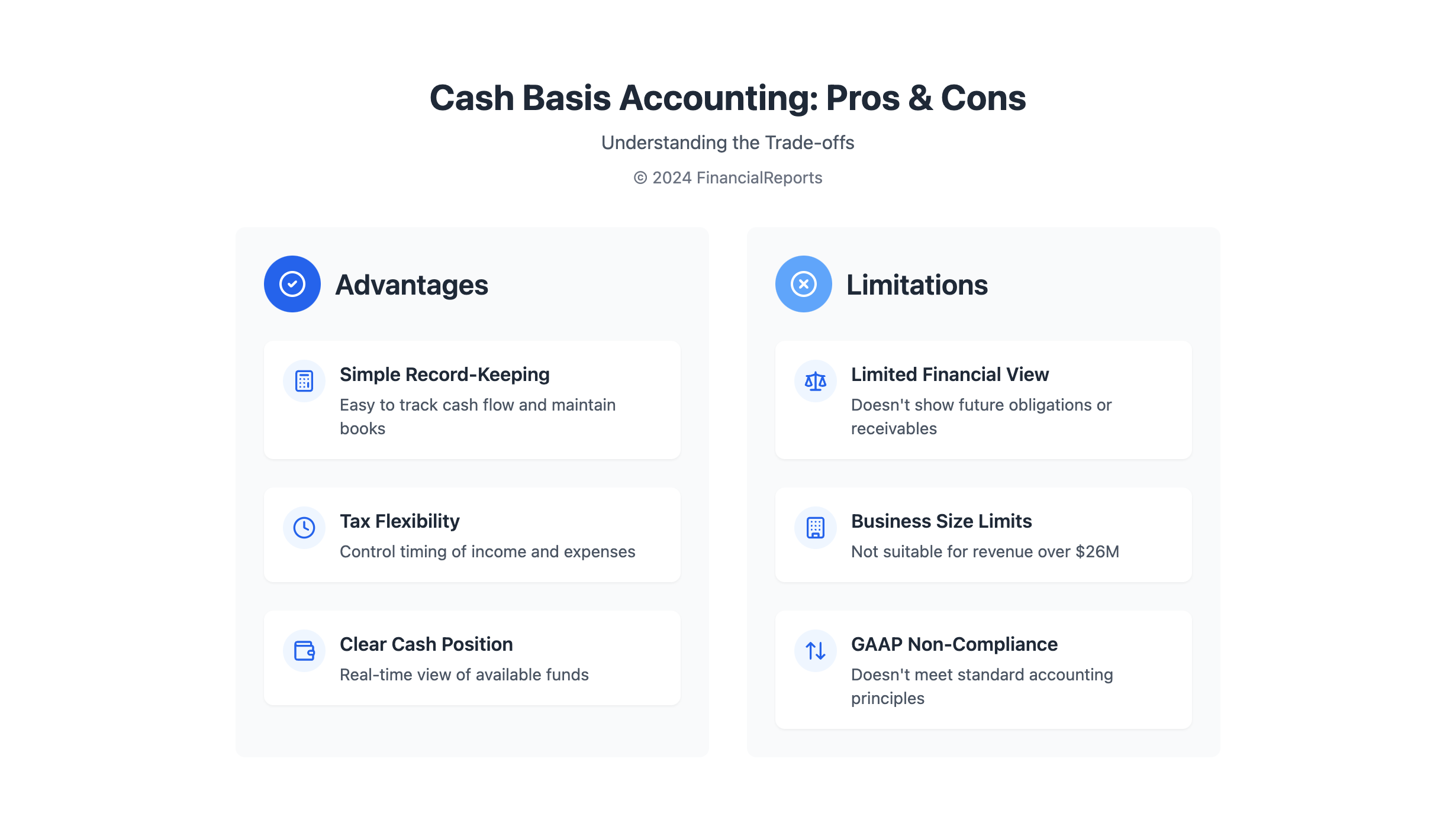
The cash basis method is simple and makes tracking cash flow easy. But, it has big downsides for managing and reporting finances. One big issue is that it doesn't align with Generally Accepted Accounting Principles (GAAP). GAAP compliance is vital for attracting investors or going public.
Limited Insight into Financial Health
Cash basis accounting can be misleading about a company's real financial state. It doesn't take future debts or income into account. So, a business might seem stable when cash flow is good, even if big bills are coming. This is a problem for businesses with uneven cash flow or those dealing with long-term projects. Their financial status might not be accurately shown.
Not Suitable for All Businesses
Organizations dealing with inventory or credit find cash basis accounting lacking. Imagine a small service company that doesn't deal with inventory or payments on credit. Here, cash basis might work. But for big companies or those with lots of inventory, it's not enough. Accrual accounting is better here. It records income when made and expenses when they happen. This gives a clearer view of what a business really owes and owns.
Big companies must use accrual accounting to meet GAAP standards. This is key for true financial planning and earning trust from stakeholders. Small businesses might start with cash basis accounting due to its simplicity. But as they grow and become more complex, shifting to accrual accounting is essential. This change meets their evolving financial needs and industry rules.
When to Use the Cash Basis Method
Knowing when to use the cash accounting method is key for businesses. It's simple to follow and tracks cash flow directly. It's great for certain situations and types of businesses.
Qualifying Conditions
The size and financial makeup of a company determine if it can use cash basis accounting. Small businesses like sole proprietorships, partnerships, and S corporations can use this method. This is if their yearly sales for the last three years are $30 million or less. This was raised from $25 million. Small businesses find the cash accounting method easier than accrual accounting because it's simpler and cheaper.
Industries That Commonly Use It
Many businesses in specific sectors prefer the example of cash accounting. This includes:
- Service sectors like consulting and landscaping where the money comes directly from the work done.
- Retail stores that get cash when they sell something.
- Food places like cafes where people pay in cash and keeping track of stock is easy.
These sectors benefit from the cash accounting method. It fits well with how they operate and makes handling money easier.
| Industry | Common Accounting Method | Reason for Preference |
|---|---|---|
| Service (e.g., Consulting) | Cash Basis | Direct relation between services provided and cash received |
| Retail | Cash Basis | Immediate payment at point of sale |
| Food Services | Cash Basis | Simplified transaction and minimal inventory concerns |
Choosing the right accounting method is crucial for reports and efficiency. For many small companies and certain sectors, the cash accounting method makes managing finances simpler. It matches the way their cash flow works.
Cash Basis Method vs. Accrual Basis Method
Understanding cash basis and accrual basis accounting is crucial for businesses. The choice depends on business size, transaction complexity, and financial goals. By knowing the key traits of each, businesses can choose the best fit for their operations and rules.
Key Differences Explained
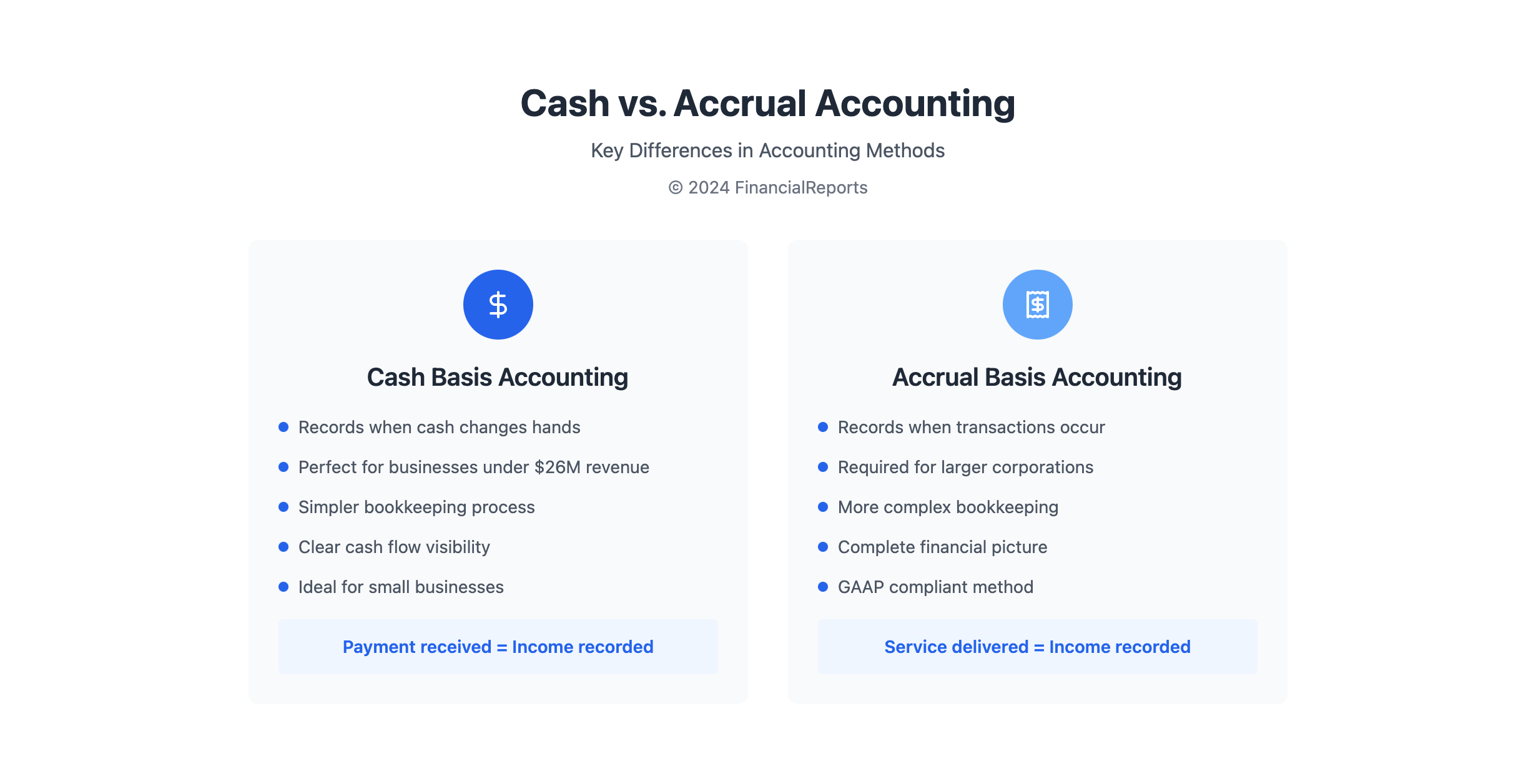
In cash basis accounting, transactions are recorded when cash is exchanged. It's known for being straightforward and focuses on cash flow. This method suits businesses that value simplicity.
On the other hand, accrual basis accounting records revenues and expenses when they happen, not when cash is exchanged. This gives a fuller picture of a company's finances. It's ideal for bigger companies or those with complicated financial activities.
When to Choose Each Method
Choosing between cash basis and accrual accounting depends on the company's needs:
- Business Size and Revenue: Small businesses prefer cash basis for its easy cash flow tracking. Big corporations with over $26 million in sales use accrual accounting by IRS rules.
- Financial Complexity: Accrual accounting suits businesses with lots of transactions or big inventories, offering a clearer financial picture.
- Regulatory Requirements: Some businesses must use accrual accounting to accurately report their financial situation.
- Strategic Financial Planning: Companies focused on long-term finances find accrual accounting's detailed insights beneficial.
Let's review the main points of each method:
| Feature | Cash Basis Accounting | Accrual Basis Accounting |
|---|---|---|
| Definition | Records transactions when cash changes hands. | Records transactions when earned or incurred. |
| Benefits | Simpler, easier to manage, better for cash flow tracking. | More accurate financial health overview, suitable for complex businesses. |
| Used By | Small businesses, sole proprietors, and some law firms. | Large corporations, businesses with inventory, entities with complex finances. |
| IRS Requirements | Preferred by small businesses not crossing the $26 million threshold. | Mandatory for businesses with receipts over $26 million. |
Choosing cash basis or accrual basis accounting affects a business's strategic choices and financial reporting. The right method is picked after analyzing the business’s size, financial activity, and industry needs.
Implementation of the Cash Basis Method
Adopting the cash basis method needs discipline to track and manage money well. It's great for small businesses because it's simple and shows cash flow clearly. It involves steps and best practices to make sure it works well from the start.
Steps for Setting Up
To start using cash basis accounting, companies must choose their accounting method on their first tax return. This choice is key as it sets up how they'll report finances and taxes later using the cash basis method. It's important to apply this method consistently to both income and expenses. This means you recognize money when you get it and record expenses when you pay them.
Best Practices for Maintenance
It's critical to keep track of when transactions happen for cash basis accounting balance sheet. A good system for writing down all money coming in and going out helps with reporting finances and preparing taxes. Keeping exact dates of transactions shows the real cash situation of a business.
It's wise to keep detailed records for all transactions. This makes annual reporting and IRS compliance easier. For businesses with changing cash flow, like those with seasonal sales, using the cash method can really help their finances.
Common Mistakes to Avoid
When using the cash basis method, not including owed expenses or payments can show the business's health wrong. Businesses must track and categorize all transactions right to prevent misleading financial statements. This avoids confusion about the company’s real financial state.
As businesses grow, many switch to more detailed accrual accounting. This change, while offering a clearer financial view, requires a careful plan. This includes watching cash flow closely and assessing risks of fraud.
In short, learning cash basis accounting brings key advantages for simplicity and clear financial understanding. But, its success depends on careful setup and ongoing careful management. Avoiding common errors is crucial for getting reliable financial information from this method.
Tax Implications of the Cash Basis Method
The cash basis method has unique tax pros and cons. It shapes cash basis tax reporting and tax planning for companies. This determines when they record income and expenses. We will look into how this affects tax reporting, with a focus on deductions and timing.
How It Affects Tax Reporting
With cash basis accounting and taxes, income is counted when received. Expenses get noted when paid. This approach lets a business alter its taxable income by timing cash flow. They can delay getting cash or pay bills early to lessen taxes. This is especially handy for small and mid-sized firms. It shows why good financial advice is crucial.
Common Deductions and Timing
Knowing when to deduct expenses is key with cash basis accounting. You can only cut expenses when you've paid them. This allows for planning but follow IRS rules to avoid fines. For example, a business could make big purchases or repairs late in the year. This reduces taxable income by offsetting it with higher expenses.
| Condition | Eligibility for Cash Basis Method |
|---|---|
| Corporations (average gross receipts > $25M) | Not Eligible |
| Partnerships with Corporate Partners (receipts > $25M) | Not Eligible |
| Tax Shelters | Not Eligible |
| Qualified Personal Service Corporations | Eligible |
| Small Businesses (gross receipts < $25M) | Eligible |
This chart shows who can or cannot use cash basis accounting based on their sales. Size and type of business play a big role in eligibility. This affects their financial and tax reports a lot.
Following cash basis tax reporting gives companies control over their financials. But, working with financial pros is key to stay compliant and make the most out of cash basis strategies.
Transitioning to the Cash Basis Method
When businesses think about moving from accrual to cash basis accounting, they must grasp what it entails. This switch affects how they keep records and report taxes. It also changes how they see their finances.
Factors to Consider
Switching methods needs a deep look into several important aspects:
- Regulatory Compliance: Check if you meet the rules, like the gross receipts limit. For 2024, it's $25 million, as set by the Tax Cuts and Jobs Act of 2017.
- Financial Assessment: Look at your cash flow and how your business operates. Pay special attention to what you owe and what's owed to you. This helps understand the effect on your cash basis balance sheet.
- Tax Optimization: Think about how changing can help or hurt your taxes. Cash basis lets businesses delay reporting income or move up deductions.
Process for Switching Methods
To start using cash accounting, businesses must do several things:
- Filing Requirements: Send in IRS Form 3115. It's best to do this by the deadline for that year's tax return.
- Financial Restatement: Update old records to mirror cash basis accounting. This may mean changing past financial statements.
- Strategic Planning: Make new rules for managing money. This might mean new billing cycles and how you handle expenses.
Switching has its perks like tax benefits and easier accounting. Yet, it demands careful planning and detail-oriented implementation. This is vital for staying within the law and getting the most financial advantage.
Resources for Cash Basis Method
Businesses using the cash basis method need to stay updated. It is key to have good tools and information. We've found some great software and books to help manage your finances better.
Recommended Software
For financial operations, HighRadius and Ramp are top choices. They automate transactions as money is received or paid. This matches the cash basis approach. You get error-free financial reports, easy tracking, and strong controls over your money.
These software solutions prevent missed expenses commonly seen in cash basis accounting. This ensures accurate financial reports at all times.
Further Reading and Tools
Learning about finance is vital. Many books and guides can teach you about cash basis and accrual accounting. They cover important topics like the 31-day rule and tax strategies, following IRS Publication 538. This knowledge aids in making smart financial choices.
Using these resources, businesses can navigate cash basis accounting effectively. This helps in staying compliant and promoting profitability in the long term.
FAQ
What is Cash Basis Accounting?
Cash basis accounting records transactions only when cash changes hands. It records revenue when cash is received and expenses when paid. This approach is different from accrual accounting, where revenue and expenses are recognized when earned or incurred.
Can you provide a Cash Basis Accounting Example?
Sure. Imagine a business invoices a client for $1,000 in January but gets the payment in February. With cash basis accounting, the income is recorded in February. Also, if a bill comes in January but is paid in February, the expense is listed in February too.
How does a Cash Basis Balance Sheet differ from an Accrual Basis Balance Sheet?
A cash basis balance sheet shows transactions where cash was actually used. So, you won't see accounts receivable or payable like in accrual basis sheets. It's simpler but offers less detail about future money owed or due.
What are the key characteristics of Cash Basis Accounting?
Its main features are simple transaction recording, clear cash flow tracking, and it's easy to manage for small businesses or entrepreneurs.
What are the advantages of using the Cash Basis Method of Accounting?
Benefits include easy bookkeeping, reflecting actual cash available, and possible tax advantages. It taxes income when it's received, not earned.
What are the disadvantages of Cash Basis Accounting?
Cons include a limited view of financial health, potential for misleading financial reports, and it's not ideal for big businesses. It doesn't align with GAAP and IFRS standards either.
Who can use Cash Basis Accounting?
It's mainly for small businesses, sole proprietors, and other small entities. The IRS allows businesses with less than $26 million in annual receipts to choose this method.
What distinguishes Cash Basis vs Accrual Basis Accounting?
The difference is in recognizing revenue and expenses. Cash basis records transactions with actual cash movement. Accrual basis accounts for revenues and expenses when they occur, regardless of cash flow.
How does one implement the Cash Basis Method?
Pick this method on your first tax return, record cash transactions as they happen, and keep consistent bookkeeping. Use good accounting software.
How will Cash Basis Accounting affect my Tax Reporting?
It changes tax reporting by recognizing income when received and expenses when paid. This impacts the timing and amount of taxes, offering some planning opportunities.
What should I consider when switching to Cash Basis Accounting?
Think about your business's size, your industry norms, legal compliance, possible tax effects, and how it changes financial management.
What are some recommended software and resources for Cash Basis Accounting?
HighRadius and Ramp are good software options for automating cash basis accounting. Online resources and tools also help manage accounting effectively.